A move exposes every forgotten box, broken chair, and unused appliance in a home. The easiest way to keep that clutter from delaying moving day is to decide early how it will leave: in a dumpster you load on your schedule, with a junk removal crew that does the lifting, or through a practical mix of both.
See the 15-yard dumpster option or choose full-service junk removal from Dumpsters On Demand LLC.
A moving cleanout dumpster is best when you want several days to sort and can load items yourself. Junk removal is better when time is short, lifting is difficult, or bulky pieces must leave quickly. Because Dumpsters On Demand LLC offers both, homeowners can choose based on labor, pace, and the items involved.
This guide focuses on a whole-home move, not only a garage cleanout. It provides a room-by-room sequence, a decision framework for the two service models, and a separate plan for furniture, appliances, and restricted materials.
Moving cleanout dumpster or junk removal: how to choose
The choice comes down to three questions: Who can do the lifting, how quickly must the home be cleared, and how much sorting remains? A dumpster gives you control over the schedule. A junk removal crew trades that flexibility for speed and hands-off labor.
Choose a dumpster when you need sorting time
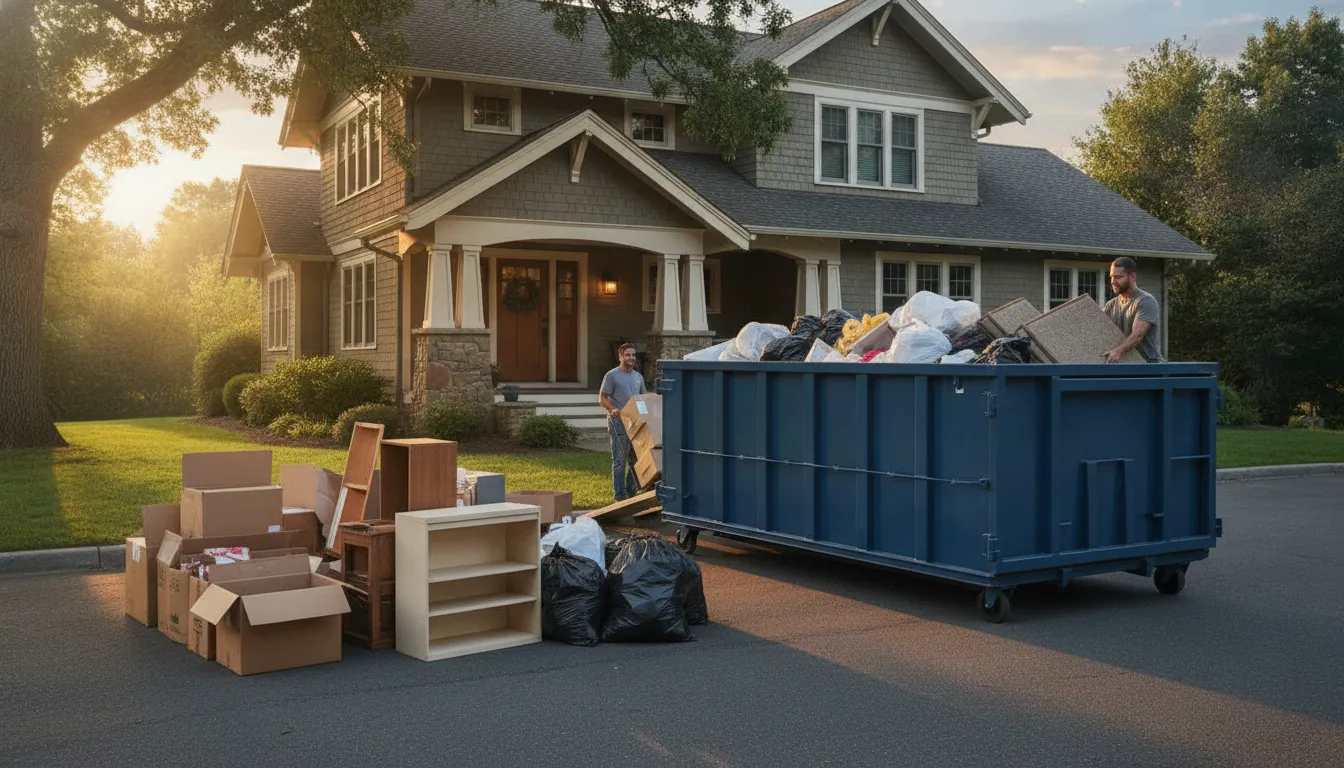
A dumpster rental works well when the move is still a week or more away and the household can manage the loading. Dumpsters On Demand LLC specializes in a driveway-friendly 15-yard roll-off container measuring 12 feet long, 8 feet wide, and 4.5 feet high. Its manageable height and residential footprint make it useful for room-by-room cleanouts without requiring repeated trips in a pickup truck.
The self-service model also preserves decision time. You can empty a closet, reconsider a donation pile, and return to the project the next day. That breathing room matters when family members must review keepsakes or when the contents of an attic have not been touched in years.
Choose junk removal when labor or time is limited
Full-service junk removal is the stronger option when a crew needs to carry items from inside the home and haul them away in one visit. It can be especially useful for a last-minute move, an estate transition, a rental turnover, or a household without enough able-bodied help. Instead of staging everything beside a container, you identify what goes and let the crew handle the carrying and loading.
If most of the unwanted material is furniture, compare dedicated furniture removal help with a self-loaded dumpster. Narrow stairs, heavy sleepers, and fragile flooring can make professional labor more valuable than extra sorting time.
Use this side-by-side decision table
| Decision factor | Dumpster rental | Junk removal |
|---|---|---|
| Labor | You sort and load | Crew lifts and loads |
| Project pace | Work over the rental period | Clear items in a scheduled visit |
| Best fit | Whole-home sorting and steady decluttering | Tight deadlines and heavy items |
| Access | Needs a clear delivery and pickup area | Crew needs safe access to items |
| Control | High control over what leaves and when | Fast execution after decisions are made |
A hybrid plan is often the most efficient answer. Use the container for boxes, damaged household goods, and ongoing decluttering. Schedule the crew for the items that are unsafe or impractical to carry. This dual-service approach is the main advantage of working with one local provider that can match the service to the job.
What is the best room-by-room moving cleanout order?
Start with low-use rooms and storage areas, then work toward the spaces needed until moving day. This order creates early progress without disrupting daily life. It also reveals the total amount of waste before you choose a service or finalize a pickup date.

Prepare five destinations before the first room
Label areas for keep, donate, sell, recycle, and dispose. Add a sixth area for items that require special handling, such as batteries, chemicals, and propane cylinders. These destinations prevent a useful item from becoming trash simply because everyone is tired. They also keep restricted materials out of the dumpster.
Gather sturdy bags, boxes, markers, tape, work gloves, and a dolly. Put important papers, medicines, keys, and valuables in a separate protected area before helpers arrive. When several people are working, assign one person to make final decisions so the same box is not reconsidered repeatedly.
Follow a sequence that protects moving-day essentials
- Attic, basement, and spare rooms: Begin with items that are rarely used. These spaces usually reveal the size of the cleanout quickly.
- Garage, shed, and outdoor areas: Separate tools and yard equipment from paint, fuel, chemicals, and other restricted materials.
- Closets and secondary bedrooms: Keep only clothing and linens that will be packed. Bag donations immediately.
- Living and dining areas: Decide which large pieces fit the new home before paying to move them.
- Kitchen and bathrooms: Save these active rooms until late in the process, then separate liquids and household chemicals from ordinary waste.
For a household transition involving a large amount of inherited property, review the company’s estate cleanout service. That type of project may need more hands-on coordination than a typical move.
Complete a ten-minute final walk-through
After the main loading is finished, open every cabinet, drawer, and closet. Check behind doors, above appliances, under stairs, and along fence lines. Photograph empty rooms if a landlord, buyer, or property manager needs proof of condition. Keep one empty box and one trash bag available for the last few items discovered on moving day.
How should you plan labor, pace, and loading?
Plan backward from moving day. Reserve the final driveway window for movers, not waste removal. Then decide how many work sessions the household can realistically complete, who can lift safely, and when the dumpster or removal crew should arrive.
Protect the driveway schedule
A roll-off container and a moving truck both need clear access. Schedule the dumpster pickup before the moving truck arrives whenever possible. Before delivery, move vehicles, toys, trailers, and low-hanging obstacles out of the path. Confirm that the placement area is level and easy to reach from the main exit used during the cleanout.
Review the available dumpster rental periods and booking options before choosing your cleanup dates. A shorter project may fit into focused weekend work, while a larger home may benefit from several planned sessions.
Load for stability and usable space
Place flat, sturdy items low in the container, then distribute heavier material across the floor. Break down suitable furniture to reduce empty pockets, but do not create sharp, unstable pieces that are difficult to handle. Fill smaller gaps with bags and light debris. Nothing should extend above the top rail when the dumpster is ready for pickup.
Use a two-person carry for awkward objects. Bend at the knees, keep loads close to the body, and use a dolly for heavy boxes. Stop when fatigue affects balance or judgment. A fast cleanout is not worth an injury or damage to a hallway.
Contact Dumpsters On Demand LLC if you need help matching the service and schedule to your move.
Use a simple pace test
Before booking, spend one hour sorting a representative room. Count how many bags, boxes, and bulky pieces are ready at the end. If that pace will clear the home before the deadline and helpers can load safely, a moving cleanout dumpster is likely a good fit. If the test produces little progress or reveals multiple heavy pieces, full-service help may be the practical choice.
Which bulky items need special handling?
Large size does not automatically mean an item can go in a dumpster. Appliances, mattresses, electronics, batteries, paint, chemicals, tires, and pressurized containers may have separate handling requirements. Confirm uncertain items with the hauler before loading to avoid delays or unsafe conditions.
Separate heavy but ordinary household pieces
Sofas, bed frames, tables, and cabinets take up space quickly. Measure doorways and plan the carry route before moving them. Remove drawers, shelves, or detachable legs where appropriate. If the route includes tight stairs or if the item is too heavy for the available helpers, use a crew rather than risking injury or damage.
For mattresses and box springs, review the company’s mattress removal service. For refrigerators, washers, dryers, and similar units, check appliance removal options before deciding where they belong.
Keep restricted and hazardous material apart
Do not put wet paint, fuels, solvents, pesticides, propane tanks, batteries, or other hazardous household products into the general disposal pile. Keep them upright in their original containers when possible and follow local disposal instructions. Never mix unknown liquids or attempt to drain equipment without appropriate guidance.
Create a clearly marked special-handling zone away from children, pets, and the normal loading path. If you are unsure whether an item is accepted, take a photo and ask before the service date. That short check is easier than removing an item after the container is loaded.
Decide when one crew visit is worth it
A junk removal visit may be the best use of the budget when only a few difficult items remain. The household can sort and load normal debris into a dumpster while reserving professional labor for a sleeper sofa, large appliance, or other object that is hard to move safely. This targeted hybrid approach keeps the pace flexible without making family members handle the toughest part.
Final checks before pickup or haul-away
The last review should confirm that the right items are leaving, access is clear, restricted materials are separate, and the load is safe. Completing these checks before the scheduled service helps prevent forgotten belongings, blocked trucks, and last-minute unloading.
Run a four-part departure check
- Contents: Inspect every disposal pile and container one final time for keys, paperwork, photos, and valuables.
- Safety: Confirm that no items extend above the dumpster wall and that nothing can fall from the load.
- Access: Clear vehicles and obstacles from the pickup route and keep pets indoors.
- Special items: Verify that chemicals, batteries, pressurized containers, and other restricted materials are outside the general load.
Match the last step to the service
For a dumpster, make sure loading is finished before pickup and the delivery path remains open. For junk removal, group the items to be taken and identify anything that should stay. Walk the property with the crew before work begins so boundaries are clear.
Dumpsters On Demand LLC serves homeowners and businesses across the region. Check the service area page to confirm coverage for the property involved.
Frequently asked questions
How far ahead should I arrange a moving cleanout dumpster?
Arrange service after estimating the amount of material but before the final moving-week rush. Build the schedule around your available sorting days and leave enough time for pickup before movers need the driveway. Contact the provider early when the move date or property access is inflexible.
Can I combine dumpster rental and junk removal?
Yes. A hybrid plan works well when you can load boxes and ordinary household debris but need help with heavy furniture or appliances. It preserves the flexible pace of a dumpster while using professional labor where it provides the most value.
What should not go into the dumpster?
Acceptance rules vary, so confirm uncertain items before loading. Keep fuels, wet paint, chemicals, batteries, propane tanks, and other hazardous or pressurized products separate. Appliances, electronics, mattresses, and tires may also require special arrangements.
Is a dumpster or junk removal better for a last-minute move?
Junk removal is usually better when the deadline is immediate and the household needs help carrying items. A dumpster is usually better when you still need time to sort and can handle the loading. The actual item mix and site access should guide the final decision.
Choose the right cleanout service for your move
A whole-home cleanout becomes manageable when the disposal plan matches the people, deadline, and item mix. Choose a dumpster for flexible self-service sorting, junk removal for fast hands-off clearing, or combine both for a project with ordinary debris and hard-to-move pieces.
Contact Dumpsters On Demand LLC to choose the right service for your moving cleanout.