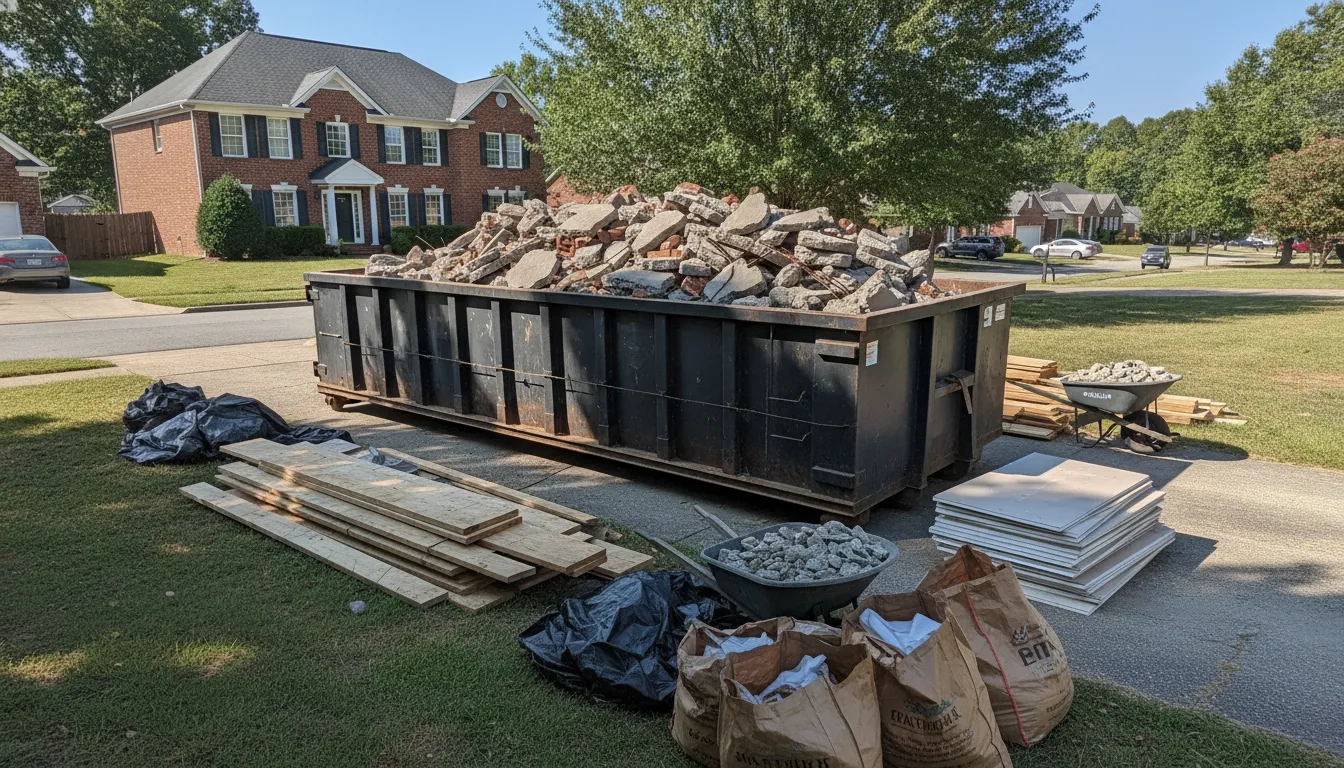
Concrete, brick, and broken masonry are not ordinary renovation waste. A small pile can become extremely heavy before it fills a container, and choosing the wrong dumpster may lead to overloading, extra handling, or a rejected load. Nashville homeowners and contractors need a disposal plan that matches both the material and the job site.
A concrete dumpster rental is the practical choice when you need to remove broken concrete, brick, asphalt, stone, block, tile, or similar construction rubble in Nashville. Dumpsters On Demand accepts these heavy materials and offers a driveway-friendly 15-yard container sized for local residential and contractor projects.
The right container makes the rest of the project easier, from loading and placement to understanding weight limits and permitted materials. Start by looking at why heavy debris requires a specialized dumpster, then use that information to choose a safe, efficient disposal approach.
Why Concrete Disposal Requires a Specialized Dumpster
Concrete is far heavier than ordinary household waste, so a dumpster that looks only partly full can reach its weight limit quickly. A specialized heavy-debris container helps keep the load manageable and separate from lighter trash. Unlike companies that prohibit concrete, Dumpsters On Demand accepts concrete, brick, and other construction rubble.
Concrete weighs about 150 pounds per cubic foot. That density changes the planning equation: filling a container by volume does not mean you can safely use all of its available space. A small amount of broken slab, block, or masonry can add thousands of pounds before the dumpster appears full.
Standard dumpsters are often intended for lighter renovation debris, such as flooring, drywall, furniture, and household cleanouts. Mixing those materials with concrete can create two problems. The container may reach its legal or operational weight limit early, and the load may be harder to handle safely during pickup and disposal. Keeping heavy material in a container designed for it gives you a clearer way to estimate the job and avoid an overloaded box.
Why competitor policies matter
Not every dumpster provider accepts heavy debris. Red Dog Dumpsters, for example, bans concrete, which can leave homeowners and contractors searching for another disposal option after demolition has already begun. Always confirm the accepted-material policy before booking. A provider’s general promise to handle construction waste does not automatically mean concrete, brick, asphalt, or block are allowed.
A local option for heavy construction debris
Dumpsters On Demand accepts concrete, brick, and heavy construction rubble throughout Nashville and Middle Tennessee. The company can help match the container to the material and project rather than treating dense debris like ordinary trash. Review the concrete dumpster rental options before scheduling, especially if your project includes a driveway, patio, foundation, masonry wall, or other demolition work.
For the most accurate recommendation, identify the material, approximate amount, and placement area when you request service. That information helps prevent an undersized container, an unexpected weight issue, or a last-minute refusal at delivery.
Choosing the Right Dumpster Size for Concrete and Brick
For most residential concrete and brick projects, a 15-yard dumpster offers the best balance of capacity, weight control, and driveway access. It provides 50% more room than a standard 10-yard container without the larger footprint of a 20-yard unit. While including up to 2 tons of material in the base price.
Size matters more with concrete than it does with household junk. Concrete and brick can fill a container quickly and add substantial weight before the dumpster looks full. Choosing a larger box simply because it holds more volume may create unnecessary space, placement, or weight-management concerns. The right choice depends on how much material you are removing and whether the debris is concentrated in one demolition area or spread across a larger project.
| Dumpster size | Capacity | Best use for concrete |
|---|---|---|
| 10-yard | Smallest standard option, with less volume than a 15-yard container | Small patches, a short walkway, a limited brick removal, or a single-room project |
| 15-yard | 12’L x 8’W x 4.5’H, with 50% more capacity than a standard 10-yard dumpster | Medium residential driveways, patios, walkways, masonry repair, and mixed concrete or brick projects |
| 20-yard | Larger volume than the 15-yard option, with size and weight planning more important | Large demolition areas or projects producing more debris than a 15-yard container can reasonably hold |
Why the 15-yard size works for many Nashville projects
The 15-yard dumpster is often the practical middle ground. A 10-yard container may work for a small repair, but it can run out of room when a project includes broken slab, brick, block, or asphalt. A 20-yard container provides more volume, but the added capacity does not remove the need to manage heavy material carefully.
At 12 feet long, 8 feet wide, and 4.5 feet high, the 15-yard container is designed to remain driveway-friendly while providing useful working capacity. The base price includes 2 tons, and Nashville Metro overage is $125 per ton. That makes it easier to plan a concrete dumpster rental around the actual material load instead of paying for unused space.
For a closer look at placement and availability, see the 15-yard dumpster Nashville service details. If your project involves a larger demolition area, describe the material and estimated volume before booking so the team can help confirm the most suitable size.
What Does a Concrete Dumpster Rental Cost in Nashville?
A concrete dumpster rental in Nashville starts at $349 for one day with Dumpsters On Demand. The 15-yard container includes up to 2 tons of material, and Nashville Metro overage is $125 per additional ton. Longer rental periods cost more, but transparent package pricing makes your disposal budget easier to plan.
Dumpsters On Demand offers four straightforward rental periods for its driveway-friendly 15-yard dumpster:
- 1 day: $349
- 3 days: $375
- 7 days: $399
- 14 days: $525
Every listed price includes 2 tons, which gives many homeowners and smaller contractors a clear starting point for projects such as patio removal. Sidewalk repair, masonry cleanup, or a partial driveway demolition. If your load exceeds that allowance, the Nashville Metro overage rate is $125 per ton. Keeping concrete, brick, and other heavy masonry together helps you estimate the load more accurately before delivery.
What changes the final price?
The rental period and total weight are the main cost considerations. A one-day rental may be enough for a focused demolition, while a seven- or fourteen-day option can make sense when concrete removal is part of a larger renovation. The container size, delivery location, material type, and amount of debris also matter, so describe your project honestly when you request a quote.
National pricing guides commonly cite a broad range of about $300 to $795 for concrete dumpster service, depending on location and project details. That range is useful for comparison, but local pricing is more relevant to a Nashville job. You can review the current dumpster rental pricing before booking, with the included tonnage and local overage rate clearly stated instead of discovering a broker’s add-on charges later.
For an accurate estimate, note the material, approximate volume, rental timeframe, and whether the container will sit on private property or a street. That information helps match the right rental period to your project without paying for unnecessary time.
What You Can and Cannot Put in a Heavy Debris Dumpster
A heavy debris dumpster is designed for dense construction materials that ordinary containers may not safely handle. In Nashville, you can load broken concrete, brick, asphalt, stone, block, tile, rock, dirt, and other masonry materials. Keep dirt separate from concrete, and leave hazardous or restricted items out of the container.
Heavy construction projects often produce several types of debris at once. A properly planned load helps the material reach the right recycling or disposal stream and reduces the risk of rejected service, unsafe loading, or unexpected weight charges.
Materials accepted in a heavy debris dumpster
Dumpsters On Demand accepts the dense materials commonly produced by demolition, hardscaping, remodeling, and concrete removal projects, including:
- Broken concrete and concrete chunks
- Bricks and cinder blocks
- Asphalt and paving material
- Natural stone and landscaping rock
- Tile and ceramic masonry materials
- Clean dirt and soil
- Rock, gravel, and similar inert debris
For guidance on separating, loading, and handling this material, review our guide to proper concrete disposal methods. If your project includes mixed household waste along with concrete, ask before loading so the container is used appropriately.
What cannot go in the container
Heavy-duty does not mean unlimited. Do not place hazardous waste, chemicals, tires, appliances, or electronics in a heavy debris dumpster. These items require separate handling because they may create environmental, safety, or recycling problems. Paints, fuels, solvents, batteries, and other potentially hazardous materials should be kept out as well unless a disposal professional has specifically approved them.
Separate dirt from concrete
Keep dirt and concrete in separate loads whenever possible. Separating these materials supports proper recycling and helps prevent otherwise usable concrete from being mixed with soil. It also gives the hauler a clearer picture of what is in the container, which matters when dense debris approaches the safe weight limit. When in doubt, describe the material and approximate volume before delivery so the right container and loading plan can be confirmed.
Tips for Efficient Concrete Disposal in Nashville
Efficient concrete disposal starts with choosing the right container and preparing the load before delivery. Break oversized pieces, keep heavy materials organized, use a private driveway when possible, and schedule delivery around your work. For most residential projects, a three- to seven-day rental gives you enough time without leaving the container onsite unnecessarily.
Concrete is dense, so loading it thoughtfully helps you use the available space while keeping the project predictable. Follow these steps before and during your Nashville cleanup:
- Break large concrete chunks before loading. Use a sledgehammer or suitable equipment to reduce oversized pieces into manageable sections. Smaller chunks settle more evenly and leave fewer unusable gaps inside the container. Do not fill above the designated level, and ask the rental provider about any material-specific loading limits before delivery.
- Keep concrete separate from mixed debris. Do not combine concrete with household trash, wood, or unrelated construction waste unless your provider confirms that mix is allowed. Separating the load supports proper handling and helps you avoid extra charges associated with contamination, sorting, or unexpected weight. Dirt should also be separated from concrete when recycling requirements call for it.
- Place the dumpster on your driveway whenever possible. A driveway-friendly placement keeps the container off public roads and usually avoids the need for a street-placement permit. Protect the surface by discussing placement with the hauler in advance, and make sure there is a clear path for the delivery truck.
- Schedule delivery when most of the debris is ready. Having demolition material staged before the container arrives lets you load efficiently and reduces the time you pay for an empty rental. Leave enough room for safe access, keep workers clear of the truck, and do not schedule delivery before the site can receive the container.
- Choose three to seven days for most residential jobs. A three-day rental can work well for a concentrated demolition project. A seven-day rental gives homeowners more flexibility when concrete removal depends on multiple work sessions, weather, or phased repairs. If the dumpster must sit on a Nashville Metro street, confirm permit requirements before delivery, because public-street placement may require approval.
These preparations make a 15-yard dumpster in Nashville easier to load, safer to access, and better suited to a driveway-based concrete project.
Frequently Asked Questions
Can you put concrete in a dumpster?
Yes, but concrete belongs in a heavy-debris dumpster rather than a general household-cleanout container. Dumpsters On Demand accepts broken concrete, brick, asphalt, stone, block, tile, rock, dirt, and other masonry materials. Tell the rental team what you are loading so the container and disposal plan match the material.
Are there weight limits for concrete dumpster rentals?
Yes. Concrete and masonry can reach a container’s weight limit before the dumpster looks full, so heavy loads require careful planning. A 15-yard driveway-friendly dumpster is often a practical fit for residential projects, but the final amount depends on the material and job size. Keep dense debris below the fill line and ask about included tonnage before loading.
What items are prohibited from a Nashville concrete dumpster?
Do not place hazardous waste, chemicals, tires, or appliances in a concrete dumpster. These items require different handling and disposal methods. If your project includes mixed debris, separate restricted materials before the container arrives and contact the rental team if you are unsure whether an item is accepted.
Do I need a permit for a dumpster in Nashville?
A dumpster placed on private property, such as a driveway, generally does not require a street-use permit. A container placed on a public street may require approval from Nashville Metro. Confirm the placement rules before delivery, especially when the driveway is unavailable or the container must occupy a travel lane or public parking area.
Can I mix dirt with concrete in a dumpster?
Keep dirt separate from concrete when possible. Separating the materials supports proper recycling and helps the disposal provider identify the load accurately. If your project includes soil, broken slab, brick, and other debris, describe the material mix when booking so the team can recommend the most efficient loading plan.
Ready to Schedule Concrete Disposal?
A clear disposal plan can help keep heavy debris contained and make your Nashville project easier to manage. Book your concrete dumpster rental online, or call (615) 971-3668 to schedule delivery. Dumpsters On Demand can help you choose a practical option for concrete, brick, and other heavy construction debris.