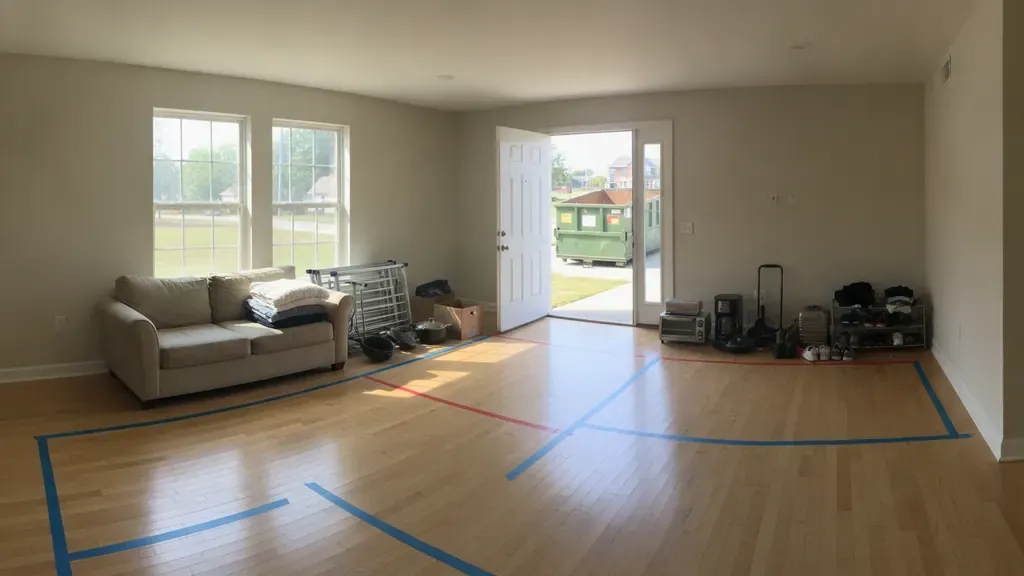
Eviction cleanout services help Nashville landlords and property managers move from a cleared rental unit to the next practical step: inspection, maintenance, listing, or re-rental. The work is more than removing a few bags of trash. A typical cleanout may involve abandoned furniture, appliances, household contents, damaged materials, access problems, and a short turnover window. A repeatable process helps you protect the property, document what was found, choose the right labor plan, and send each material to an appropriate disposal route.
Book eviction cleanout service online or call the Tennessee office at (615) 971-3668 to discuss a Nashville or Middle Tennessee property.
This guide is an operational checklist, not legal advice. Before scheduling removal, confirm with your attorney, court process, lease policy, or property-management policy that the unit is ready for cleanout and that any required handling of personal property has been completed.
What are eviction cleanout services?
Eviction cleanout services remove unwanted furniture, appliances, bagged trash, household contents, and ordinary debris from a rental after the property manager has confirmed that the unit can be cleared. Full-service removal uses a crew to perform the lifting, loading, hauling, and disposal work. A self-service dumpster gives your team, maintenance staff, or a contractor a container to load during an agreed rental period.
The best option depends on the unit’s condition, the amount of material, available labor, stairs or elevators, loading distance, and how quickly the space must be ready. Some property managers use both services. A crew can remove heavy or awkward items while a driveway-friendly roll-off handles additional material from repairs or a larger turnover.
For Nashville property managers, the cleanout boundary should be clear before anyone arrives. Decide whether the assignment covers one unit, a garage, storage area, exterior items, a clubhouse, or multiple addresses. Clear boundaries reduce surprises and help the provider give a more useful estimate or recommend a better container plan.
Step 1: Confirm the unit is ready for physical cleanout
The first step is not loading. It is confirming that the property manager has completed the internal approval process for removal. A service provider can remove material, but the manager or owner must decide when the unit is ready and what property should be retained.
- Confirm the release: Verify that the unit has been cleared for the cleanout under your organization’s process. Do not rely on a verbal assumption from someone who is not authorized to approve removal.
- Identify retained items: Mark owner furnishings, appliances that will stay, maintenance supplies, documents, keys, access devices, and anything designated for storage or review.
- Control access: Arrange keys, lockbox details, gate codes, parking instructions, elevator reservations, and an onsite contact for the crew or loading team.
- Protect sensitive information: Separate mail, financial records, medical paperwork, identification, electronics, and other items that should not go directly into a disposal load.
- Set the work boundary: Note rooms, closets, patios, garages, storage units, and exterior areas included in the assignment.
Do not begin with the assumption that every item left inside is ordinary trash. A short sorting pause can prevent an important document, owner item, or questionable material from being loaded by mistake.
Step 2: Photograph and document the starting condition
Take timestamped photos or follow the documentation system your company already uses before the cleanout begins. Capture each room, closets, appliances, walls, floors, fixtures, exterior areas, and the access path. The purpose is to create a practical before record for the property file and to help the removal provider understand the scope.
Use a simple room-by-room checklist:
- Record the room: Name the area and note the approximate amount of material present.
- List large items: Identify sofas, beds, dressers, tables, appliances, shelving, televisions, and other heavy pieces.
- Note access: Record stairs, elevators, narrow hallways, long walks, gates, low branches, and loading restrictions.
- Flag damage or hazards: Note broken glass, exposed nails, wet materials, strong odors, pests, unstable furniture, or blocked paths.
- Separate decisions: Mark what should be removed, stored, donated, recycled, or reviewed before disposal.
Step 3: Sort the contents before loading
Sorting does not need to become a long salvage project. It does need to be deliberate. Create clearly separated areas for removal, retention, donation or reuse, recycling, and items requiring a different disposal route. If the unit is small, use labeled corners or a written room list instead of moving everything repeatedly.
Common eviction cleanout materials
- Furniture such as couches, chairs, tables, dressers, bed frames, and shelving
- Mattresses and box springs, subject to the selected provider’s acceptance rules
- Bagged household trash, clothing, boxes, and ordinary household contents
- Small appliances and larger appliances that the provider has confirmed in advance
- Cabinets, flooring, drywall, trim, and other non-hazardous repair debris
- Outdoor furniture, storage-room items, and ordinary property-maintenance debris
Dumpsters On Demand offers both full-service junk removal and self-service dumpster rental. Its service pages describe full-service junk removal for projects where a crew handles the lifting and hauling, while a roll-off is designed for a property team or contractor to load.
Items to hold back for confirmation
Set aside paint, fuel, solvents, pesticides, batteries, chemicals, propane cylinders, refrigerants, medical waste, unknown liquids, and anything leaking or unlabeled. Do not place a questionable item in a dumpster just because it is small. The EPA explains that household hazardous waste can include products that are ignitable, reactive, corrosive, or toxic, including some paints, cleaners, oils, batteries, and pesticides. Its household hazardous waste guidance recommends following label directions and contacting the local environmental, health, or solid-waste agency for disposal options.
When you need a decision on an uncertain item, photograph the label and ask the provider or local disposal authority before loading. Do not mix chemicals, pour liquids into drains, or transfer unknown contents into another container.
Step 4: Choose full-service removal, a dumpster, or both
The right service model is a labor decision as much as a disposal decision. Use the comparison below as a starting point, then confirm the material list and access conditions.
| Option | Best fit | Property manager handles |
|---|---|---|
| Full-service junk removal | A unit with heavy furniture, stairs, limited onsite labor, or a tight turnover schedule | Define the scope, provide access, identify retained items, and approve the quote |
| 15-yard dumpster rental | A team or contractor can load a moderate amount of furniture, household contents, or repair debris | Sort, carry, load, distribute weight, and keep prohibited materials out |
| Both services | A cleanout includes heavy lifting plus a larger volume of material or repair debris | Separate the labor scope from the container scope and coordinate access |
A self-service container is not a substitute for labor. It fits when maintenance staff or a contractor can load it. If your team lacks that labor, a full-service crew may reduce internal work hours and vehicle trips.
Dumpsters On Demand focuses on a driveway-friendly 15-yard roll-off. Share volume, weight, access, and placement details before choosing it. Furniture takes space, while appliances, tile, concrete, brick, and other dense materials can create a weight concern before the container looks full.
Step 5: Plan labor, access, and safe loading
Make the loading route part of the cleanout plan. A unit on the third floor with no elevator is a different job from a ground-floor unit beside a driveway. Note the distance from the door to the truck, the number of stairs, elevator rules, hallway protection requirements, parking limits, and the time window for loading.
- Clear the route: Remove loose obstacles from hallways, sidewalks, driveways, and doorways before the crew or maintenance team arrives.
- Use proper lifting help: Do not ask one person to move a heavy appliance or an unstable piece of furniture alone. Use trained help and appropriate equipment for the load.
- Protect shared areas: Follow the property’s rules for elevators, floors, walls, doors, and common areas.
- Keep people away from active loading: Establish a simple boundary around the work zone, especially when furniture is being carried through a common area.
- Load evenly: Place heavier items low and distribute weight instead of stacking everything at one end.
- Keep material inside the container: Do not overfill, hang items over the sides, or climb into a loaded dumpster.
If the container will sit in a driveway or another private area, confirm that the surface is firm and level and that the truck has a clear approach. If public access, a street, a sidewalk, or a shared parking area is involved, check the property’s approval process and current local requirements before delivery.
Step 6: Match disposal routes to the material
One private dumpster is not automatically the right route for every item in a rental property. Ordinary household contents and common repair debris may fit a planned service, while hazardous products, certain electronics, refrigerants, tires, and other materials may need separate handling.
Nashville’s official bulky item collection guidance lists local options and limits for residents, including specific information for mattresses, scrap metal, furniture, and small amounts of construction and demolition waste. The page also directs readers to larger construction and demolition disposal or recycling locations. Property managers should confirm whether a listed option applies to the property and load rather than assuming a residential limit covers a commercial or multi-unit cleanout.
For renovation or repair debris, the city’s Construction and Demolition Recycling Guide can help identify material-specific recycling and disposal options. Tennessee’s solid-waste regulations page is another official reference point when a project raises a compliance question. These resources are useful for planning, but current facility rules and acceptance policies should be confirmed before delivery.
Dumpsters On Demand accepts concrete, brick, and heavy construction rubble, subject to the material, weight, and service plan. Tell the team about dense materials before booking. Do not combine a heavy repair load with a general household cleanout without confirming that the planned container and disposal route are appropriate.
Step 7: Review the rental period and budget
Property managers often want a quick turnover, but the shortest rental period is not always the lowest-friction option. A dumpster project can pause for maintenance, inspection, vendor scheduling, or a second sorting pass. Choose a period that matches the work and confirm the pickup plan before the container arrives.
Dumpsters On Demand’s standard 15-yard Nashville pricing is currently listed as follows:
| Rental period | Published rate |
|---|---|
| 1 day | $349 |
| 3 days | $375 |
| 7 days | $399 |
| 14 days | $525 |
The standard rates include 2 tons, and the Nashville Metro overage rate is $125 per additional ton. Confirm the total for the exact address, rental period, material mix, and any special access conditions before booking. Full-service junk removal is quoted differently because labor, volume, access, and disposal needs vary from property to property.
Planning a unit turnover now? Review Nashville dumpster rental options for a self-service project, or call (615) 971-3668 to discuss whether a crew, a container, or a combination makes more sense.
Step 8: Complete the final sweep and turnover handoff
Do not treat the last load as the end of the assignment. Walk the unit after removal and compare it with the starting photos and scope. Check closets, cabinets, balconies, patios, storage areas, behind doors, and the path used for loading.
- Confirm that retained appliances, fixtures, keys, documents, and owner items remain.
- Look for nails, broken glass, leaks, loose debris, or materials left in an unsafe location.
- Photograph the cleared rooms and any condition that needs maintenance attention.
- Note items that were excluded, deferred, donated, recycled, or sent to a separate facility.
- Record the pickup or completion date and attach the provider’s invoice or service confirmation.
- Send the unit to the next internal owner, such as maintenance, inspection, leasing, or renovation coordination.
This closeout step creates a useful handoff and keeps the cleanout separate from repairs. A removal company can clear material, but it should not be assumed to perform painting, deep cleaning, pest treatment, mold remediation, electrical work, plumbing, or other property repairs unless those services are explicitly included in a separate agreement.
How can property managers make the next eviction cleanout easier?
After the first project, save the details that will help with future units. Keep a property profile with parking instructions, gate or elevator rules, typical room layouts, preferred access windows, container placement notes, and the names of approved contacts. Create a standard photo request for onsite staff so the provider receives the same information every time.
For broader apartment turnover planning, review the Nashville apartment cleanout guide. For construction, repair, or exterior material that is separate from household contents, the Nashville debris removal service page is a useful starting point.
Frequently asked questions about eviction cleanout services
When should a property manager schedule an eviction cleanout?
Schedule the cleanout after the property manager confirms that the unit is ready for physical removal and after any internal or professional legal review required by the owner’s process. Share the desired turnover date, access details, photos, and material list early enough to compare labor and container options.
Is a dumpster or full-service crew better for an eviction cleanout?
A full-service crew is usually the better starting point when the unit contains heavy furniture, appliances, stairs, or a limited onsite labor team. A 15-yard dumpster can be a practical fit when maintenance staff or a contractor can load the container. Some larger or mixed projects use both, with a crew handling lifting and a container holding additional debris.
What items should stay out of an eviction cleanout dumpster?
Keep paint, fuel, solvents, pesticides, batteries, chemicals, unknown liquids, leaking containers, medical waste, and other questionable materials out until the provider or local disposal authority confirms the route. The EPA household hazardous waste guidance is a useful starting point, but the correct local option depends on the material and current acceptance rules.
Can an eviction cleanout include appliances and furniture?
Furniture and many appliances are common cleanout materials, but confirm acceptance before service. Refrigerators, air conditioners, televisions, and other appliances may require specific handling. Provide a list or photos so the removal team can plan labor, access, and disposal instead of discovering a special item during loading.
What should I send a cleanout company before requesting a quote?
Send the property address, rooms included, photos, largest items, stairs or elevator information, loading distance, parking or gate instructions, desired completion date, and any concrete, brick, chemicals, appliances, or other unusual materials. That information helps the provider distinguish a full-service cleanout from a self-service dumpster project and gives you a clearer comparison.
Build a repeatable Nashville cleanout plan
A successful eviction cleanout starts before the first item is carried out. Confirm the unit’s release, document the starting condition, separate retained and questionable items, choose the labor model, plan access, match materials to the correct disposal route, and complete a final sweep. For Nashville and Middle Tennessee property managers, Dumpsters On Demand can help compare full-service junk removal with a driveway-friendly 15-yard roll-off.
Start your online cleanout booking or call (615) 971-3668 to discuss the property, material list, access, and preferred timing.