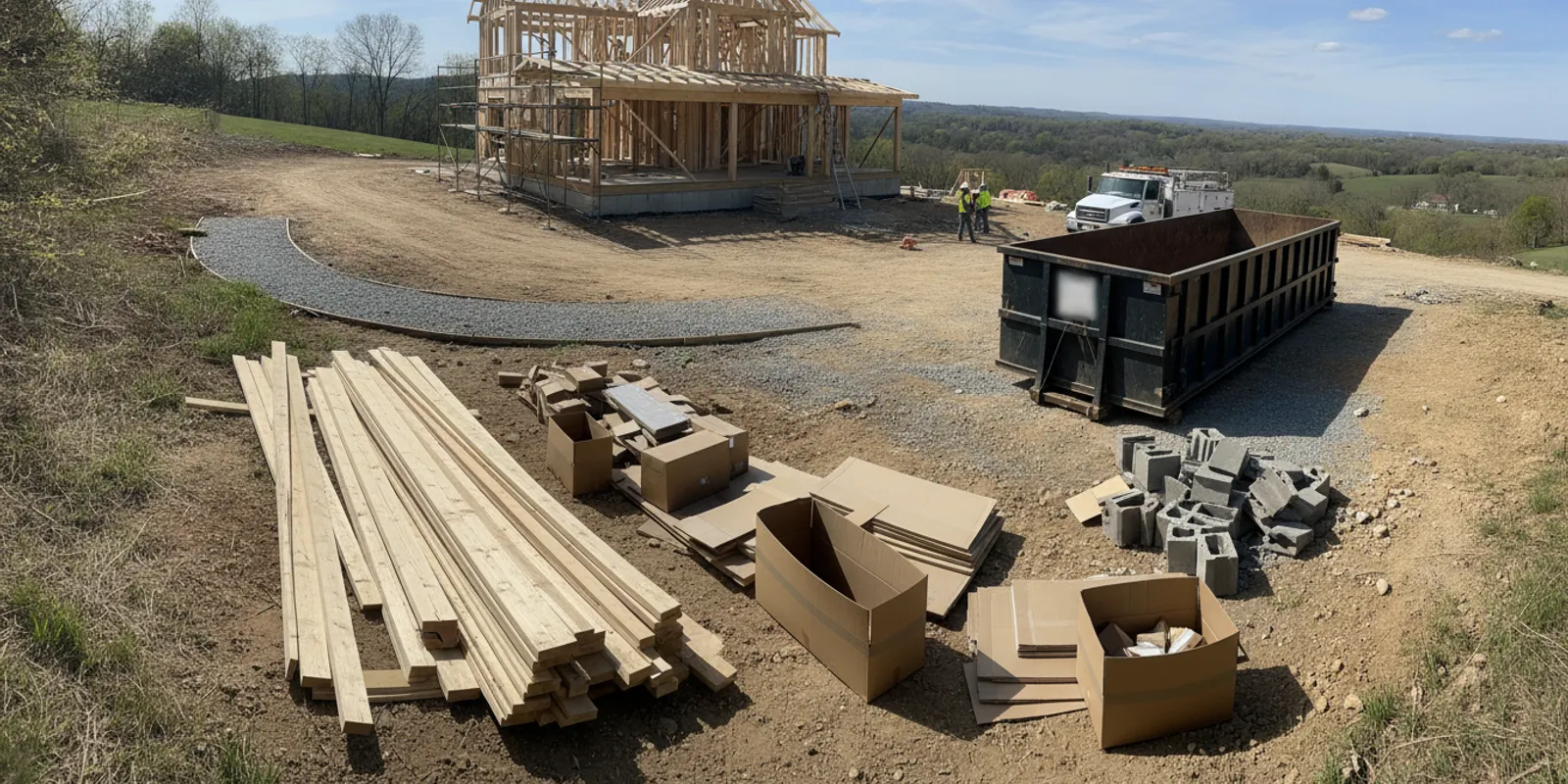
When a renovation or building project creates a pile of offcuts, packaging, and broken materials, the first question is often: what is construction debris? It is the material left over from building, remodeling, repair, and demolition work. Knowing what is in the pile helps you choose a sensible disposal plan before debris blocks work areas or creates safety hazards.
Ask about disposal options for your project
Construction debris is not one uniform waste stream. A kitchen remodel may produce cabinets, tile, drywall, and packaging. A roof replacement produces shingles and underlayment. A small addition can leave lumber, siding, and concrete. Some materials may be reusable or recyclable, while others need a disposal route that accepts them. Separate the materials early, and confirm rules with your hauler or receiving facility rather than assuming every item can go into one container.
What is construction debris, and what materials does it include?
The term generally covers discarded materials generated by construction, renovation, and demolition. The U.S. Environmental Protection Agency describes construction and demolition materials as debris generated during building construction, renovation, and demolition. The exact mix depends on the project, but common examples include:
- Wood: framing cutoffs, trim, doors, cabinets, and untreated lumber.
- Drywall and plaster: broken panels, scraps, and related interior materials.
- Roofing: shingles, felt, flashing, and other removed roof components.
- Masonry: brick, block, tile, concrete, and mortar.
- Metals: pipe, wire, ductwork, fasteners, and metal framing.
- Flooring and finishes: carpet, underlayment, laminate, tile, and trim.
- Packaging: cardboard, plastic wrap, pallets, and protective materials from new products.
- Fixtures and components: sinks, cabinets, windows, doors, and other items removed during a renovation.
Not every item from a job site belongs in a general debris load. Paint, solvents, fuel, certain batteries, chemicals, and other hazardous or regulated materials may require special handling. Household trash and food waste are also different from construction debris. Check accepted-material rules before loading; an item that looks ordinary can still have restrictions based on its contents or local facility requirements.
How is construction debris different from household trash?
Household trash usually comes from daily living: food packaging, personal refuse, and routine household discards. Construction debris comes from work on a building or site. It tends to be bulky, heavy, sharp, dusty, and uneven in shape. A container filled with tile or concrete behaves differently from one filled with cardboard and light wood scraps, so weight and material mix matter as much as volume.
Construction and demolition debris is also treated as a distinct waste category by the EPA, rather than being included in municipal solid waste. That distinction is a useful reminder to plan for construction materials specifically. Do not assume a curbside cart, municipal pickup day, or ordinary trash service will accept renovation waste. Review the relevant local service and facility rules before hauling materials away.
For more background, see the EPA’s overview of sustainable management of construction and demolition materials. Its guidance emphasizes that management decisions can include reuse and recycling as well as disposal.
Which materials should you sort before disposal?
Sorting makes a project area safer and helps reveal which disposal route fits. It does not require a complicated system. Start by grouping material types in separate, stable locations and keep walkways clear. If you are working with a contractor, agree on the sorting plan before demolition starts.
| Material group | Common examples | Planning consideration |
|---|---|---|
| Reusable items | Unbroken doors, cabinets, fixtures, usable lumber | Set aside before demolition; protect from weather and damage. |
| Clean recyclable material | Some metals, cardboard, and selected wood or masonry | Ask a receiving facility what it accepts and whether separation is required. |
| Mixed bulky debris | Drywall, flooring, trim, and broken fixtures | Check container acceptance rules and distribute material safely. |
| Heavy inert material | Concrete, brick, block, and tile | Weight may limit how much can be loaded; verify the right option first. |
| Potentially restricted items | Paint, chemicals, fuels, some batteries or treated materials | Do not mix into a general load without explicit acceptance guidance. |
Keep reusable materials separate from waste as soon as they are removed. If a contractor or local organization can use an item, a clean, undamaged piece is easier to assess than one buried under rubble. For recycling, do not rely on a generic label: acceptance varies by material and facility. Nashville’s government information on recycling construction and demolition debris is a useful example of why local rules and available pathways matter.
How do you choose a disposal method?
The best method depends on volume, weight, labor, material restrictions, and how quickly the site needs to be cleared. A small repair may produce only a few items, while a full remodel can generate repeated loads throughout the job. Compare the work involved, not just the container or hauling fee.
| Option | Works well when | What to plan for |
|---|---|---|
| Reuse or donate | Fixtures and building materials remain usable | Sort carefully, check condition, and arrange the recipient before demolition. |
| Material-specific recycling | A facility accepts separated materials | Confirm accepted types, preparation, and delivery requirements. |
| Small-item drop-off | The project has a modest amount and suitable transport | Account for loading, travel, vehicle capacity, and facility hours. |
| Roll-off dumpster | Debris will accumulate over multiple workdays | Choose a size and placement that suit the site; check prohibited materials and weight limits. |
| Full-service removal | You want a crew to load and haul the debris | Describe the pile, access, material mix, and timing when requesting an estimate. |
A dumpster gives a project a designated place to put accepted debris as work proceeds. It can be a practical fit when there is enough material to justify a container and the crew can load it safely. A removal crew may be more suitable when you cannot or do not want to handle the lifting, or when the debris is already piled and ready to go. Dumpsters On Demand offers dumpster rental information and junk removal options; compare the service details with your job’s needs.
How can you estimate the amount of debris?
Start with the work scope rather than a guess based on room size. List what will be removed, then consider whether each item is bulky, compact, or unusually heavy. Cabinetry and trim take space; concrete and tile can reach weight limits before a container looks full. If the project is uncertain, describe the materials and expected stages when asking for advice.
- Write down the tasks. Separate demolition, replacement, and packaging waste. A flooring replacement, for example, may generate old flooring, underlayment, trim, and boxes for new materials.
- Identify the heaviest materials. Flag concrete, brick, tile, soil, and similar dense materials. Do not assume they can be mixed without limit.
- Account for bulky pieces. Doors, cabinets, and long boards may occupy space even when they are not heavy.
- Plan for the sequence. If debris arrives in stages, consider whether a container can remain in place or whether separate removal trips make more sense.
- Confirm limits before loading. Ask about acceptable materials, fill level, weight restrictions, and pickup arrangements.
For a roll-off container, keep debris below the fill line and distribute it evenly. Break down items only when safe and appropriate. Do not climb into a loaded container or throw material from a height if doing so risks injury. The guide to loading a dumpster safely covers practical handling considerations.
What should you check before work begins?
A few early checks can prevent delays once the crew is ready to remove materials. Confirm where debris will be staged, how the service vehicle will access the site, and whether a container can be placed on the property. If it may sit in a public right-of-way, ask the relevant local authority whether a permit or other approval is required. Requirements can vary by location and placement, so do not assume one city’s process applies everywhere.
- Confirm the material list and any prohibited or restricted items.
- Choose a level placement area with workable access and adequate clearance.
- Protect walkways and keep debris away from doors, drains, and vehicle paths.
- Separate sharp, dusty, or heavy material so it can be handled deliberately.
- Ask how delivery, pickup, rental duration, and extensions are handled.
- Clarify whether the quoted service includes disposal and what could create additional charges.
If the job involves older building materials or substances that may be hazardous, pause before disturbing them and seek qualified guidance. This article is general planning information, not a determination that a particular material is safe to remove or acceptable in a container.
How can you keep a construction debris area safer?
Good debris management starts with a clear work zone. Remove nails or sharp edges from items when safe to do so, keep piles stable, and avoid stacking materials where they can slide into a path. Wear suitable protective equipment for the task, including eye, hand, and foot protection as appropriate. Follow the project’s safety plan and the tool manufacturer’s instructions.
Keep the container area accessible and do not leave loose debris around the outside. Load heavier items in a controlled manner and avoid concentrating weight in one spot. Never place people, animals, or equipment inside a container during delivery or pickup. If you are unsure whether a material is safe to handle or accepted for disposal, stop and ask before proceeding.
What is the most practical next step?
Make a short inventory, separate anything reusable, and identify heavy or potentially restricted materials. Then compare the work and handling involved in drop-off, a dumpster, and a removal crew. This turns the question “what is construction debris?” into a project plan: what you have, what needs special attention, and how it will leave the site.
Dumpsters On Demand serves customers in Middle Tennessee and South-Central Kentucky. For a project-specific estimate or to ask about disposal options, use the contact page. For related planning, read the construction debris disposal guide and the Nashville debris removal information.
Construction plans also benefit from a written handoff: note what remains, what has been separated, and which items still need an acceptance check. That prevents a later crew or helper from treating an uncertain pile as ordinary waste.
Request help planning your debris removal
Frequently asked questions
Is construction debris the same as demolition debris?
They overlap. Construction and demolition debris commonly refers to material generated by building construction, renovation, and demolition. The exact mix varies by project and local acceptance rules.
Can all construction materials go in a dumpster?
No. Acceptance depends on the service and receiving facility. Check first for hazardous, regulated, unusually heavy, or otherwise restricted materials.
Can construction debris be recycled?
Some materials may be reused or recycled, but options depend on material condition and local facilities. Keep possible recyclables separate and verify acceptance before transporting them.
Should I rent a dumpster or hire a removal crew?
A dumpster can suit work that generates debris over time and where you can load it. A removal crew may fit a ready pile or a project where you prefer not to do the lifting. Compare access, material mix, timing, and labor.
With materials identified and local acceptance confirmed, you can keep the work area organized and choose a disposal approach that fits the project.