Placing a roll-off container on a Nashville street without a permit can trigger daily violation fees of $30 or more. This steep penalty often surprises homeowners who assume any curb space is fair game for their renovation cleanup. Knowing where the sidewalk ends and the public right-of-way begins is the first step to a stress-free rental.
Book your Nashville dumpster rental online after confirming the right placement for your project.
A dumpster permit Nashville is required for any roll-off container placed on a public street, sidewalk, or alleyway within the city limits. According to the Metro Nashville Government, you must get this approval before your rental arrives to avoid big fines and project delays. However, you generally do not need a permit if the dumpster sits entirely on your private property, such as a driveway or yard. The standard fee for placing a dumpster in the public right-of-way is $10 per day, not to exceed $2,000, with a $30 per day violation fee if you place a bin without a permit. If the bin blocks a travel lane, a separate lane or street closure permit applies, at $160 for up to five days plus $10 per day after that, with a $480 triple fee when no permit was obtained. Contact the NDOT permits office before delivery to confirm current processing time and requirements for your exact placement.
Navigating city codes can feel like a lot of extra work when you just want to clear out your garage or start a renovation. We want to help you make sense of these local rules so you can focus on your project instead of your paperwork. Knowing exactly When is a dumpster permit required in Nashville? is the best way to stay compliant. The path begins with
Dumpster Permit Nashville: When is a dumpster permit required in Nashville?
The place where you set your bin is the main part of learning local permit rules. Most home jobs in Middle Tennessee happen on private land. But some job sites need to use public space. Knowing which rule applies helps you avoid extra costs or waits. You should always plan your spot before the drop off day.
Public street and sidewalk placement
You must get a permit if you place a dumpster on a public street, sidewalk, or alley. Nashville rules say that any use of the public right-of-way needs a formal permit. This includes any public road within the city limits. The city wants to make sure that bins do not block cars or create risks for people walking.
The city runs these trash permits for waste bins. If your work blocks a lane, you may also need a street closure permit. A trailer or dumpster placed in the public right-of-way costs $10 per day, not to exceed $2,000, with a $30 per day violation fee if the bin is set up without a permit. If the bin blocks a travel lane, a lane or street closure permit instead runs $160 for up to five days plus $10 per day after that, with a $480 triple fee when no permit was obtained.
Ask the NDOT permits office for current processing times before you need the bin. If your work will block a lane for more than seven days, the city may ask for a traffic plan. This plan must be from a licensed engineer. Taking these steps early keeps your work moving.
Private property and driveway use
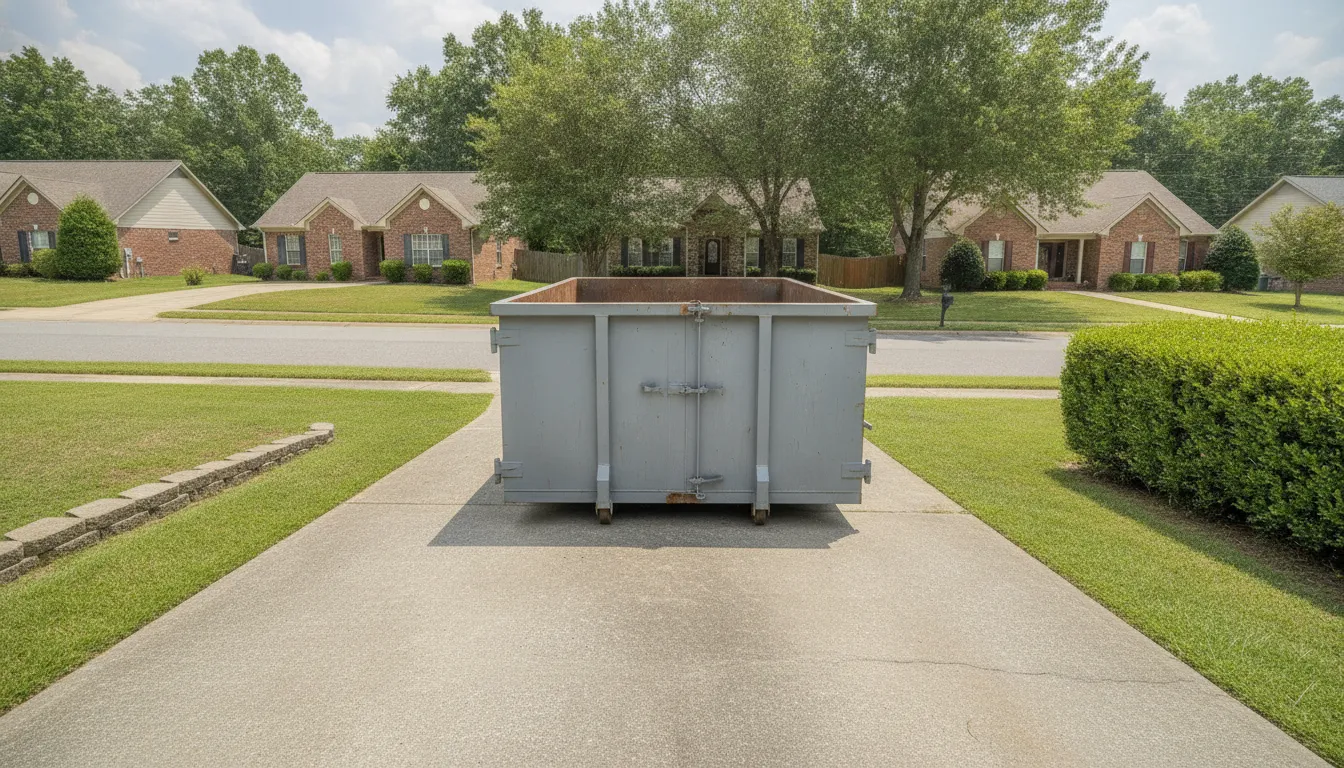
Most home jobs do not need a permit. Placing a dumpster on a private driveway or yard often does not need a city permit in Nashville. This is the simplest path for most folks who need a 15-yard roll-off bin. It saves you time and money on fees. Compare current Nashville dumpster prices to see how affordable driveway placement is.
We use driveway-friendly tools to help protect your land. Our roll-off bins are made to fit in tight spots with less risk of harm. Since the bin sits on your own land, you avoid the need for public right-of-way forms. It is still a good idea to check with your local HOA if you have one. They may have their own rules for how long a bin can stay on your drive. Some areas also have rules about where you can place the bin in your yard.
Checking current local rules
Rules can change based on your set zone or job type. While we can help with tips, it is your job to know the latest zoning laws. We advise all our folks to check with local city offices before they book. This step helps make sure your work stays on track without any legal hitches. You can often find the latest info on the city website or by calling the waste office. Being ready is the best way to start your cleanout or remodel.
Private driveway vs. public right-of-way placement
When you rent a bin, you must decide where to put it. Most people pick their own driveway or a spot on the street. Each choice has its own rules. If you put it on the street, you will likely need a Nashville street placement permit from the city. This helps keep the road safe for cars and people.
Rules for driveway use
Using your own driveway is often the best path. It is close to your work site and keeps the bin off the road. In most cases, you do not need a city permit to put a bin on your own land. We use tools that are easy on your drive to keep your concrete safe. But you should still check with your HOA to see if they have their own rules.
Driveways offer a stable base for the heavy bin. You will not have to worry about blocking your neighbors or traffic. This makes the job much smoother for you and our drivers. If you have a gated drive, make sure we can get in on the day we drop it off.
Public right of way permits
Sometimes, your driveway is too small or too steep. In those cases, you may need to use a public street or alley. Nashville calls this the public right-of-way. You must get a dumpster permit Nashville before we drop the bin off. The city charges a fee for these permits, and you must apply at least two days early. Missing this step can lead to big fines from the city.
Placing a bin on the street also means you must follow safety rules. You might need to use cones or lights so drivers can see the bin at night. If the bin blocks a sidewalk, you must find a way for people to walk past safely. Our team can help you find a spot that meets these city rules.
| feature | private driveway | public street |
|---|---|---|
| city permit needed | usually no | yes |
| permit fees | none | $10 per day (cap $2,000); $160/5 days if a lane is blocked |
| lead time | none | at least 2 days |
| surface type | concrete or asphalt | paved street |
| HOA approval | likely needed | not usually |
How to pick the best spot
Think about how the truck will reach the spot. Drivers need space to back in and drop the bin. Street spots are easy to reach but cost more in fees. Driveway spots are free but might be tight. You should also look for low wires or tree limbs that might block the truck. It is your job to know the local permit rules before the truck arrives.
A good spot will keep your project on track. If the truck cannot drop the bin, you might have to pay a trip fee. Clear the area of cars and toys before we arrive. If you are not sure where the bin should go, give us a call. We can help you pick the best spot for your next big clean up.
How to check permit rules before booking
Planning for your waste bin starts with a quick check of local laws. Before you book a rental, you must know where the bin will sit. The spot you choose changes if you need a permit. In most cases, placing a bin on your own land is simple. But placing it on a street or sidewalk often requires city approval. A small amount of work now can save you from big fines later.
Find the best spot for your bin
The first step is to pick a flat, firm area for the bin. For most home projects, a driveway is the best choice. Our 15-yard bins are built with driveway-friendly gear to keep your property safe. When the bin stays on your land, you usually do not need a dumpster permit in Nashville. This saves you money and time. Always measure your space to make sure the truck can reach it easily.
If your driveway is too small or steep, you may think about using the street. This is where rules get strict. Any bin that sits on a public road or sidewalk needs a permit. Nashville officials track these bins to keep roads safe for cars and people. If you do not have a permit, the city may fine you. These fines can be three times the cost of the permit itself. Checking this first keeps your project on track.
Talk to local city workers
Each town has its own set of rules. You should call the city or county office to ask about their latest laws. Tell them your address and where you want to put the bin. They can tell you if that spot is a public right-of-way. It is better to ask a professional than to guess. You can find more tips on our dumpster rental service page to help you get ready. We can guide you on how to talk to these offices.
Wait times for city papers can vary. Most city offices ask for at least two days to process a request. If your project is large, you might need more time. Do not wait until the day of your booking to check the laws. By then, it may be too late to get the right forms. Start this process a week before you need the bin. This gives you a cushion for any delays or questions.
Book Your Nashville Dumpster Online once you have confirmed the right placement for your bin.
- Pick your bin spot. Choose a flat area like a driveway or a private yard. This helps you avoid extra fees and city paperwork.
- Check for public land. See if the spot is on a public street, alley, or sidewalk. If it is, you will likely need to get a permit.
- Call the city office. Speak with the Nashville Waste Services Department or your local town hall. Ask about the “right-of-way” rules for your street.
- Ask about fees. Find out the current cost for a short-term right-of-way permit. In Nashville, a trailer or dumpster permit costs $10 per day, not to exceed $2,000, with a $30 per day violation fee.
- File your request early. Send in your forms at least two days before your work starts. This gives the city time to review your plan.
- Get it in writing. Always keep a copy of your approved permit. You should have it ready to show to city workers if they stop by.
- Tell your driver. Give your permit details to us when you book. We need to know where the bin goes and if the city says it is okay.
Keeping a copy of your permit is a smart move. If a city worker asks to see it, you can show it right away. This avoids stops in your work and keeps neighbors happy. Many people forget to keep the paper on site, which can lead to trouble. Put a copy in your truck or tape it to a door near the project. This small step ensures your junk removal goes smooth and fast.
Once you have your permit and your spot, you are ready to start. Our team can help you pick the right bin size for your debris. We want to make sure your project is as easy as it can be. By following these steps, you can focus on your work instead of worrying about fines. Safe and legal placement is the best way to get the job done right.
How to prepare the placement area
Before your bin arrives, you must pick a safe spot for it to sit. A good spot makes the drop off easy. It also keeps your home safe. You should check for low wires, tree limbs, or roof edges that could block the truck. The truck needs a clear path to drop the bin and pick it up later.
Choose a flat and clear spot
The best place for a dumpster is a hard, flat surface like a paved driveway or a parking lot. A level spot keeps the bin from sliding or tipping as you fill it. You should make sure there is enough room for the truck to back into place without hitting any walls or fences. Most trucks need about 20 to 25 feet of height to raise the bin during a drop.
You also need to think about the space around the bin once it is set down. You will need a few feet of room on all sides to walk and toss in your waste. If you are knowing local permit rules for a big project, planning your layout early saves time. A clear path for your crew will make the whole cleanup go much faster.
Protect your driveway and property
Heavy steel bins can sometimes mark or dent soft surfaces. We use driveway-friendly gear to help keep your home in good shape. But you can take extra steps to be safe. Placing large plywood boards on the ground before we arrive can give the bin a soft place to rest. This helps spread the weight and protects your asphalt or concrete from scratches.
You also need to know if your spot needs a Nashville street placement permit or other papers. In most cases, placing a bin on a private driveway does not need a city permit. But if the bin must sit on a public street or sidewalk, you will need to get a permit from the city first. You should check these rules at least two days before your rental starts.
Plan for safe loading
Once the bin is in place, you should load it in a flat way to keep it steady. Start with heavy items at the bottom and spread them out across the floor. This keeps the bin from getting too heavy on one side, which can make it hard to haul away. You should never fill the bin past the top rail because loose debris can fall out during transport.
Lastly, be sure to keep out any items that are not allowed. Toxic waste, tires, and wet paint are common things that cannot go in a standard bin. These items can leak and damage the ground or the truck. Keeping your waste safe and tidy helps us give the best help for your home or job site.
Common dumpster permit and placement mistakes
Many people run into delays because they do not plan for their dumpster delivery. Avoiding simple errors can save you time and money. Here are the most frequent mistakes made during the Nashville street placement permit process and on delivery day.
Public versus private property
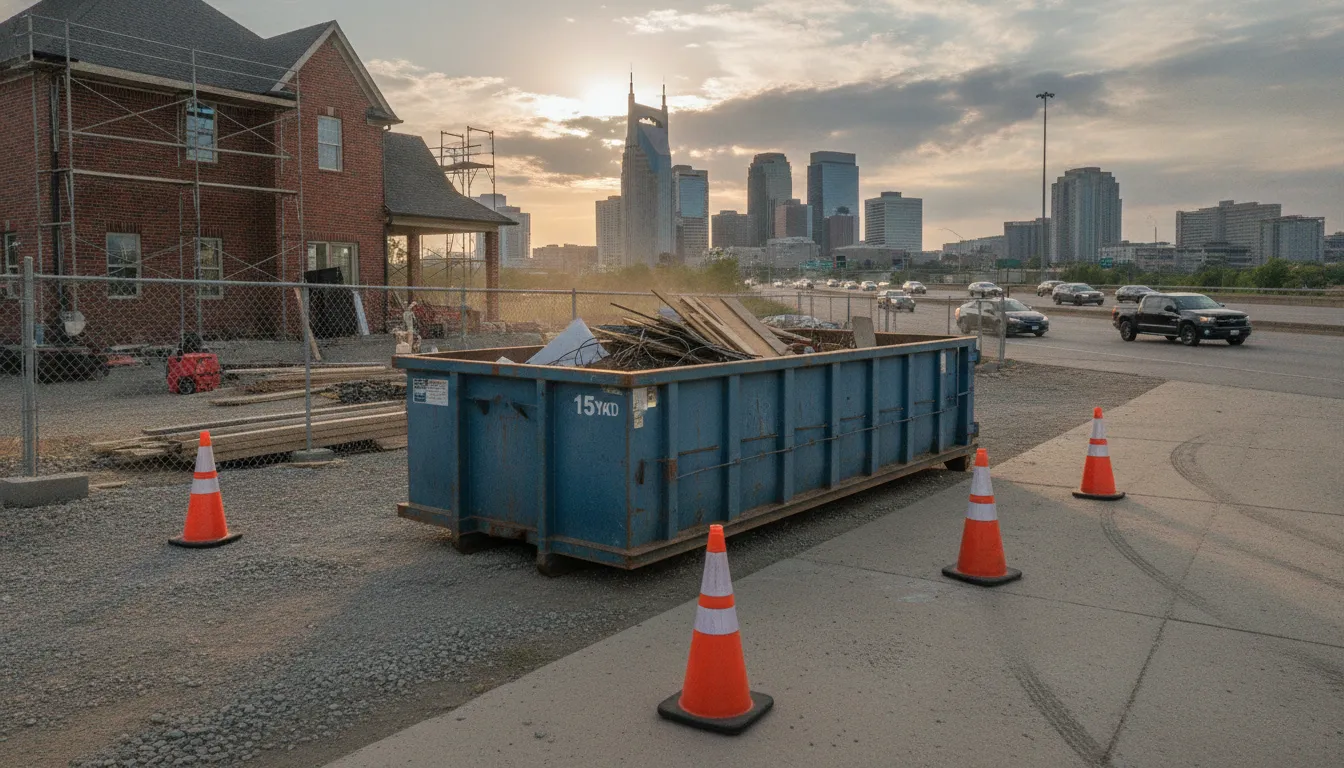
One of the biggest errors is assuming you can place a container on the street without paperwork. Nashville requires a permit for any dumpster placed in the public right-of-way, such as a street or alley. If you put it there without a permit, you could face a $30 per day violation fee on top of the $10 per day permit fee, and unpermitted lane closures carry a $480 triple fee. To avoid this, try to clear space on your driveway. Placing a dumpster on a private driveway usually does not require a municipal permit from the Metro Nashville Government.
Blocking property access
Delivery day can go wrong if the drop-off spot blocks doors or shared paths. You must ensure the driver has enough room to leave the unit and pick it up later. Also, check with your HOA or property owner before the bin arrives. Some neighborhoods have strict rules about how long a bin can sit out. Using driveway-friendly equipment from a local team like Dumpsters On Demand can help protect your property, but you still need to follow understanding local permit rules for your specific zone.
Waiting until the last minute
Do not wait until your project starts to think about where the dumpster will go. In Nashville, contact the NDOT permits office early to confirm current processing time before you need the container. Planning early gives you time to notify neighbors or set up signs. If you need to close a lane for more than seven days, you must even provide a traffic plan from a licensed engineer. Thinking about these steps early helps your project move forward without a hitch.
Who should you contact about a dumpster permit?
Finding the right person to talk to about a dumpster permit is a key part of any big job. You want to make sure your project stays on track without any legal stress. Whether you are a homeowner, a builder, or a lead, knowing who handles the forms is your first step. Rules can vary based on your exact spot in the city. They can also change as local laws update. It is vital to check with your local office before you book your bin. This keeps you safe from fines and delays.
Metro Nashville waste and traffic offices
If you plan to place a bin on a public street or sidewalk, you must talk to the city. In our area, the Metro Nashville city handles these tasks. They manage all public spaces like alleys, roads, and paths. You will need to reach out to the Nashville traffic permits office for a street closure permit. This is needed if your bin blocks any public lane. A trailer or dumpster right-of-way permit costs $10 per day, not to exceed $2,000, with a $30 per day violation fee. Lane or street closure permits, needed only when the bin blocks a travel lane, run $160 for up to five days plus $10 per day after that, with a $480 triple fee. Confirm current fees and processing time with the NDOT permits office before your project starts.
You should also know that these rules apply to more than just trash. They cover any bin used for wood waste, yard waste, or industrial waste. The city wants to make sure that these bins do not create a risk for cars or people. When you call the office, have your project dates and the exact street address ready. They will ask how much space you need to use. Being clear about your needs helps the city give you the right permit fast. Permit rules vary across Middle Tennessee, so check the local process before booking a dumpster in Franklin, Murfreesboro, or Hendersonville.
Zoning and private property rules
For many homeowners, the process is much simpler than they think. If you put a bin in your own driveway, you often do not need a permit from the city. This is because your driveway is seen as private land. You are still in charge of knowing local permit rules for your exact zone. Even if a city permit is not needed, you should check your local zoning laws. Some parts of town have their own rules about how long a bin can sit out or how big it can be.
At Dumpsters On Demand, we use driveway-friendly tools to help keep your yard and pavement safe. We can give you tips on where to place your bin, but the final check with the city is up to you. We suggest calling your local codes office if you have any doubt. They can tell you if your home is in a special zone that needs more care. It only takes a few minutes to ask, and it can save you a lot of trouble later on.
Builders and site managers
If you run a job site, the rules for a Nashville street placement permit might be more strict. Large projects often take more than a few days to finish. If you need to close a lane for more than seven days, you will need a special plan. A licensed engineer must sign off on a traffic control plan for the city. You also have to follow safety rules for signs and blocks. This helps keep drivers and walkers safe while your crew works on the site.
Site managers should also check if their exact county or town has extra steps. Rules in Middle Tennessee can vary from one block to the next. A quick call to the local building office is always a smart move. They can tell you if you need a project notice or if you must tell the neighbors about the bin. Making these calls early helps your project run well from start to finish. It also shows that you are a pro who cares about local safety and rules.
This guide provides general planning information, not legal advice. Municipal requirements and fees can change. Confirm the current rules for your exact address and placement with the relevant municipality before booking.
Frequently Asked Questions
Do I need a permit for a dumpster in Nashville?
You only need a permit if you place the dumpster on a public street, sidewalk, or alley. If you put it in your private driveway or yard, you often do not need a permit. Based on the Metro Nashville City, any truck used to haul waste on public roads must have the right papers. We suggest checking with your local city rules to be sure before your rental starts.
How much does a dumpster permit cost in Nashville?
A dumpster placed in the public right-of-way costs $10 per day, not to exceed $2,000, with a $30 per day violation fee. If the bin blocks a travel lane, a lane or street closure permit runs $160 for up to five days plus $10 per day after that, with a $480 triple fee. You can find these rates on the Nashville NDOT temporary street closure permits page.
How do I get a dumpster permit in Nashville?
To get a permit, you must apply through the Metro Nashville Waste office or the Transit office. You will need to fill out a form and may need to show a plan for traffic flow if you block a lane. Most forms are done online or at the city office. The Metro site has all the forms and payment facts needed to finish the process.
How far in advance should I apply for a Nashville permit?
Ask the NDOT permits office for current processing times before you want the dumpster dropped off. NDOT does not publish a processing-time guarantee, so confirm your dates with the office directly. Planning ahead helps you avoid wait times and extra fees for late filings.
Ready to book a Nashville dumpster rental?
Putting off your dumpster plan can cause big issues for your Nashville home project. City rules for street use can change fast and cost you a lot of time. If you place a bin without the right city permit, you might face very high fines. These fines often cost much more than the rental price itself. By setting up your service early, you can keep your daily job on track. You also avoid extra legal stress and ensure your bin is ready for you. Our local team knows all the rules for placing bins on your land today. We can help with knowing local permit rules for your specific site. Acting today means your dumpster will be ready and legal when you need it most. This helps you focus on your build and finish your work on time.
Book Your Nashville Dumpster Online and our team will confirm the permit and placement details for your Nashville project.