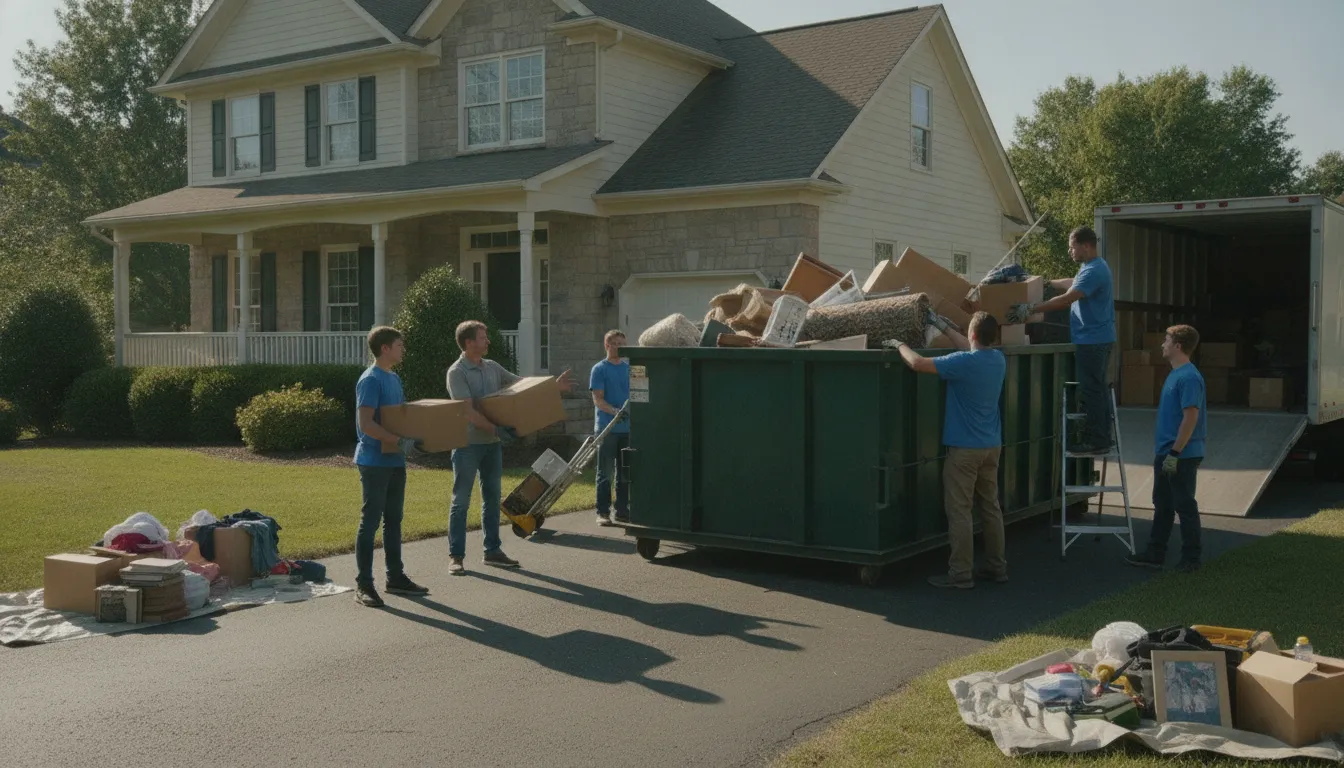
A full home cleanout can start with one room and quickly become an entire-house project. Moving, downsizing, or clearing years of belongings takes more than a few curbside pickups, especially when furniture, boxes, renovation debris, and household clutter all need a destination.
For most Nashville homeowners who can load their own debris, a driveway-friendly home cleanout dumpster offers the most practical balance of cost, capacity, and flexibility. You can sort and load at your own pace over several days instead of rushing to coordinate a truck for every item. Full-service junk removal may be the better fit for a smaller job or when you cannot handle the lifting.
The right choice depends on what you are removing, how much help you have, and how quickly the property needs to be cleared. Before you book anything, a simple plan will help you separate reusable items, protect your safety, and avoid paying for space you do not need. Start by mapping out the cleanout and deciding which disposal option matches the work ahead.
Book your driveway-friendly home cleanout dumpster online
Why a Full Home Cleanout Needs a Plan Before You Start
A full home cleanout is easier when the decisions happen before the first box reaches the dumpster. Whether you are moving, helping a family member downsize, or clearing out years of accumulated belongings, take time to decide what each item needs from you. A home cleanout dumpster gives you room to work at your own pace, but it cannot tell the difference between something worth saving and something ready for disposal.
Sort every room before you load
Set up four clear categories: keep, donate, recycle, and trash. You can use separate rooms, labeled areas, or colored tape if space is limited. The important part is to make the decision away from the container, before the loading process becomes rushed. Sorting first helps you use the dumpster efficiently and keeps reusable items from being discarded by mistake. It can also reduce the amount of material you need to pay to haul away.
Be realistic with the keep pile. If an item is staying, move it out of the work area so it does not get handled repeatedly. Place donations and recyclable materials in their own staging areas, then arrange their drop-off or pickup as part of the cleanout schedule. This keeps the dumpster reserved for items that truly belong in it.
Estimate the volume, not just the number of rooms
Before booking, walk through the home and look at the actual material you expect to remove. Include furniture, boxes, flooring, old appliances, household clutter, and any renovation debris. A packed garage or basement can add more volume than several lightly furnished rooms. Think about how much will be discarded after sorting, not the total amount currently in the house.
Estimating the true volume helps you rent the right container and avoid an inconvenient second haul. It also gives you a better loading plan. If you are unsure, make a simple list by room and note which items are bulky, dense, or difficult to break down. A local dumpster provider can use that information to help you choose a practical size for your Nashville property.
Stage heavy items before delivery
Do not wait until the dumpster arrives to start moving large or heavy items. Place furniture, carpet rolls, boxed books, and other bulky material near the planned loading route, while keeping walkways clear. Staging gives you space to inspect items, identify anything that should be donated, and decide how the load will be distributed.
Use help or proper equipment for anything that is unsafe to lift alone. Proactive staging can prevent injuries and streamline the cleanout, especially when several people are working around a driveway. It also means you can begin loading promptly after a driveway-friendly container is delivered. A few hours of planning before delivery can save repeated lifting, wasted space, and last-minute decisions during the cleanout.
Home Cleanout Dumpster vs. Junk Removal: Which Fits Your Move?
When you are clearing an entire home for a move, downsizing project, or estate transition. The right disposal method depends on two practical questions: how much material do you have, and who will do the lifting? A self-service dumpster gives you a container on your property, then lets you sort and load items over the rental period. Full-service junk removal sends a crew to do the loading and hauling for you.
For a full-home move, a dumpster vs junk removal decision usually favors a dumpster when you have several rooms to work through. It gives you room to make decisions without rushing every item into a single appointment. If the project is small or you cannot safely carry bulky items, full-service junk removal may be the better fit.
| Factor | Self-service dumpster | Full-service junk removal |
|---|---|---|
| Cost model | You rent the container and pay for the rental period, with disposal included under the provider’s terms. For larger projects, this is often more cost-effective than paying a crew to remove each load. | You pay for a crew to load, haul, and dispose of the items. The convenience can make sense when the total volume is limited or labor is the main concern. |
| Timeline | Work at your own pace over several days. This is useful when you need time to sort belongings, coordinate movers, or clean one room at a time. | Removal happens during a scheduled visit. The job can be finished quickly, but you need the items ready when the crew arrives. |
| Effort | You and your helpers carry, sort, and load the material. Staging heavy items before delivery can make loading safer and more efficient. | The crew handles the lifting and loading, making this option more practical for homeowners who cannot manage heavy or awkward items. |
| Best for | Full-home cleanouts, multi-room moves, deep decluttering, downsizing, and projects where the volume builds over time. | Single-room cleanouts, a few bulky items, urgent removal, or homeowners who want a hands-off service. |
| Waste types | Common household contents and approved renovation debris can be loaded as you work. Household hazardous waste, such as paints, chemicals, and batteries, needs a dedicated disposal option. | The crew will explain what materials they can accept and how restricted items must be handled before removal. |
Why a dumpster often fits a full-home move
A move creates waste in waves. You may clear closets today, sort the garage tomorrow, and dismantle furniture later in the week. With a dumpster, you can keep the container available while those decisions happen instead of paying for repeated pickups. The approach also lets you separate donations and recyclables before loading, so usable items do not automatically become trash.
Choose junk removal when the main obstacle is labor rather than volume. If stairs, heavy furniture, or limited mobility make loading unsafe, professional help is worth prioritizing. Otherwise, a driveway-friendly dumpster gives most Nashville homeowners the control and flexibility needed to complete a full cleanout without compressing the project into one appointment.
Choosing the Right Size: What a Home Cleanout Dumpster Can Handle
For most Nashville house cleanouts, the 15-yard dumpster is the practical middle ground. It gives you enough room for furniture, boxed belongings, flooring, broken fixtures, and general household debris without taking up more driveway space than necessary. A driveway-friendly unit also makes it easier to keep the container near the work area while reducing the risk of scraping. Crowding, or unnecessarily blocking access to your property.
The 15-yard size holds about 50% more material than a 10-yard dumpster, yet it is easier to place than a 20-yard model. That balance matters when you are clearing a full home, downsizing after years in one house, or preparing for a move. You want enough capacity to avoid a second haul, but not a container that is oversized for your driveway or difficult to position. Review these home cleanout dumpster sizes before booking if you are between options.
Which dumpster size fits your cleanout?
- Choose a 10-yard dumpster for a smaller decluttering project, a single-room cleanout, limited furniture removal, or a modest garage cleanup. It can be a good fit when the debris volume is clearly limited and driveway space is tight.
- Choose a 15-yard dumpster for most full-home cleanouts, moving projects, estate transitions, and downsizing efforts. It offers useful capacity while remaining driveway-friendly and easier to place than a larger unit.
- Consider a 20-yard dumpster when the project includes a large amount of bulky debris, multiple rooms of substantial material, or an extensive renovation. Confirm that your property has enough room for safe placement before selecting it.
Weight matters as well as volume. The standard rental includes a 2-ton weight allowance, which gives many household cleanouts room for ordinary furnishings and mixed debris. Concrete, brick, and heavy construction rubble are accepted, but those materials can add weight quickly. If your cleanout includes masonry, roofing, tile, or demolition debris, mention it when arranging the rental so the size and loading plan match the project.
Placement is part of choosing the right container. Measure the intended area, keep overhead clearance in mind, and use driveway-friendly dumpster rentals to protect the property while keeping loading convenient. For a more detailed planning method, see how to choose the right dumpster size. The right home cleanout dumpster should fit both the debris and the property where it will be used.
What Can You Put in a Residential Cleanout Dumpster?
Most household cleanout debris can go into a residential dumpster, which is why a roll-off works well for moving, downsizing, estate cleanouts, and major decluttering. You can load items as you work instead of making repeated trips to a transfer station. The key is to separate reusable goods and hazardous materials before the dumpster arrives.
Common household items that are accepted
For a typical home cleanout, accepted materials include everyday nonhazardous junk and bulky items. If an item is dry, solid, and not dangerous to people or the environment, it will usually fit the project. Keep reusable items out of the dumpster so they can be donated or passed along instead of sent to the landfill.
- Furniture such as couches, tables, desks, bed frames, and shelving
- Household junk, clothing, toys, carpet, and small nonhazardous items
- Appliances, including refrigerators and other large household units, when properly prepared
- Cardboard, paper, packaging, and ordinary moving debris
- Yard waste such as branches, leaves, and trimmings, kept separate from restricted materials
- Concrete, brick, and heavy construction rubble from repairs or remodeling
Concrete, brick, and other heavy construction rubble are accepted by Dumpsters On Demand, an important difference for homeowners combining a cleanout with renovation work. Load dense debris carefully and avoid mixing it with prohibited materials. If you are unsure about a specific appliance, material, or unusually heavy load, ask before loading it.
Keep hazardous household waste out
Do not put household hazardous waste, or HHW, in a regular roll-off. The EPA explains that HHW can be flammable, corrosive, reactive, or toxic. These materials need dedicated local collection or disposal programs rather than ordinary dumpster service.
- Paint, paint thinner, stain, stripper, and other solvents
- Cleaning chemicals, pesticides, pool chemicals, and unknown liquids
- Gasoline, motor oil, antifreeze, brake fluid, and other automotive fluids
- Household, rechargeable, and automotive batteries
- Fluorescent bulbs, compact fluorescent lamps, and mercury-containing items
- Propane cylinders, ammunition, explosives, and other flammable materials
Set these items aside while you sort the house, keep containers closed, and contact your local HHW program for instructions. Never pour chemicals down a drain or combine products. Separating restricted waste at the beginning keeps your cleanout safer and helps prevent a disposal problem at pickup.
Step by Step: How to Declutter Your Home With a Dumpster
A home cleanout becomes much easier when you treat it as a series of manageable decisions instead of one enormous weekend project. A home cleanout dumpster gives you a place for non-reusable material. But your preparation determines how efficiently you use the container, protect your home, and stay within the included weight allowance.
- Assess each room and set a timeline. Walk through the house before moving anything. Note which rooms need a full cleanout, which items are bulky, and whether the project involves a move, downsizing, renovation, or an estate transition. Set a realistic start and finish date, then choose a rental period that gives you enough time without creating pressure to rush. Work room by room so the project has a clear sequence.
- Sort before anything goes into the dumpster. Create four groups: keep, donate, recycle, and trash. Sorting first helps you use the dumpster efficiently and keeps reusable belongings from being thrown away. The process can also identify household hazardous waste, including paints, chemicals, batteries, and other items that may be flammable, corrosive, reactive, or toxic. Keep those materials out of a regular dumpster and follow the EPA’s household hazardous waste guidance for dedicated disposal options. Set aside usable items for local donation or recycling. Donating reduces landfill waste and can support community groups.
- Stage large and heavy items before delivery. Move furniture, appliances, branches, and other bulky debris into an accessible staging area, but do not block walkways or create unstable piles. Ask for help with items that are too heavy for one person. Having the load ready before the container arrives can reduce carrying distance, speed the loading process, and lower the risk of injuries. Keep children and pets away from the work area.
- Fill the container strategically. Break down cardboard boxes and dismantle furniture when practical. Flatten shelves, doors, and other broad items, then stack flat materials along the sides or in stable layers. Place smaller debris into gaps instead of tossing it loosely over the top. Load heavy material low and distribute it across the container. Do not overfill the dumpster or allow items to extend above its safe fill line.
- Reserve weight headroom. Volume is only part of the calculation. Concrete, brick, soil, roofing, and other dense materials can use your weight allowance quickly, even when the container is not full. Keep heavier items distributed and monitor how much dense debris you add. If you are unsure whether the planned load is appropriate, ask before loading rather than discovering an overage after pickup.
- Schedule pickup when the cleanout is nearly finished. Once the container is close to full, confirm that all material is safely below the fill line and that no reusable items remain mixed into the load. Schedule pickup rather than leaving the dumpster longer than needed. If lifting and loading are not practical for your household, consider full-service junk removal instead.
This method keeps the project organized while giving you control over the pace. It also makes it easier to see what you are discarding, what can be reused, and when the cleanout is truly complete.
How Much Does a Home Cleanout Dumpster Cost in Nashville?
For a Nashville home cleanout, the cost depends mainly on the rental period you need and how much material you load. Dumpsters On Demand keeps the pricing straightforward, so you can plan around a real number instead of guessing at a vague starting rate.
The standard 15-yard rental options are:
- 1 day: $349
- 3 days: $375
- 7 days: $399
- 14 days: $525
Each standard rental includes up to 2 tons of material. In Nashville Metro, material above that allowance is charged at $125 per additional ton. This matters when a cleanout includes dense debris. Furniture, boxes, clothing, and general household contents may fill the container without weighing as much as concrete, brick, dirt, tile, or other heavy renovation debris.
What changes the price of a home cleanout dumpster?
Rental time is one of the biggest factors. A quick move-out or garage cleanout may fit comfortably within a 1-day or 3-day rental. A full-house downsizing project often benefits from 7 days, giving you time to sort room by room without rushing. If you are coordinating an estate cleanout, renovation, or extended move, the 14-day option gives you more breathing room.
Weight is the other key consideration. If you are clearing ordinary household items, the included 2 tons may cover the project. If you are also removing a concrete patio, brick walkway, bathroom tile, or other heavy construction rubble, ask about the expected weight before loading. Dumpsters On Demand accepts concrete, brick, and heavy construction rubble, but those materials can reach the weight allowance faster than lightweight household waste.
Choosing the right rental window can also help you avoid paying for unnecessary extra days. Set aside items for donation or recycling first, then load the dumpster with what truly needs disposal. That approach makes your container space and rental time work harder for you.
For a broader overview, see our guide to Nashville dumpster pricing. Your quote is free, and you can book online when you are ready. If you are unsure which rental period fits your cleanout, contact the owner-operated local team before scheduling so the plan matches your home, driveway, timeline, and materials.
Making the Move: A Home Cleanout Dumpster Checklist for Nashville
Before you book a home cleanout dumpster, take a few minutes to make the site and schedule ready. A simple plan helps you load faster, protect your property, and avoid paying for space you do not need. Use this Nashville checklist as you prepare for a move, downsizing project, estate cleanout, or home listing.
- Measure the driveway and access route. Check the available width, overhead clearance, turning space, and the distance from the street to the placement area. Remove low branches and move vehicles before delivery. If you are concerned about the surface, review these driveway-friendly dumpster rentals and discuss placement when you book. A right-sized unit should give you useful capacity without making access unnecessarily difficult.
- Book around your real deadline. If you are moving or preparing a property for sale, work backward from the truck date, closing date, listing photography, or final walk-through. Reserve delivery ahead of time when possible, especially if your cleanout date is firm. Leave enough time to sort and load without rushing. You can reach the Nashville service area team for local scheduling questions.
- Sort before you load. Create four clear groups: keep, donate, recycle, and trash. Set reusable items aside before the dumpster arrives so they do not get buried or damaged. Sorting first improves space efficiency and can reduce landfill waste. It also gives family members or movers a clear system to follow.
- Stage large and heavy items safely. Put bulky furniture and debris in an accessible location, but do not create unstable piles or block walkways. The EPA recommends planning and staging materials to streamline work and reduce injury risks. Keep lifting teams coordinated, use appropriate equipment, and never climb into an overloaded container. Review the EPA’s preparation guidance for additional safety principles.
- Confirm what belongs in the container. Concrete, brick, and heavy construction rubble are accepted, but mention unusually heavy loads when arranging service. Keep paint, chemicals, batteries, fuels, and other household hazardous waste out of the dumpster. The EPA explains that hazardous materials require separate handling through appropriate local programs.
- Watch the weight and fill level. The standard Nashville allowance includes 2 tons, with a $125-per-ton overage charge beyond that allowance. Load evenly and keep debris below the top edge. When the container nears full, contact Dumpsters On Demand to plan pickup rather than adding an unsafe mound.
With the driveway checked, materials sorted, and pickup planned, your home cleanout dumpster can keep the move organized from the first room to the final sweep. Dumpsters On Demand is owner-operated and local to Middle Tennessee, so you can get straightforward help before delivery and throughout the cleanout. For projects in Wilson County, see our dumpster rental in Lebanon, TN page for local roll-off service.
Ready when you are. Book your home cleanout dumpster in Nashville online
Frequently Asked Questions
How much does a dumpster cost for two weeks?
In Nashville Metro, a 15-yard dumpster costs $525 for a 14-day rental. The price includes up to 2 tons, with additional weight billed at $125 per ton. Your final choice may depend on the amount and type of material, so confirm the details when you book.
What can I put in a home cleanout dumpster?
Most household cleanout materials are suitable, including furniture, appliances, boxes, clothing, and general remodeling debris. Concrete, brick, and heavy construction rubble are also accepted. Keep paints, chemicals, batteries, fuel, and other hazardous household materials out of the dumpster. The EPA recommends using dedicated household hazardous-waste programs for those items: EPA household hazardous waste guidance.
How long can I keep the dumpster?
Rental periods range from one day to 14 days, so you can match the schedule to a move, estate cleanout, or downsizing project. A 14-day period gives you room to sort, donate, load, and finish without rushing to the curbside pickup deadline.
What size dumpster do I need for a home cleanout?
A driveway-friendly 15-yard dumpster is a practical starting point for many full-home cleanouts. It holds 50% more than a 10-yard unit while remaining easier to place than a 20-yard dumpster. The right size still depends on your home’s contents, furniture volume, and any heavy debris.
Is it better to hire junk removal or rent a dumpster?
Rent a dumpster when you want to load items yourself over several days and control the pace of the cleanout. Choose full-service junk removal when you have a smaller load or need help with lifting and hauling. The best option depends on your available labor, project timeline, and total volume.
Ready to Book Your Home Cleanout Dumpster?
A driveway-friendly dumpster lets you sort and load on your own schedule, whether you are moving, decluttering, or downsizing. As an owner-operated local business, Dumpsters On Demand LLC keeps the process straightforward from drop-off through pickup.
When you book, we deliver a right-sized, driveway-friendly container to your Nashville property, and you fill it on your own timeline. When you are done, we take it away and handle the disposal. That means no repeated trips to a transfer station, no coordinating multiple pickups, and no fighting over a cramped curbside schedule.
Talk to a real local team about your project before you load. Book your driveway-friendly home cleanout dumpster online today, or call (615) 971-3668 if you would like to go over your timeline and materials first. We will help you choose the right size, rental period, and loading plan so the cleanout goes smoothly from the first room to the final sweep.