A kitchen remodel, roof replacement, and estate cleanout can produce very different kinds of debris, even when the project seems similar on paper. The right dumpster depends on how much material you will remove, how heavy it is, and how quickly the work will fill the container. Choosing by project type helps you avoid paying for unused space or discovering that the dumpster is too small on pickup day.
Wondering what size dumpster do I need? Start with debris volume, then account for weight, material type, and available placement space. For many Nashville-area home projects, Dumpsters On Demand’s driveway-friendly 15-yard dumpster is a practical starting point, but roofing, heavy rubble, and large cleanouts may require a different plan.
A short project review can make the choice much clearer. Start by looking at the three details that most directly affect your rental: the amount of debris, the material’s weight, and where the container can safely sit.
Need a faster answer? Ask our owner-operated team at (615) 971-3668 to confirm the right size for your project before you start loading.
Start With These Three Questions to Find the Right Size
Choosing the right dumpster starts with three practical questions: how much debris you will create and how heavy that material is. Those two answers, plus where the container will sit, usually point toward a safe, driveway-friendly option without paying for unused capacity.
How much debris will you generate?
Start with volume, not the name of the project. A kitchen remodel, garage cleanout, or estate project can produce very different amounts of waste depending on what stays, what gets donated, and how densely everything can be loaded. Pickup-truck loads and trash bags are useful mental models when cubic yards are hard to picture.
As a rough comparison, a 15-yard container is commonly associated with about four to five pickup-truck loads. That is a planning estimate, not permission to pile material above the rim. A 15-yard dumpster is often the right-sized starting point for residential work because it gives homeowners useful capacity without jumping immediately to a much larger container. For a project that may exceed one container, ask about swaps rather than assuming the biggest option is best.
- One-room decluttering or a small basement project.
- Kitchen cabinet, flooring, or fixture removal.
- Garage cleanup with bulky household items.
- Yard cleanup involving branches and general debris.
- Estate cleanouts that may need more than one haul.
- Roofing or construction work with a concentrated removal schedule.
For additional project comparisons, review the roll off dumpster sizes guide, then match the capacity to your actual debris rather than an optimistic guess.
How heavy is the material?
Weight changes the decision. Concrete, brick, and construction rubble can fill a container quickly by weight even when there appears to be room by volume. Heavy material does not automatically mean you need the biggest dumpster. It means you need a right-sized container and a hauler that accepts the material. Dumpsters On Demand LLC accepts concrete, brick, and heavy rubble, so tell the team what you are removing before booking.
Roll-off containers are especially appropriate for large, heavy loads or quick, intensive projects such as roof replacements, according to Logan, Utah’s dumpster rental guidance. Keep heavy debris distributed across the floor instead of concentrating it in one corner. The standard 15-yard unit includes two tons, with additional weight charged at the published overage rate.
Where will the dumpster sit, and how long will you need it?
Placement is part of sizing because the truck must be able to deliver and retrieve the container safely. Choose a stable location with a straight approach. There should be no overhead wires or tree limbs in the truck’s path. These requirements are also identified in the Logan guidance, which says trucks need a straight approach and clear overhead access.
Our 15-yard flagship measures 12 feet long by 8 feet wide by 4.5 feet high and is designed to be driveway-friendly. Before scheduling, measure the intended space, check gates and nearby vehicles, and estimate how long loading will take. See our driveway-friendly dumpsters page for placement considerations. Finally, never load above the top. A container is full when its contents are level with the rim, and an overfilled roll-off may not be legally hauled.
Dumpster Sizes Explained in Plain Terms
Dumpster size is measured in cubic yards, or the volume of debris the container holds. For many Nashville home projects, a driveway-friendly 15-yard dumpster offers a practical middle ground. It handles more than a small 10-yard unit without the footprint and unused capacity of a larger 20-yard container.
Think of one cubic yard as roughly the space taken up by a kitchen oven. The table below translates common sizes into dimensions, pickup-truck loads, and approximate trash-bag counts. Dimensions and general capacity comparisons are based on the Connecticut DEEP dumpster size guide, with truckload and bag estimates from industry sizing references.
| Size | Approximate dimensions | Pickup-truck loads | Trash bags |
|---|---|---|---|
| 10-yard | 14′ L x 7.5′ W x 3.5′ H | 3 | Not listed. |
| 15-yard | 16′ L x 7.5′ W x 4.5′ H | 4-5 | About 60. |
| 20-yard | 22′ L x 7.5′ W x 4.5′ H | 6 | About 90. |
| 30-yard | 22′ L x 7.5′ W x 6′ H | 9 | About 120. |
| 40-yard | 22′ L x 7.5′ W x 8′ H | 12 | About 180. |
Dumpsters On Demand takes a different approach from a one-size-fits-all national menu. Our flagship 15-yard dumpster measures 12′ L x 8′ W x 4.5′ H and is designed to be driveway-friendly. That right-sized footprint can be a strong fit when a 10-yard unit feels cramped, but a 20-yard unit feels excessive. Review the roll off dumpster sizes guide for more planning detail.
- Choose smaller capacity for a single-room cleanout with light, loose debris.
- Choose a 15-yard unit for many kitchen remodels, garage cleanouts, and mixed household projects.
- Move up when debris will fill several pickup beds or cover multiple rooms.
- Remember that bulky items consume space faster than compact, broken-down debris.
- Account for weight separately when loading concrete, brick, soil, or other dense materials.
- Never load above the container walls. Contents must remain level with the top for safe hauling.
The Best Dumpster Size for a Kitchen Remodel or Garage Cleanout
For most kitchen remodels and garage cleanouts, a 15-yard dumpster is the sweet spot. It holds bulky cabinets, countertops, flooring, drywall, appliances, and household clutter without taking up unnecessary driveway space. A 10-yard container can require a second rental, while a 20-yard unit may give you capacity you do not need.
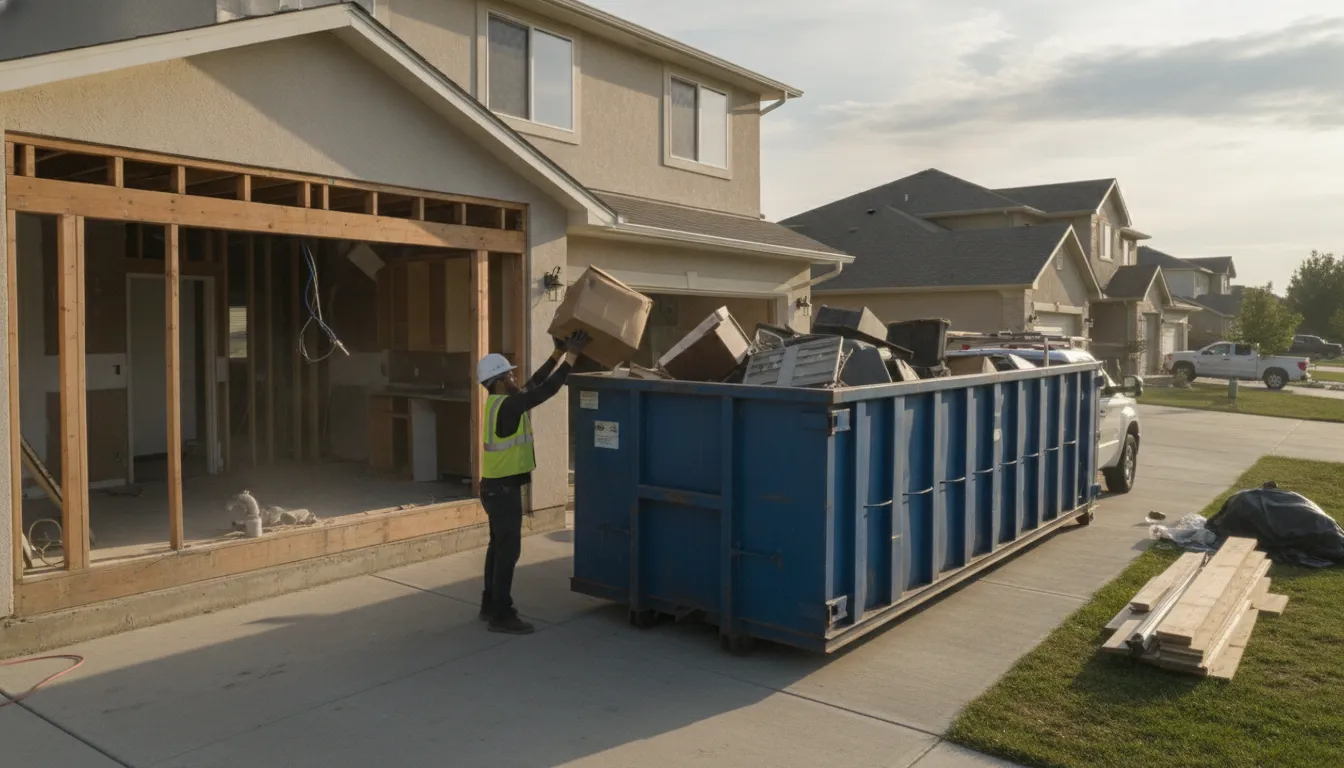
Kitchen renovations and garage cleanouts create a wide mix of debris. You may remove upper and lower cabinets, laminate or tile countertops, flooring, drywall, trim, shelving, boxes, an old refrigerator, or other appliances in the same project. That combination is bulky enough to outgrow a small dumpster quickly, but it usually does not justify jumping to the largest residential container.
A 15-yard dumpster gives you room to load as you work without making the container unnecessarily tall or difficult to use. Dumpsters On Demand’s driveway-friendly 15-yard unit measures 12 feet long by 8 feet wide by 4.5 feet high. For general industry context, a Connecticut Department of Energy and Environmental Protection size guide lists a typical 15-yard dumpster at 16 feet long by 7.5 feet wide by 4.5 feet high. Dimensions vary by provider, so confirm the actual footprint before delivery.
The 15-yard option is also a practical middle ground between two common sizing mistakes.
- Choosing a 10-yard dumpster: A small kitchen tear-out or limited garage declutter may fit, but cabinets, appliances, and flooring can consume the available volume faster than expected. Needing a second rental can cost more time and coordination than choosing the right size initially.
- Choosing a 20-yard dumpster: A 20-yard container makes sense for a much larger renovation or a full property cleanout. For a typical kitchen remodel or single-garage cleanout, however, its additional capacity may mean paying for space you never use.
Weight matters as much as volume. Dumpsters On Demand’s standard 15-yard pricing includes 2 tons, with overage charged at $125 per ton. The current rental options are $349 for 1 day, $375 for 3 days, $399 for 7 days, or $525 for 14 days. Concrete, brick, and heavy construction rubble are accepted, but dense materials can reach the weight limit before the container looks full.
For a deeper capacity check, review this 15 yard dumpster sizing guide. If your remodel includes unusually heavy debris or expands beyond one kitchen and garage, share the material list with the owner-operated team. They can size the recommendation for both volume and weight.
What Size Dumpster Do I Need for a Roofing Project?
For most modest, single-story roof replacements, a driveway-friendly 15-yard roll-off is a practical starting point when the load is planned and stacked level. Larger roofs, multiple layers of shingles, or additional construction debris may require a 20-yard or larger container. Weight matters as much as volume because tear-off shingles accumulate quickly.
Roofing debris can look manageable at the start of a tear-off and become a heavy, compact load within hours. Asphalt shingles, felt, nails, flashing, and damaged sheathing all add up. The right approach is to estimate both the amount of material and its weight before the truck arrives. Roll-off containers are specifically recommended for large or heavy loads and short, intensive projects such as roof replacements, according to guidance from Logan City, Utah.
- Estimate the roof’s squares. One roofing square represents 100 square feet of roof surface. Use the contractor’s measured square count, or ask for it before ordering. Include waste from cuts and overlaps rather than sizing only to the home’s floor area.
- Count the bundle layers. A single layer of shingles takes less room and weight than a tear-off involving two or three layers. If the old roof has multiple layers, tell the dumpster provider. That detail can change the recommendation more than the roof’s footprint alone.
- Add the supporting debris. Include felt or underlayment, nails, flashing, drip edge, damaged wood, and packaging in your estimate. If the same container will hold siding, concrete, brick, or other rubble, plan for a heavier load. Dumpsters On Demand accepts concrete and heavy debris, including construction rubble, but weight still needs to be managed.
- Choose the container size. A 15-yard dumpster is often the right-sized, driveway-friendly choice for a modest single-story roof when the debris is mainly one layer of shingles. For a larger roof, multiple shingle layers, or roofing combined with renovation debris, industry guidance commonly points toward a 20-yard or larger roll-off. Review the roll off dumpster sizes guide when comparing project capacity.
- Load it level and keep it below the rim. Shingles should be distributed rather than piled into a peak. A dumpster is full when its contents are level with the top, and an overfull roll-off cannot legally be hauled. Leave room for the lid or tarp and confirm the truck has a clear, straight approach without overhead wires or tree limbs.
When in doubt, share the roof size, number of shingle layers, and any additional debris with an owner-operated local provider before scheduling. That conversation is more reliable than choosing by container volume alone.
Yard Cleanup and Estate Cleanouts: Choosing by Volume
Yard cleanup and house cleanouts are usually volume-heavy projects, so a driveway-friendly 15-yard dumpster is a practical starting point. Wet soil, sod, and concrete can add substantial weight, while a whole-estate cleanout may require a second swap or a larger container. Plan for both the amount and type of debris.
Yard debris can look bulky without seeming heavy. Dry leaves, small branches, and general outdoor clutter are primarily a volume question, and a 15-yard container often handles a typical residential cleanup. The calculation changes when the load includes wet soil, sod, mulch, roots, or concrete chunks. Moisture adds weight quickly, so avoid treating a full load of soil like a full load of leaves.
Dumpsters On Demand includes 2 tons with its 15-yard rental. Material above that allowance is charged at $125 per ton. If your cleanup involves digging out a garden, removing a sod layer, or breaking up a patio, describe those materials when you reserve the dumpster. The right recommendation may be a partial load, a scheduled swap, or a plan that keeps heavy debris separate from lighter yard waste.
How much fits in a yard cleanup dumpster?
For many Nashville-area homeowners, the 15-yard unit is a useful middle ground because it offers enough room for a substantial cleanup without placing an oversized container in the driveway. Dumpsters On Demand’s 15-yard dumpster measures 12 feet long by 8 feet wide by 4.5 feet high. Its driveway-friendly footprint is designed for common residential placements, subject to safe truck access and site conditions.
Estate cleanouts require a different volume estimate. A typical house cleanout can often fit in one 15-yard dumpster when furniture, closets, and household contents are cleared in a controlled sequence. A whole-house estate cleanout, especially one involving an attic, basement, garage, or years of accumulated belongings, may exceed that capacity. Plan for multiple swaps or discuss a larger-unit strategy before loading begins.
Separate volume from weight before booking
Walk through the property and make two lists: bulky items that consume space, and dense materials that consume weight allowance. Furniture, boxes, clothing, and household goods fill the container by volume. Soil, sod, brick, and concrete affect the weight calculation much sooner. This simple split gives you a more reliable answer to what size dumpster do I need than counting rooms alone.
For more guidance on planning a residential project, review our residential dumpster rental guide. Keep debris level with the top of the container rather than mounding it above the sides. That protects the load during transport and helps ensure the dumpster can be legally hauled.
How to Avoid Overage Fees and Overfilling
The easiest way to avoid overage fees is to choose a right-sized dumpster, estimate the weight of your materials, and keep the debris level with the top. Dumpsters On Demand 15-yard rentals include 2 tons, with a transparent $125 per ton overage rate. Concrete, soil, shingles, and wet debris need extra attention because they become heavy quickly.
Dumpster capacity is not only about how much material fits. It is also about how much that material weighs. A full load of drywall may stay within the included allowance, while a smaller load of concrete or wet soil can exceed it. Before booking, separate the major material types and think about the weight, not just the pile’s appearance.
Use these practical ways to protect your budget
- Estimate the load by material type. Drywall and household items are generally lighter, while concrete, brick, shingles, tile, and soil are much heavier.
- Do not mix a heavy-material project with a general cleanout estimate. Ask for guidance when rubble or dense construction debris makes up most of the load.
- Keep debris level with the top of the container. A government dumpster-rental guide states that containers are full at the top line and cannot legally be hauled when overfilled: review the overfill safety guidance.
- Break down bulky furniture and cardboard before loading. This creates usable volume without adding unnecessary weight.
- Load dense material evenly across the floor instead of building a mound in one area. Even distribution helps keep the container stable and transportable.
- Plan the rental period around the work. The standard 15-yard options are $349 for 1 day, $375 for 3 days, $399 for 7 days, and $525 for 14 days, each including 2 tons.
Choosing a larger container is not automatically cheaper. Bigger units cost more, and weight rules still apply, so sizing right usually beats guessing big. Dumpsters On Demand’s driveway-friendly 15-yard unit is often a practical fit for residential projects, while the owner-operated team can help review unusually heavy loads. The company accepts concrete, brick, and construction rubble, which helps prevent surprises when those materials are part of the job.
For a closer look at the numbers, see the dumpster rental cost guide and current Nashville dumpster rental prices. If you are unsure whether your project needs more volume or simply a different loading plan, call (615) 971-3668 before the dumpster arrives.
Frequently Asked Questions
What is the most common size dumpster rental?
A 15-yard dumpster is a practical choice for many residential projects because it balances useful capacity with a driveway-friendly footprint. It commonly handles remodeling debris, garage contents, yard cleanup, and smaller cleanouts without jumping to a larger container than the project requires.
Will a couch fit in a 10-yard dumpster?
A couch may fit in a 10-yard dumpster if it is placed carefully and other debris is limited, but available volume can disappear quickly. For a couch combined with furniture, household contents, or renovation debris, a 15-yard container usually gives you more working room and fewer placement problems.
What size dumpster do I need for a kitchen remodel?
A 15-yard dumpster is typically a good starting point for a kitchen remodel. It can accommodate cabinets, countertops, flooring, drywall, and related debris from many residential projects. If the remodel includes extensive structural demolition or heavy masonry, review the material and weight with an owner-operator before booking.
What size dumpster should I rent for a house cleanout?
A 15-yard container often suits a partial house or estate cleanout, while a larger project may need multiple swaps rather than one oversized delivery. Estimate the number of rooms, furniture pieces, and bags first, then account for bulky items that leave unused air space.
What are the dimensions of a 15-yard dumpster?
Dumpsters On Demand’s 15-yard dumpster measures 12 feet long by 8 feet wide by 4.5 feet high. Its driveway-friendly design makes it a right-sized option for many Nashville-area home projects, but confirm access, overhead clearance, and placement space before delivery.
Ready to Choose the Right Dumpster Size?
Matching the container to your project type can make loading simpler and help you avoid paying for more space than you need. If you prefer to talk through the debris, placement, or rental timing first, call the Tennessee office at (615) 971-3668.