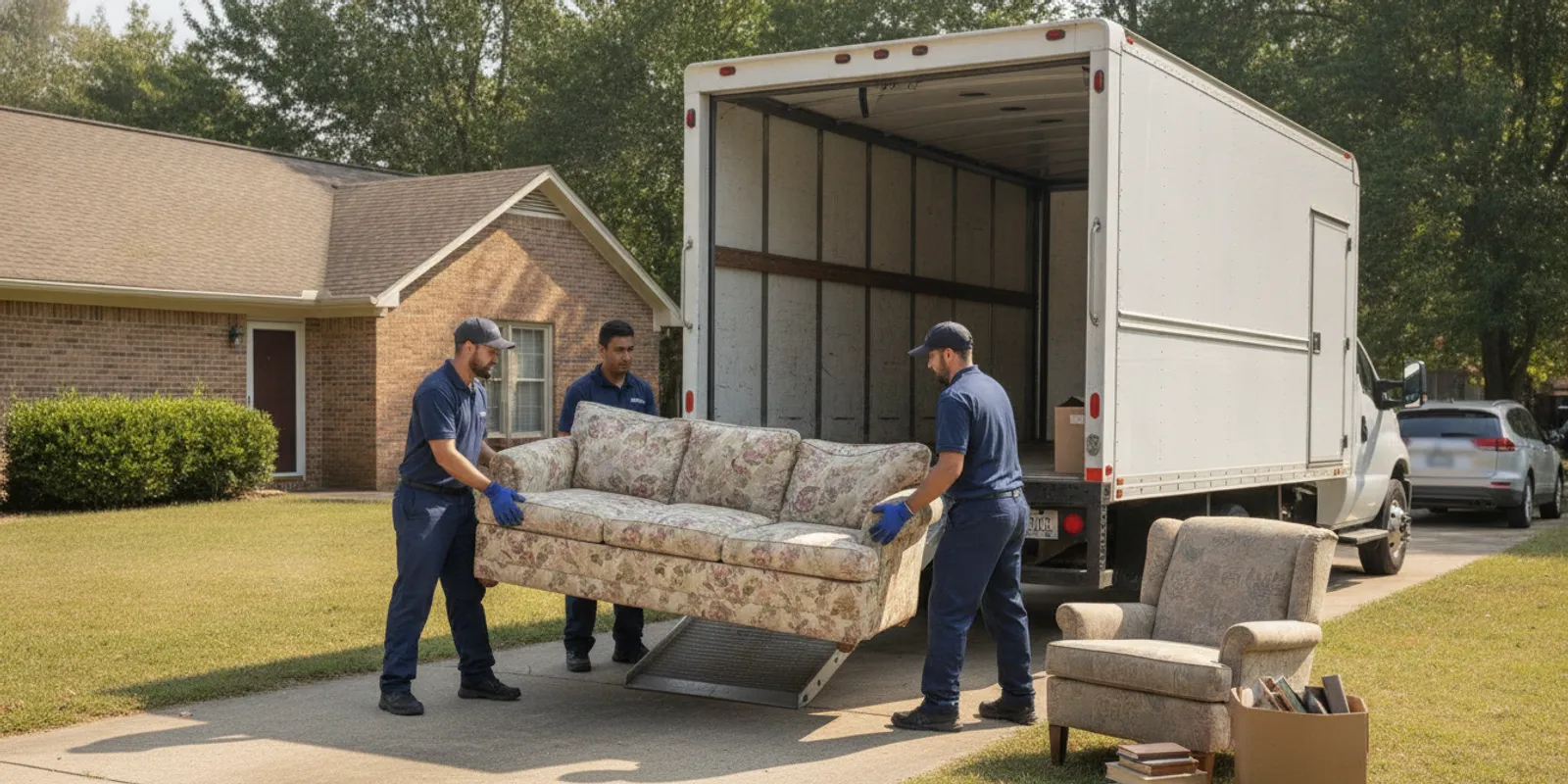
When a cleanout leaves you with heavy furniture, boxes, or renovation debris, junk removal Bowling Green KY residents can arrange is one way to avoid repeated trips to a disposal site. The right option depends on the amount of material, access, who can load it, and how quickly you need the space cleared. Here is how to compare a removal crew, self-hauling, and a dumpster before you book.
What does full-service junk removal include?
With full-service removal, a crew handles lifting and hauling rather than leaving a container for you to fill. This can help when items are inside a house, upstairs, in an office, or spread across rooms. You identify what should go, and the crew removes the agreed items. Confirm in advance whether the service covers the exact locations and item types you have.
Make a clear list or take photos before requesting an estimate. Include where each item is located and note stairs, narrow hallways, gates, elevator rules, or a long carry to the truck. These details affect the work involved. Ask whether the estimate reflects volume, labor, or both, and how the price changes if the pile or scope changes on arrival.
Dumpsters On Demand has a Kentucky location in Bowling Green and offers full-service junk removal as well as dumpster rentals. Read about the company and its services. Availability and final terms depend on project details, so confirm them directly before setting a date.
Which Bowling Green projects may suit a removal crew?
Think about the job in terms of its bottleneck. A single bulky item may be difficult because it is heavy or awkward, while a whole-house cleanout can be difficult because it involves many rooms and decisions. A commercial job may be constrained by building access or a short turnover window. Identifying the main obstacle helps you ask for the right service instead of choosing by label alone.
Home cleanouts and moves
For a move, start with items that will not travel to the next home: damaged furniture, unwanted shelving, or leftover household goods. Make a room list and decide whether the crew should enter each room or collect staged items. If belongings are mixed together, sort them before the appointment. A clearly marked keep area, removal area, and donation pile can reduce confusion. In a garage or basement, check boxes for personal papers, paint, batteries, or other contents that need review before anything is carried away.
For downsizing or an estate, allow family members or decision-makers time to review sentimental and valuable items. Photographing furniture and labeling drawers can help people decide remotely, while a written inventory creates a shared record of what has been approved for removal. The pickup plan can then focus on material that is ready to go.
Offices and rental properties
In an office, establish who can approve disposal. Desks may be easy to identify, but file cabinets, computers, and boxed records need a separate review. Follow the organization’s retention and data-handling rules before removal. Tell the crew which items are included, which must remain, and whether equipment needs to be disconnected by your staff or a qualified technician. Reserve an elevator or loading area if building management requires it.
For a rental turnover, clarify responsibility between owner, manager, and former occupant before scheduling. Confirm the property is ready to be cleared; do not assume that every item left behind is disposable. Identify the deadline, access instructions, and whether maintenance workers will be on site at the same time. Separate trash from fixtures or materials that belong to the property.
Contractor debris and renovation work
Contractors should estimate the waste stream before choosing removal. A few cabinets and a compact pile after a one-day task differ from ongoing debris produced over a week. Identify whether the load is mostly wood, drywall, flooring, or mixed material, and call out dense items such as concrete. Keep reusable materials and tools away from the debris zone. If work will continue, plan a safe path and protect loose material from weather while it waits for pickup.
Dumpsters On Demand has a Kentucky location in Bowling Green. Ask directly about the specific address, materials, and schedule; a local location does not by itself confirm availability on a particular date.
A crew may be useful when moving material is the hardest part. Homeowners might arrange help for bulky furniture, appliances, a move-out, or a room-by-room cleanout. Offices may need old desks, shelving, and boxes cleared after a renovation or tenant change. Property managers may be coordinating a turnover on a deadline. Contractors may need a defined debris pile removed when loading a container themselves is impractical.
Each project benefits from a different plan. In a home, decide which items stay before the crew arrives; mark them clearly and keep them away from the removal area. In an office, identify equipment and records that must remain, and arrange building access. For a rental turnover, determine who can authorize removal and whether the unit will be unlocked. A contractor should separate reusable supplies, tools, and debris so nothing gets mistaken for waste.
For multi-unit buildings, check elevator reservations, loading-zone rules, quiet hours, and any required insurance documents with building management. Give the provider restrictions before the appointment. If parking is limited, discuss where a truck can stop and whether the crew will need to carry items farther than usual.
Not every item is accepted in every load. Describe unusual, heavy, or potentially restricted materials rather than assuming they can travel with ordinary household junk. Ask about appliances, construction debris, chemicals, liquids, batteries, and materials that may require special handling. Sorting and disclosing contents early can prevent a rejected item or interrupted pickup.
Should you hire a crew, self-haul, or rent a dumpster?
Compare labor, access, volume, and timing. Self-hauling can work for a small load when you have a suitable vehicle, helpers, and time for travel and unloading. A crew handles the carrying and loading. A dumpster may fit a project that generates debris over several days, provided you can load it and have a suitable placement area.
| Option | Who loads? | Often a fit when | Plan for |
|---|---|---|---|
| Full-service junk removal | Removal crew | Items are bulky, indoors, or difficult to move | Access, item list, labor, and pickup timing |
| Self-hauling | You or your helpers | The load is small and transport is available | Loading effort, travel, facility rules, and trips |
| Dumpster rental | You | Debris accumulates over time and you can load it | Placement, rental period, accepted materials, and fill level |
A roll-off dumpster is a container delivered to the project site, not a crew to carry items out. The company specializes in 15-yard rentals; see its 15-yard dumpster guide and overview of how rental works. Ask about placement, rental duration, material limits, and loading requirements before deciding.
Consider a homeowner with a sofa and a few large items inside, but no suitable vehicle. A crew may solve the main problem: carrying. A contractor generating mixed renovation debris throughout the week may prefer a container if the site has space and workers can load it. Someone with a few boxes and a vehicle may find self-hauling sufficient. Verify item acceptance and terms for the actual job.
Compare the hidden effort, not just the visible price. Self-hauling can involve borrowing a vehicle, recruiting help, making several trips, and spending time at a disposal facility. A container needs space and active loading. Full-service pickup needs clear access and an agreed scope. The best fit handles the project’s constraint without adding another problem.
How can you prepare for a Bowling Green pickup?
Start a day or more ahead if the job involves several rooms or decision-makers. Keep the list practical: item, location, quantity, and access challenge. “Two bookcases, upstairs, narrow landing” is more useful than “some furniture.” If using photos, take wide shots of the overall pile and close-ups of unusually large, heavy, or damaged items.
- Decide what leaves. Separate items to keep, donate, recycle, or remove. Mark keepers and anything fragile or important.
- Inventory the load. List large pieces, appliances, and debris. Include every room or outdoor area involved.
- Describe the route. Mention stairs, narrow turns, elevators, gates, parking limits, and distance from items to the truck.
- Confirm scope and timing. Ask what is included, who must be present, the arrival window, payment arrangements, and how added items affect the quote.
- Prepare the work area. Clear walkways, secure pets, and remove documents or personal belongings from furniture, drawers, and boxes.
For an estate or whole-home cleanout, work room by room and label anything that should not be removed. A written checklist can help family members agree before the crew arrives. The estate cleanout planning guide offers more preparation ideas. For bulky household pieces, review these furniture removal tips.
For a contractor or property manager, confirm access hours, identify the authorized contact, establish the truck’s stopping point, and isolate material that is not part of the pickup. If residents or tenants are present, tell them what will be removed and when.
What should you ask about the quote and schedule?
Give each provider the same description so you can compare like with like. Include item counts, approximate dimensions for oversized pieces, locations, stairs, and unusual carrying distances. State whether the job is a one-time pile or several rooms you may add to. Note whether each provider saw photos or visited the site.
Questions that clarify scope
- Does the estimate include removal from the current rooms, or must items be outside?
- Are there materials you cannot take, and what should be separated?
- What happens if actual volume differs from the list or photos?
- Could additional labor, access, or disposal charges apply?
- What arrival window should I plan around?
- What payment, cancellation, or rescheduling terms apply?
Write down the answers and agreed item list. Confirm who will be present and how the crew can reach them. For a business, verify vendor check-in steps and whether work can occur during operating hours.
A price comparison should include the effort that remains yours. Self-hauling may require a truck, fuel, helpers, several trips, and time away from other work. A dumpster involves your own loading labor. Evaluate a crew’s estimate against the specific items and access included, rather than comparing unlike services. There is no universally cheapest choice without those details.
Ask what labor and hauling are included, whether the quote covers all listed items, and what could change the amount due. Clarify how stairs, unusually heavy objects, extra stops, added items, or a larger-than-described pile affect the quote. Get the agreed scope in writing when possible.
Check appointment details too. Ask whether the provider has a time that suits your deadline, how arrival updates are handled, and what happens if access is delayed. For an office or rental property, coordinate building hours and occupant access. Leave room for unforeseen delays before a closing, inspection, or new tenant move-in.
Dumpsters On Demand lists its Bowling Green location at 150 Anders Dr, Bowling Green, KY 42101, and the Kentucky phone number is (270) 776-7202. Keep the Kentucky contact separate from the Tennessee number. Use the contact page to ask about a specific cleanout.
How can you plan disposal responsibly?
Sort before pickup rather than expecting every item to follow the same route. Use separate labeled areas for usable items, recycling candidates, ordinary debris, and materials needing special advice. Avoid mixing batteries, liquids, chemicals, or sharp objects into a general pile. Tell the provider what is in each group. If unsure whether an item is accepted, identify it by name and condition when requesting service.
For renovation work, separating material can make the estimate more accurate. A pile of light packaging differs from dense masonry. Take a count or estimate dimensions, and do not conceal heavy material under lighter debris. Ask whether concrete, dirt, appliances, or other specific items require separate arrangements.
Usable furniture or household goods may have options beyond disposal, but condition and local acceptance vary. Check with a donation recipient before transport. If an item is broken, stained, or incomplete, describe its condition honestly.
Before pickup, set aside items that may still be useful and check whether donation is practical. Keep recyclables separate when feasible, and ask how the provider handles materials in your load. A usable household item has different options from broken mixed debris.
Do not place chemicals, liquids, batteries, or other questionable materials in an ordinary load without confirmation. Disposal requirements depend on the material and receiving facility. The U.S. Environmental Protection Agency’s recycling guidance explains that options and accepted materials vary by community; check local instructions for the specific item.
For renovation debris, describe material accurately. Concrete, dirt, and mixed construction waste may have different handling requirements. Read the company’s concrete recycling overview and concrete disposal guide. If your project is outside the immediate area, check the service-area information.
Frequently asked questions
Do I need to move items outside before the crew arrives?
Full-service removal is intended to include lifting and hauling, but confirm pickup locations when booking. Share details about stairs, tight spaces, or restricted access.
Can a junk removal crew take renovation debris?
It depends on the materials and amount. Describe debris before scheduling, especially if it includes heavy or unusual material. Ask what is accepted and what should be separated.
When is a dumpster a better choice?
A dumpster can make sense when debris accumulates over several days and you can load it yourself. Full-service removal may be easier when you need help carrying items or clearing a defined group of belongings.
What should I share when requesting an estimate?
Provide an item list or photos, locations, access conditions, and preferred timing. Mention appliances, heavy objects, building rules, or materials needing special handling.
Discuss your Bowling Green cleanout
Planning the scope, access, and material list ahead of time makes it easier to choose the right removal option and clear the space with fewer surprises.