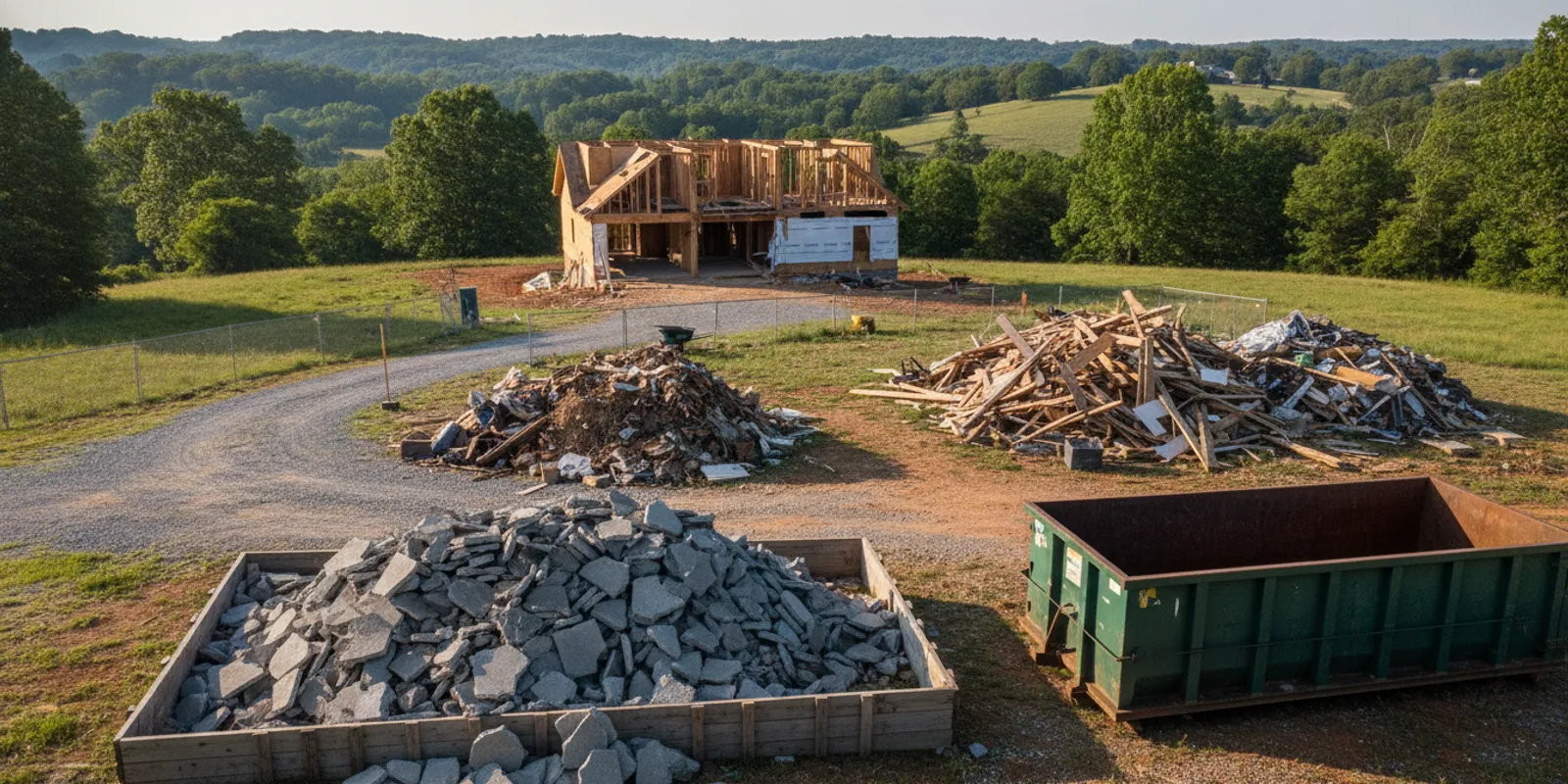
Concrete recycling can keep usable rubble in the materials loop, but the right route depends on what the concrete is mixed with, how much you have, and which local facilities accept it. Before breaking up a slab or arranging a pickup, learn how recycling works and what to confirm for your project.
Book a disposal plan for your project
What does concrete recycling involve?
Concrete recycling is the process of collecting demolished or leftover concrete, preparing it, and processing it into material that can be used again. A recycling facility may inspect incoming loads, separate unsuitable material, crush the concrete, and screen it into sizes for a specified use. The exact process and accepted material vary by facility.
Processed concrete may be used as aggregate or fill in construction applications, depending on its quality and local specifications. It is not automatically suitable for every job. A facility or project buyer determines what it can accept and where the processed material can go.
The first practical step is therefore not to assume that every broken slab is recyclable. Find a receiving facility or service that confirms acceptance, then prepare the material to meet its rules. A construction and demolition recycling guide from the City of Los Angeles lists clean concrete and asphalt among materials recyclers may process; it is a useful example of why clean separation matters, but it does not establish local Middle Tennessee acceptance rules: Construction and Demolition Recycling Guide.
Which concrete can be recycled?
Clean, separated concrete is often a more straightforward recycling candidate than rubble mixed with general demolition waste. But each receiving site sets its own criteria. Call ahead and describe what you have rather than relying on a broad label such as “concrete.”
- Plain concrete: Broken patio, sidewalk, driveway, or foundation pieces may be accepted if they meet the facility’s size and cleanliness rules.
- Concrete with reinforcing steel: Rebar or wire may be handled during processing, but do not assume the receiving site accepts it. Explain whether the pieces have protruding metal or attached mesh.
- Concrete with soil or gravel: Some sites may accept limited attached material; others may require it to be removed. Ask what counts as excessive dirt or contamination.
- Mixed demolition rubble: Brick, block, asphalt, tile, wood, insulation, and household trash can change the receiving options. Keep materials separated when feasible and identify each component.
- Concrete with coatings or other materials: Paint, sealant, adhesives, and unknown residues may affect acceptance. Describe these honestly and ask whether the material needs special handling.
Do not pour liquid concrete washout, slurry, or wet saw-cutting residue into a container or onto the ground. Those materials are different from cured concrete rubble and can create separate handling and environmental concerns. Ask the contractor or receiving facility for instructions on collecting and disposing of washout.
How does concrete move from a project to recycling?
The broad sequence is simple: identify the material, confirm a receiving route, separate it, transport it safely, and verify the destination. The details matter because concrete is heavy and a load that looks small by volume can reach a weight limit quickly.
- Estimate the amount. Note the dimensions and thickness of the slab or structure, and whether the debris is already broken up. Photos can help a facility or service provider understand the material, but they do not replace an acceptance check.
- Describe the condition. Say whether the concrete is clean, mixed with soil, reinforced, coated, or combined with other debris. Include any unusual material attached to it.
- Confirm the destination and rules. Ask whether the facility accepts this kind of concrete, what preparation it requires, how it receives material, and whether there are limits on pieces or load size. Confirm current hours and any applicable fees directly with the facility.
- Choose a transport method. Depending on quantity and site access, you may be able to deliver the material yourself, arrange a container, or hire a crew to load and haul it.
- Load and secure it appropriately. Avoid exceeding the vehicle or container’s weight limit. Keep the load stable and comply with transport rules; do not allow debris to protrude or spill.
- Keep the material separated. Prevent wood, household trash, and other debris from being mixed into concrete intended for a particular receiving route.
These steps help you avoid arranging a pickup for material that a facility will not take. For a more general overview of concrete disposal choices, see this guide to concrete disposal methods.
How can you plan different concrete projects?
Project size and timing affect how you stage and move concrete. A little planning at the start can prevent a pile of rubble from becoming an access problem or an unplanned mixed load.
For a small patio or walkway
Before demolition, measure the area and estimate thickness. Ask a receiving site whether it accepts a small delivery and whether you need to remove soil, edging, or mesh. If the amount is manageable, determine how it can be carried and transported safely. If it is not, ask about a pickup or container option rather than making multiple trips without knowing the rules.
For a home renovation
Coordinate concrete removal with the project schedule. Decide where the rubble can be staged without blocking workers, entrances, or deliveries. Keep concrete apart from packaging, wood, drywall, and other renovation debris if it may go to a separate route. Before ordering a container, confirm that its placement location and permitted material fit the plan.
For a contractor or property manager
Set a repeatable process for identifying loads, documenting what is mixed in, and confirming receiving requirements for each job. Different sites and materials may call for different arrangements. Tell the property owner who is responsible for separating, loading, arranging transportation, and sharing any facility instructions with the crew. Clear responsibility helps avoid assuming that another person has already checked acceptance.
In every case, the amount you can safely handle matters as much as the volume. Make a conservative estimate and ask the provider how it wants the load described. If site conditions change or demolition exposes unexpected material, pause and confirm the new route before adding it to a previously approved load.
How should you prepare concrete for recycling?
Start with the receiving site’s instructions. Its requirements should guide how you sort and stage the material. When those directions are not yet available, basic separation makes the next conversation easier and may prevent avoidable contamination.
- Set aside concrete from wood, drywall, roofing, household waste, and other debris where the work area allows.
- Point out embedded metal, mesh, pipe, tile, or attached soil instead of hiding it under other material.
- Keep concrete rubble away from liquid washout, paint, chemicals, and unknown residues.
- Break down or stage pieces only when it is safe to do so and consistent with the facility’s size rules.
- Use appropriate protective equipment and safe lifting practices. Concrete edges can be sharp, and individual pieces can be difficult to handle.
- Keep the staging area accessible for the vehicle or crew that will move the material, without blocking walkways or creating a trip hazard.
Do not take on demolition or heavy lifting that is beyond your tools, training, or physical ability. A slab may be awkward even after it is broken, and hidden reinforcing material can make pieces harder to move. If you are planning a larger project, review this guide to loading a dumpster safely before debris is placed in a container.
What local disposal option fits your project?
There is no single best method for every concrete job. Compare the amount of material, the work required to load it, access to the site, and the receiving facility’s rules. Ask what is included in any quote and whether concrete is accepted before booking.
| Option | May suit | What to confirm |
|---|---|---|
| Deliver to a recycling or disposal facility | A small, manageable amount and a suitable vehicle | Acceptance, material condition, size limits, hours, fees, and safe load requirements |
| Rent a dumpster | A project with a defined loading area and debris generated over several days | Whether concrete is allowed, weight limits, placement, rental period, and any extra handling charges |
| Hire a removal crew | A bulky load, limited time, difficult access, or a need for help with lifting | Whether the crew accepts concrete, what it will remove, access needs, and the destination or disposal plan |
| Ask a contractor to coordinate removal | Concrete demolition included in a larger renovation or construction job | Who is responsible for loading, hauling, sorting, and confirming the receiving location |
A dumpster is not automatically suitable for concrete just because it can hold the volume. Weight is a central consideration. Before reserving a container, explain the quantity and material to the provider and ask whether it can be handled under the rental terms. The company’s guide to dumpsters for dirt and concrete covers considerations for these dense materials, while the dumpster information page is a place to review rental details.
Dumpsters On Demand offers dumpster rentals and full-service junk removal, but acceptance and routing depend on the material and project. A container gives you time to load debris yourself; a removal crew handles loading and hauling. For broader help deciding between the two, compare the company’s junk removal service with its dumpster option. Do not book on the assumption that every concrete load is accepted; describe it first.
What should you ask before arranging concrete removal?
A few direct questions can clarify whether a proposed route is practical. Keep the answers together with your project notes so the property owner, contractor, and hauler share the same plan.
- Does the receiving facility or service accept my specific material, including its attached soil, coatings, and reinforcing?
- Should the concrete be separated from other debris, and are there limits on piece size or contamination?
- Is the plan for recycling, another approved use, or disposal if recycling is not available?
- How much material can be handled, and how are weight limits managed?
- Where can a container or vehicle be placed without blocking access or damaging the work area?
- Who will load, transport, and confirm the receiving destination?
- What is included in the quote, and could weight, distance, sorting, or special handling affect the final charge?
For projects in Middle Tennessee and the supported Kentucky service area, a local provider can help explain available removal and rental options. Service coverage and material acceptance should be confirmed for your specific address and load. Use the service-area page to check the areas listed, then contact the company with the project details.
When is a dumpster or removal crew the better choice?
A dumpster may be useful when debris will be generated over time, there is safe space for placement, and you can load it yourself. It lets a homeowner or contractor work at their own pace, but the person arranging it must consider loading effort, access, acceptable materials, and weight.
A removal crew may be a better fit when the concrete is already piled, the job needs to be cleared quickly, or lifting and transport are the main obstacles. The crew’s scope must be clear: confirm whether it will remove concrete specifically, whether it handles demolition, and what conditions could affect the quote. A removal service is not a substitute for confirming that the material has an appropriate destination.
If concrete is part of a larger cleanout with furniture or other unwanted items, separate the materials and ask about each category. Different items may follow different routes. The company’s contact page provides a way to describe the load and request guidance before scheduling.
Contact the team with questions about your concrete load
Frequently asked questions
Is all concrete recyclable?
No. Whether concrete can be recycled depends on its condition and the receiving facility’s rules. Mixed debris, coatings, attached materials, or contamination can change whether a site accepts it. Describe the load and confirm acceptance before transport.
Can concrete go in a dumpster?
Only if the dumpster provider confirms that the material is allowed and the amount is within applicable weight limits. Concrete is dense, so a container can reach its weight limit before it looks full. Explain the estimated quantity and ask about the rental terms before booking.
Does clean concrete always become recycled aggregate?
No. Clean separation can make a recycling route more feasible, but the receiving facility decides what it accepts and how the material is processed. Ask what will happen to your load rather than assuming a particular end use.
Should I separate brick and asphalt from concrete?
Ask the intended receiving facility or service. Some routes may accept multiple mineral materials, while others require separation. Keep the materials apart when practical until you have instructions.
What if I only have a small amount?
Check whether a nearby facility accepts small deliveries and what vehicle or load requirements apply. If transporting the pieces is not practical, ask a local service about available options. In either case, confirm acceptance and fees first.
Choose a concrete disposal plan that fits the job
Concrete recycling starts with knowing what is in the load and where it can go. Separate the material when practical, check the receiving rules, and choose a delivery, rental, or removal option that suits the amount and work involved. When you are ready to plan, share the project details and confirm the route before the concrete is moved.