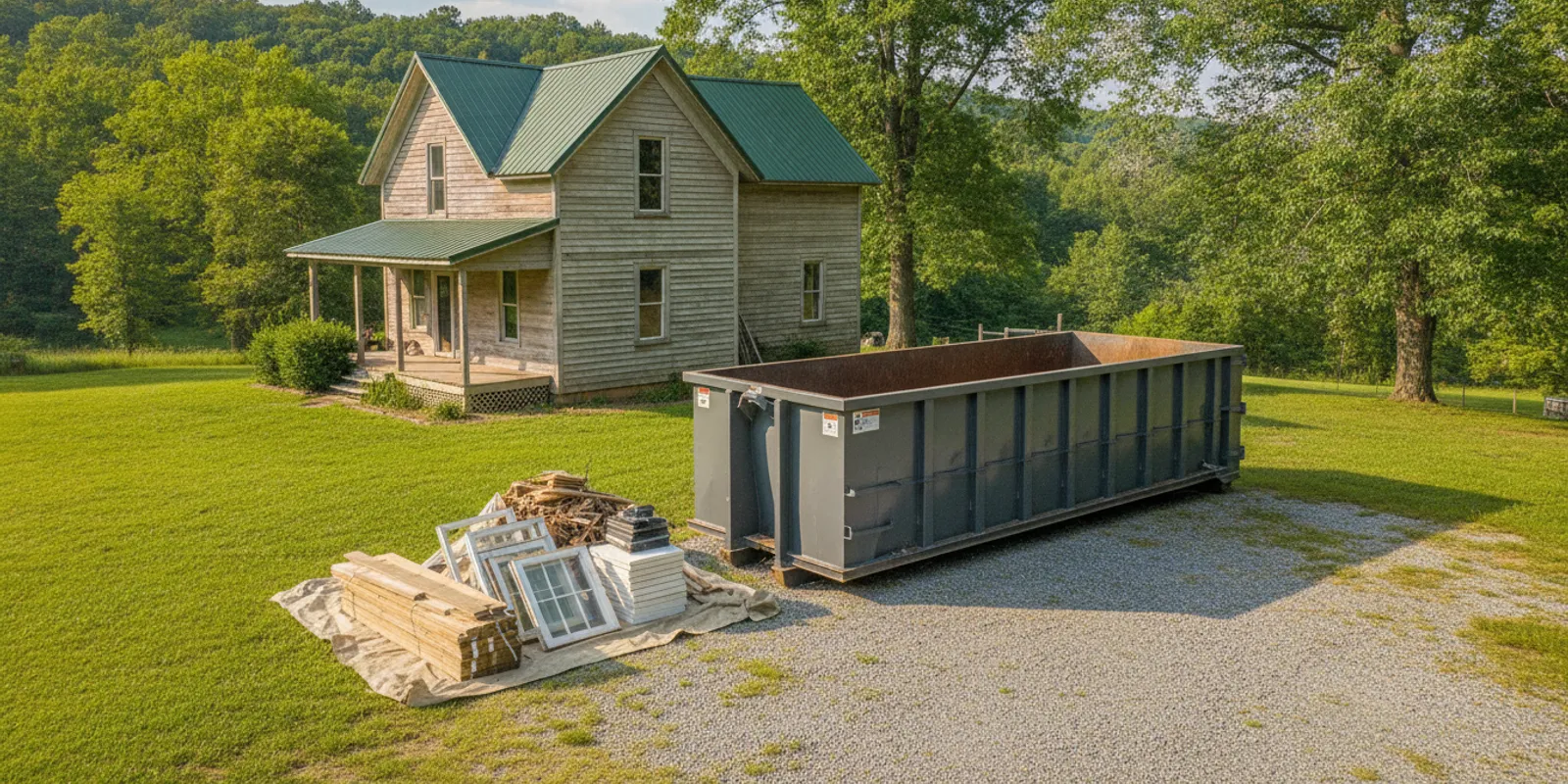
Planning a home cleanout, renovation, roof project, or yard improvement in Cannon County? A cannon county tn roll off dumpster rental can give you one convenient place to collect debris while work moves forward. The best plan depends on what you are throwing away, how much material you expect, where a container can sit, and whether you want to load it yourself.
Request help planning your disposal project
What should you know before arranging a dumpster in Cannon County?
Start with the project rather than a container size. A kitchen remodel, garage cleanout, roof replacement, and brush-clearing job can produce very different debris. Make a short list of the rooms, structures, or outdoor areas involved. Then note the biggest items, the material types, and the order in which debris will be created.
A roll-off rental is usually most useful when debris will accumulate over several days and you can load the container yourself. You can work room by room, keep the property organized, and avoid repeated trips with a pickup or trailer. A full-service removal crew may be more practical when the work is a single cleanout, items are difficult to lift, or you do not want to handle loading.
Before booking, confirm service at your exact address. Dumpsters On Demand serves Middle Tennessee and South-Central Kentucky, but coverage, delivery timing, and access conditions should be confirmed for the specific property. Review the service area information and use the company information page as starting points for that conversation.
Cannon County also identifies a Convenience Center as a place where county citizens can dispose of solid waste. Its current location, hours, accepted materials, and operating requirements should be confirmed before you load a vehicle. The county’s Convenience Center information is the most relevant local reference in this guide.
Which disposal option fits your project?
Compare the options by considering volume, timing, physical effort, and transportation. A low-volume load that fits safely in a vehicle may not need a rental. A multi-day renovation may be difficult to manage with repeated trips. A large cleanout may be easier when a crew handles the lifting.
| Option | Works well when | What you handle | What to confirm |
|---|---|---|---|
| Roll-off dumpster rental | Debris builds up over several days or tasks | Sorting, carrying, and loading material | Address coverage, placement, rental period, materials, and weight terms |
| Full-service junk removal | You want a crew to lift and haul bulky items | Identify what should go and provide access | Item list, access, scheduling, and estimate details |
| Cannon County Convenience Center | You have a suitable vehicle and a manageable load | Transporting, unloading, and following facility rules | Current hours, accepted waste, residency rules, and fees |
| Donation or recycling | Items are usable or a material has a recovery route | Separating and delivering or coordinating acceptance | Condition standards, acceptance, and pickup availability |
Dumpsters On Demand offers 15-yard roll-off rentals and full-service junk removal. Rental customers load the container themselves, while junk removal crews handle lifting and hauling. Review the dumpster options and pricing page when you want a container, or compare the junk removal service when the job calls for a crew.
How can you estimate the amount of debris?
Looking at a pile often leads to an unreliable estimate. Debris can settle, bulky objects leave empty spaces, and a remodeling project may create more material after walls or flooring are removed. An inventory gives you a clearer basis for a conversation with the provider.
- Define the work area. List each room, outbuilding, roof section, driveway area, or yard section included in the project.
- Separate large objects. Count cabinets, appliances, mattresses, furniture, doors, fixtures, and other items that occupy space.
- Estimate small debris. Use bags, boxes, bins, wheelbarrow loads, or trailer loads as familiar units rather than guessing from a loose pile.
- Identify dense materials. Mark dirt, concrete, brick, stone, roofing material, and other heavy debris separately because weight can matter as much as volume.
- Account for growth. If demolition is still underway, include a reasonable allowance for material hidden behind walls, under flooring, or beneath an old structure.
- Share the mix. Tell the provider what the debris is made of, how much you expect, and how long the project will last.
For example, a garage cleanout may involve shelves, boxes, a worn couch, and loose household items. A roof replacement may involve bundled shingles and related tear-off debris. Both can occupy a similar-looking area on the ground, but the material mix and loading method differ. A provider can give more useful guidance when you describe the actual contents instead of saying only that you have a pile.
Dumpsters On Demand specializes in 15-yard dumpsters. That makes an honest project description especially important: do not assume that a different container size is available, and do not plan to fill the container above its safe fill line. The roll-off container rental guide can help you think through capacity, loading, and scheduling questions.
What materials should you sort before loading?
Make a material list before the first item enters the container. Household clutter, construction debris, yard waste, appliances, and dense materials can have different acceptance or weight rules. Ask what is permitted, what must remain outside, and whether a mixed load is appropriate. Keep questionable items in a separate area until you receive instructions.
Do not treat a dumpster as a solution for every waste stream. Paint, chemicals, fuel, batteries, pressurized containers, electronics, tires, and other specialty materials may require a separate disposal route. Rules can vary by provider and facility, so confirm rather than relying on a general internet list. The same caution applies to the county facility: check its current accepted-material list before making a trip.
Heavy debris deserves special attention. Concrete, brick, dirt, and stone can reach weight limits before a container looks full. If a project includes these materials, describe the approximate amount before delivery. For concrete-specific planning, the guide to disposing of concrete offers another planning reference.
Set aside usable items early. Clean furniture, fixtures, tools, and household goods may be candidates for donation if a receiving organization confirms that it accepts them. Separate recyclable materials only when you have a realistic place to take them. Dumpsters On Demand states that it prioritizes donation and recycling where practical, with landfill disposal as a last resort. That approach can reduce the material sent for disposal, but acceptance still needs to be verified for each item.
Where can a dumpster be placed?
Choose a level, stable location with enough room for the delivery vehicle to approach and set down the container. A driveway is often convenient, but inspect more than the parking surface. Look for gates, narrow turns, steep grades, soft ground, low branches, overhead wires, retaining walls, and nearby vehicles.
Measure the route from the street to the proposed placement area. Open gates fully, move parked cars, and remove stored items that could limit the truck’s approach. Tell the provider about any slope, tight turn, low clearance, or surface concern before delivery. A clear description helps avoid an arrival-day surprise.
If the container may sit on a public street, shoulder, alley, or other property that you do not control, check with the relevant local authority before scheduling. A private driveway and public right-of-way may have different permission or safety requirements. Do not assume that a rental provider can obtain every approval for you.
Keep the placement area away from entrances and emergency access. Leave a clear path for people carrying debris, but keep children and pets away from the work zone. The company’s guide to loading a dumpster safely includes practical reminders for arranging and using the container.
How should you prepare for delivery and pickup?
Use a written checklist so the container is ready when it arrives:
- Confirm the service address, contact information, delivery date, pickup plan, and rental period.
- Describe the debris, including dense or unusual materials, before finalizing the arrangement.
- Clear the placement area and the full approach route.
- Tell the provider about gates, slopes, overhead obstructions, limited turning space, or soft ground.
- Keep the container accessible throughout the project. Do not block it with a vehicle, trailer, scaffold, or equipment.
- Load heavy material evenly instead of concentrating it in one corner.
- Keep debris below the fill line and do not allow items to hang over the sides.
- Keep restricted materials outside the container until you have specific disposal instructions.
- Contact the provider before pickup if the project timeline or material list changes.
Plan the loading route from the work area to the container. If a bathroom is being remodeled, place boxes or bins where workers can carry tile and fixtures without crossing a finished room. If a garage is being emptied, create separate zones for donation, recycling, and disposal before loading. If a contractor is working on the roof, coordinate where tear-off material will land so it can be moved safely and evenly.
Do not use the container as a work platform, climb into it, or allow people to sort material from an unsafe position. Keep sharp objects contained and maintain a tidy area around the rental. Small habits make the site easier to navigate and reduce the chance that the container becomes overloaded or difficult to service.
What should you ask before booking?
A clear quote starts with clear questions. Ask the provider:
- Do you serve my exact Cannon County address?
- Is a 15-yard container appropriate for the material and estimated volume?
- What rental periods are available, and how do extensions work?
- Which materials are allowed, restricted, or subject to separate handling?
- What weight allowance and additional-charge terms apply?
- What placement conditions must be met for delivery?
- Are delivery, pickup, disposal, and the rental period included in the quoted terms?
- What happens if the container is ready early or the project takes longer?
- How should I request a date change?
Review the quote and terms rather than relying on assumptions. The terms page is available for reference. Ask for clarification if the material list, rental period, or weight language is not clear. A short conversation before delivery is easier than correcting a rejected item or an inaccessible placement area later.
When is a removal crew a better fit?
A rental gives you control over the loading schedule, but it requires carrying, sorting, and placing the debris. Full-service junk removal may be better when a cleanout must be completed quickly, the load includes heavy furniture, or you do not have a suitable location for a container. It can also help when material is spread throughout several rooms, up stairs, or across an outbuilding.
Compare the work involved, not only the disposal method. With a rental, you prepare the site, load the container, follow material rules, and keep access open for pickup. With junk removal, you identify what should go and make sure the crew can reach it. For a room-by-room furniture project, use the furniture removal guide to organize the list. For a garage project, the garage cleanout dumpster guide can help you compare a staged rental with a one-time haul-away.
Consider three common examples. A homeowner completing a two-week renovation may prefer a rental because debris arrives in stages. Someone clearing an inherited home may prefer a crew because furniture and boxes must be removed from multiple rooms. A small yard project with a vehicle and a manageable load may be more efficient at an approved public facility. The right choice is the one that matches the material, timeline, access, and physical effort.
Frequently asked questions
Does Dumpsters On Demand serve every address in Cannon County?
Confirm your exact address and requested date directly. Service coverage and delivery logistics can vary by location, road access, and the proposed placement area.
What size dumpster does the company offer?
The company specializes in 15-yard roll-off dumpsters. Describe the debris, material mix, and project timeline so the provider can help determine whether that option fits.
Can I put any type of waste in a rented dumpster?
No. Material rules and weight terms apply. Ask what is accepted before loading, and keep restricted or uncertain items separate until you receive instructions.
Should I rent a dumpster or hire junk removal?
Choose a rental when you want to load debris yourself over time and have a suitable placement area. Consider junk removal when you want a crew to lift and haul items or the project involves a one-time cleanout.
What local disposal information should I check?
Cannon County’s Convenience Center page is a useful starting point for citizens considering a public disposal option. Confirm current hours, location details, accepted materials, and any requirements before traveling.
Choose a disposal plan that fits your project
For a smoother cleanup, inventory the debris, separate usable and questionable items, confirm material rules, and prepare a safe placement area before scheduling. Then compare the effort of self-loading with the convenience of a removal crew. Dumpsters On Demand can discuss the project through its contact page, and the Tennessee office phone number is (615) 971-3668.
Ask about your Cannon County project
With the service address, debris list, access plan, and pickup expectations confirmed in advance, you can keep the cleanup organized and focus on the work ahead.