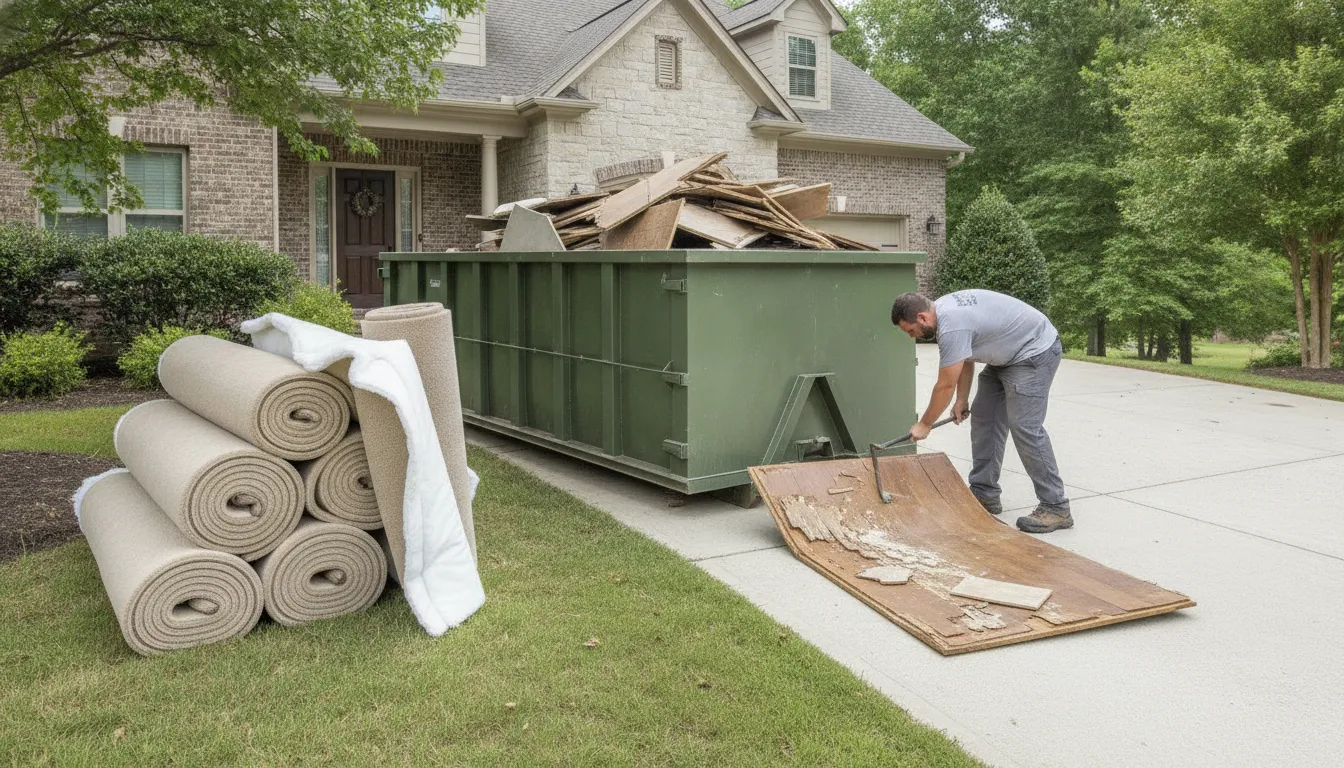
Old carpet can take up more space than expected, especially once rolls, padding, and related renovation debris are gathered in one place. The right disposal method depends less on the carpet itself than on who will do the lifting, how much material you have, and whether you need a container at the property.
Need help with carpet disposal? Book online for the service that fits your project.
For most Middle Tennessee projects, carpet disposal comes down to two practical choices. Hire full-service junk removal when you want a crew to lift, load, and haul everything away. Rent a driveway-friendly dumpster when you or your team will handle the work and need an onsite container.
That distinction helps homeowners, contractors, and businesses plan around labor, access, project timing, and cleanup volume. Before choosing a service, it helps to understand what happens to carpet during a typical removal project and which details can change the amount of space and handling your job requires.
What Carpet Disposal Usually Involves
Old carpet rarely leaves a project as one neat piece. Once flooring is pulled up, you may also be dealing with padding, tack strips, cutoffs, staples, and other renovation debris. The right disposal plan depends less on the word “carpet” and more on the work around it. Consider who will lift and load the material, how much there is, how easily it can reach the driveway, and when you need it gone.
That is why carpet disposal is best treated as a project decision rather than a single service. A small bedroom refresh may create a manageable amount of rolled material. Replacing flooring throughout a house, clearing a rental property, or finishing a commercial renovation can create bulky debris that needs more space and more handling. The U.S. Environmental Protection Agency notes that carpet’s bulky nature can create collection and handling problems, and that its mixed materials can make recycling difficult. See the EPA’s overview of carpet materials and end-of-life considerations for broader context.
Start with the labor question
Will you or your crew remove the carpet, carry it out, roll it, and load it? If so, a dumpster gives you a container onsite while you control the pace of the project. Dumpsters On Demand uses a drop-off, customer-loading, pickup model. You can review the driveway-friendly 15-yard dumpster option when a renovation or cleanout will produce a steady stream of debris.
If you do not want to handle the lifting and loading, full-service junk removal is the more relevant path. That distinction matters when carpet is heavy with moisture, spread across multiple rooms, located up stairs, or being removed while you are managing other renovation work. The condition of the material, the amount of padding and tack strips, and the distance from the rooms to the truck or container can all affect the practical effort involved.
Then plan for volume, access, and timing
Before scheduling, estimate the number of rooms. Identify where the material will be staged, and check whether a truck or container can access the property without obstructing doors, vehicles, or neighbors. Also decide whether the project needs a container onsite for several days or a crew to arrive, load, and leave. Confirm placement details and disposal arrangements with the provider before work begins, especially if the material is wet, contaminated, or mixed with other debris.
When a 15-Yard Dumpster Makes Sense for Carpet Disposal
A 15-yard dumpster can be a practical carpet disposal option. It works well when you or your crew are handling the removal and want a container available throughout the project. The service is self-service: Dumpsters On Demand drops off the roll-off, you fill it, and the company picks it up when the job is finished. That gives you one place to put carpet, padding, and other renovation debris instead of making repeated trips to dispose of bulky material.
The container holds 15 cubic yards. Its published dimensions are 12 feet long by 8 feet wide by 4.5 feet high. That size can provide useful room for a flooring project, a room-by-room renovation, or a cleanout where carpet is only part of the load. The right fit still depends on how much carpet you are removing, what else will go in the container, and whether the material is rolled, cut, or bundled. Planning the load before delivery helps you avoid filling the space with awkwardly arranged pieces.
The 15-yard model includes 2 tons in the base rental. That matters because carpet and renovation debris can vary in weight, especially when other materials are added. Keep heavier items distributed rather than concentrating them in one area, and confirm any material or loading questions before scheduling. The container should be loaded safely and within the provider’s instructions, not packed above the top or in a way that creates a transport hazard.
For homeowners and contractors who want a driveway-friendly container, the driveway-friendly 15-yard dumpster is the relevant option to review. Driveway-friendly positioning can be helpful on residential projects, but it does not mean every driveway, surface, access route, or placement is suitable. Before booking, confirm where the truck can reach, how much clearance is available, and where the container should sit.
Rental duration is another planning point. Review the available terms and current rates on the page for dumpster prices and rental durations, then choose a window that gives your project enough time for removal and loading. A dumpster makes the most sense when you control the labor and want disposal capacity onsite. If you need someone to lift and load the carpet for you, full-service junk removal may be the better route.
When Full-Service Junk Removal Is the Better Choice
A dumpster works well when you or your crew can handle the carpet removal, carry the material outside, and load the container. Full-service junk removal solves a different problem. The crew handles the lifting, loading, and hauling, so you are not responsible for moving bulky rolls from the work area to a container.
That labor difference matters most when access is difficult. Carpet removed from an upstairs room, a basement, or a property with several flights of stairs can become a demanding job quickly. Long rolls are awkward to carry, and maneuvering them through hallways, doorways, and stairwells may require more people than expected. If you have concerns about lifting, balance, back or joint strain, or general physical limitations, paying for help can be the safer and more practical carpet disposal route.
Choose labor when time is the main constraint
Full-service removal can also make sense when you need the material out quickly. A dumpster requires you to organize the work, move each load, and keep the project moving until the container is ready for pickup. That is manageable for a planned renovation with several people available. It is less convenient when a home must be cleared before a move. A property is being prepared for new occupants, or a small cleanout contains several unrelated bulky items.
For an occupied home, rental property, office, or estate cleanout, having a crew manage the heavy work can reduce disruption. You can identify what should go, point out access details, and let the professionals handle the physical loading. This is especially useful when carpet is only one part of a smaller mixed cleanout rather than the main material from a large renovation.
Know what service model you are booking
With self-service rental, the company drops off the container, you fill it, and the company takes it away. With full-service junk removal, the work is centered on crew labor and hauling instead. Before scheduling, explain where the carpet is located, whether stairs or narrow access are involved, and whether other items will be included. That information helps confirm which service fits the property and the scope of work.
How to Prepare Carpet for Pickup or Disposal
A little preparation makes carpet disposal safer and easier to plan. Whether you are loading a dumpster yourself or arranging a crew to handle the work, organize the material before the scheduled pickup or delivery. Use this checklist to avoid surprises.
- Confirm the service model. Decide whether you need a container delivered for you or your crew to load, or full-service junk removal with professional lifting, loading, and hauling. These are different services, so confirm what labor is included before scheduling.
- Measure the access route. Check doorways, hallways, gates, stairs, driveway width, overhead clearance, and the path from the room to the loading area. Note tight turns or steps that could affect how rolled carpet is carried. Share those details in advance if a crew will be moving it.
- Roll the carpet into manageable sections. Cut or fold long pieces only as needed to make them safer to move. Roll each section tightly with the backing facing inward, then secure it with twine, stretch wrap, or sturdy straps. Avoid making bundles so heavy that one person cannot control them.
- Separate padding and tack strips when practical. Keep padding apart from carpet if it comes up easily. Remove tack strips only if you can do so safely and have the right tools. Place sharp strips in a rigid container or otherwise secure them so they cannot puncture bags, gloves, or walking surfaces.
- Set aside questionable materials. Keep wet, visibly contaminated, chemically treated, or unknown materials separate from ordinary carpet. Do not assume a disposal provider will accept every material in the same load. Describe anything unusual when you request service and confirm the correct handling plan first.
- Protect the walkway. Sweep up loose staples and fasteners, cover vulnerable flooring, and keep bundles out of active walkways until they are ready to move. Wear gloves and sturdy footwear when handling carpet, padding, tack strips, or debris.
- Choose the load location before delivery or pickup. Decide where the container or collected material will sit, while keeping driveways, gates, utilities, and vehicle access in mind. Confirm that the proposed placement works for the property and the service provider before the appointment.
Clear information about the carpet, access, and intended loading area helps the provider recommend the right next step without guessing.
Dumpster Rental or Junk Removal: Which Fits Your Project?
The right carpet disposal option depends less on the carpet itself than on who will do the physical work and how you want the project to run. A dumpster gives you a container at the property so you, your crew, or a contractor can remove and load the material on your own schedule. Full-service junk removal shifts the lifting, loading, and hauling to a removal crew.
| Project factor | Dumpster rental | Full-service junk removal |
|---|---|---|
| Labor | You or your crew remove, carry, and load the carpet. | A professional crew handles the lifting, loading, and hauling. |
| Project control | You control the pace and can add other allowable renovation debris as the work progresses. | The crew completes the removal during the scheduled service window. |
| Volume | Best when carpet removal produces enough material to justify having a container onsite. | Useful for a smaller, defined load that can be removed in one crew visit. |
| Access | Works well when there is a suitable placement area and a clear path for loading. | Can be more practical when you cannot safely stage a container or carry material to one. |
| Timing | Supports multi-day renovation work because the container remains available during the rental period. | Fits a project where you want the material gone after one planned appointment. |
| Best fit | DIY renovations, flooring crews, and larger cleanouts with hands available for loading. | Occupied homes, limited labor, difficult lifting, or customers who want a hands-off removal. |
For carpet disposal, choose a dumpster when you have help available and want control over the sequence of removal. Confirm the placement area first, then plan how rolled carpet, padding, and related debris will move from the room to the container. A driveway-friendly 15-yard dumpster may fit a renovation workflow when the site and access are suitable.
Choose full-service junk removal when the main problem is labor rather than container space. That route is especially practical if carrying bulky rolls down stairs, through narrow paths, or across a long distance would create unnecessary strain. If the project scope changes, confirm what materials the selected service can accept before scheduling.
A Local Carpet Disposal Plan for Middle Tennessee
For a carpet disposal project in Nashville or elsewhere in Middle Tennessee, start by deciding who will do the physical work. If you are removing the carpet yourself, or already have a contractor handling the tear-out, a dumpster gives you a container onsite while the project moves forward. If you want a crew to lift, load, and haul the carpet away, full-service junk removal is the more practical route.
Next, estimate the volume and consider the access around the property. Rolled carpet can take more space than expected, especially when padding and other renovation debris are included. A driveway-friendly 15-yard dumpster may fit a residential renovation or cleanout, but placement still depends on the driveway, approach, overhead clearance, and available working room. Confirm those details before scheduling delivery rather than assuming every location is suitable.
Match the service to the project
- Choose a dumpster when you or your crew will remove and load the carpet. This works best when you need the container onsite for several stages of work and want control over the project schedule.
- Choose junk removal when the main priority is avoiding lifting and loading, the material is already gathered, or the property has access challenges that make self-loading inconvenient.
- For a commercial project, confirm the loading plan, site access, placement area, and pickup timing with the provider before work begins. A business cleanout may require coordination around employees, customers, tenants, or other active operations.
Dumpsters On Demand serves Nashville and Middle Tennessee with both disposal paths. The company is locally owned and owner-operated, so you can explain the carpet volume, access conditions, and timing before choosing a service. For a broader look at local cleanup options, review debris removal in Nashville.
Confirm these details before booking
- Who will remove, carry, and load the carpet?
- How many rooms, rolls, or work areas are involved?
- Where can a container be placed without blocking access?
- When must delivery, pickup, or crew service occur?
- Is this a residential renovation, home cleanout, or commercial project?
Once those answers are clear, you can request the service that matches the work. That helps you avoid paying for labor you do not need or taking on a loading job you would rather avoid. Tennessee customers can also call (615) 971-3668 with placement or scheduling questions.
Frequently Asked Questions
How do I choose between junk removal and a dumpster for carpet disposal?
Choose full-service junk removal when you want a crew to handle the lifting, loading, and hauling. Choose a dumpster when you or your remodeling crew will remove the carpet and want a container onsite while the project is underway. The right fit usually depends on your available labor, the amount of carpet, access to the property, and how long cleanup will take.
How should I prepare old carpet before pickup or disposal?
Ask the provider what preparation they require before you cut or roll anything. In general, keep carpet rolls manageable, separate loose padding and tack strips, and point out any moisture, unusual contamination, stairs, narrow gates, or other access issues. Clear a safe path before the crew arrives, or plan your loading route before a dumpster is delivered.
Is a 15-yard dumpster large enough for a flooring project?
A 15-yard roll-off provides 15 cubic yards of capacity and is positioned as a middle-ground option for residential and commercial renovation work. It can suit carpet and other flooring-related debris, but the actual fit depends on the amount of material and what else you are throwing away. Review the published 15-yard dumpster details and confirm the load plan before booking.
Can carpet be recycled in Middle Tennessee?
Recycling availability can vary by material, provider, and location. The EPA notes that carpet’s bulky construction and varied materials can create collection and recycling challenges, so do not assume a local drop-off accepts every type. If recycling matters for your project, verify the current program directly before arranging transportation.
What should I confirm before scheduling carpet disposal?
Confirm whether the service includes labor, how the carpet should be prepared, where the container or truck can access the property, the expected volume, and any material restrictions. For a Middle Tennessee project, you can also confirm the service area and timing before using the company’s online booking path.
Ready to Choose Your Carpet Disposal Option?
The right choice depends on whether you want a container onsite for your crew or help with lifting and hauling. For a driveway-friendly dumpster or full-service junk removal in Middle Tennessee, book online and choose the service that fits your project. You can also call (615) 971-3668 if you want to talk through the next step.