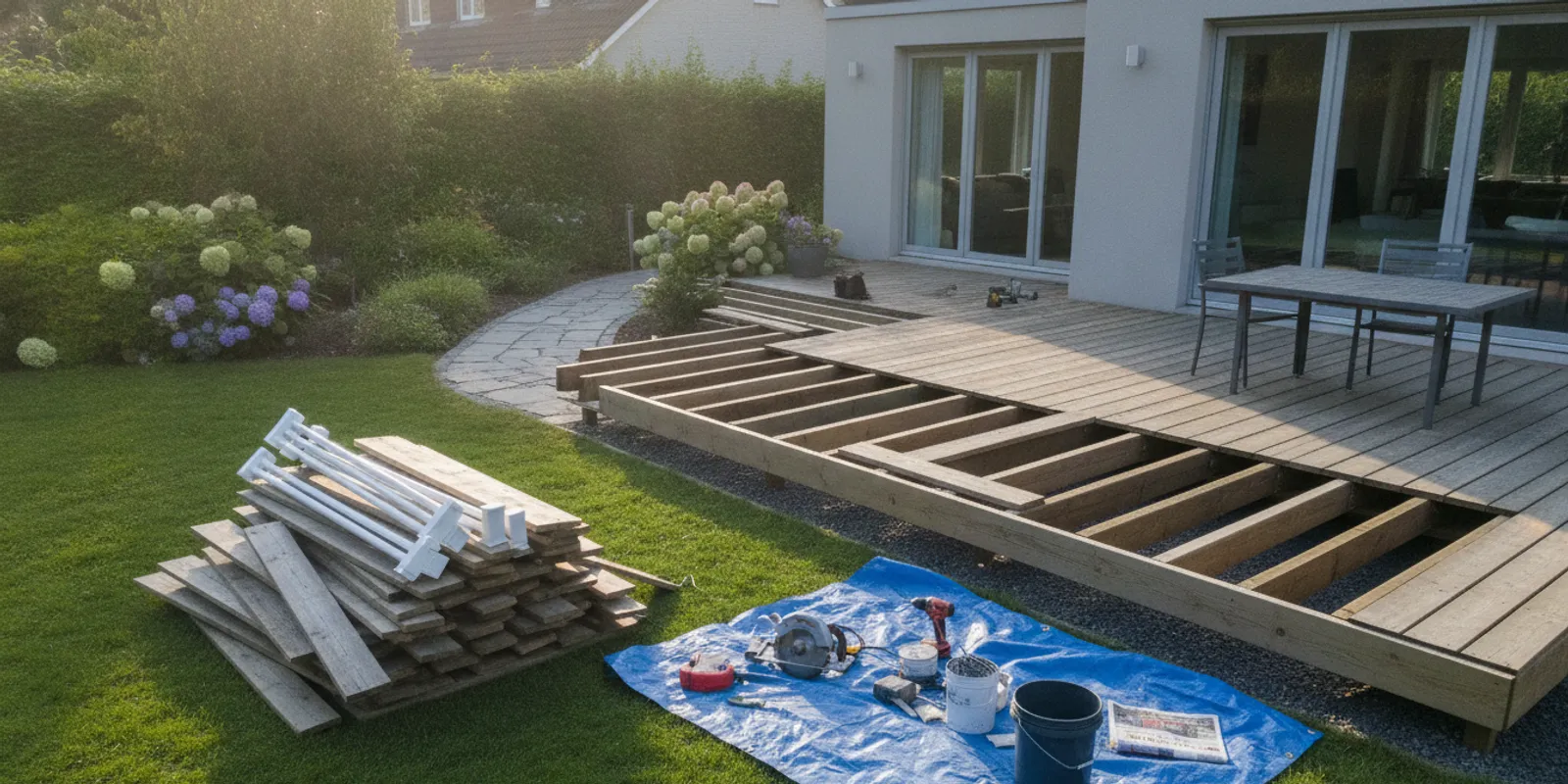
Deck removal is easier to plan when you decide how the structure will come apart and where each material will go before demolition starts. Whether you are replacing a worn deck, clearing a yard, or preparing for a larger renovation, the right disposal plan can keep the work area manageable and help you avoid a last-minute pile of boards and hardware.
Book disposal support for your project
What should you decide before starting deck removal?
First, define the scope. Are you removing only the deck boards, or the railings, stairs, framing, posts, and footings as well? A surface-board replacement creates a different volume and material mix than taking the entire structure down to the ground. If you are not sure what must go, walk the project area and list each component.
Then check the site and the project schedule. Note the deck’s height, how close it is to the house, where workers can carry debris, and whether a vehicle or dumpster can reach the loading area. Look for overhead obstructions, gates, landscaping, and narrow paths. The demolition method should fit both the structure and the space around it.
- Set a clear boundary. Mark the part of the deck being removed and protect any steps, siding, doors, or structures that will remain.
- Choose the disposal approach. Decide whether you will load debris yourself into a container or have a removal crew handle the lifting and hauling.
- Estimate how long work will take. Include dismantling, sorting, loading, and cleanup,not just the time spent removing boards.
- Check material restrictions. Ask the disposal provider what it accepts, especially if the deck has treated or composite lumber, roofing material, concrete, or other mixed debris.
A useful starting point is this guide to how dumpster rental works. It explains the basic drop-off, loading, and pickup process so you can judge whether self-loading matches your project.
Should you rent a dumpster or hire a removal crew?
The main choice is who will do the loading. With a dumpster, the container is delivered and you load it as the work progresses. With full-service removal, a crew handles the heavy lifting and hauling. A do-it-yourself approach using ordinary trash collection may work for a small amount of material, but it depends on local collection rules and the amount your household service can accept.
Deck debris is bulky, awkward, and often includes pieces of different lengths. Consider your available time, ability to lift and carry, access to the work area, and whether you can safely dismantle the structure. A rental may suit a project where you or a contractor will remove the deck in stages. Full-service hauling may be more practical when you want help loading or have limited time and physical capacity.
| Option | Who loads the debris? | Best fit | What to confirm |
|---|---|---|---|
| Dumpster rental | You or your project crew | A teardown that will produce debris over several hours or days | Container placement, accepted materials, rental period, included weight, and any overage terms |
| Full-service removal | The removal crew | A project where you want help with lifting, loading, and hauling | What materials and labor are included, access needs, timing, and how the estimate is determined |
| Household or municipal collection | You prepare items for collection | A small quantity that meets the local service’s size and disposal rules | Local limits, preparation requirements, collection schedule, and whether construction debris is accepted |
| Do-it-yourself hauling | You load and transport the debris | A small project with a suitable vehicle and a confirmed receiving facility | Facility hours, material acceptance, vehicle capacity, and unloading arrangements |
Dumpsters On Demand offers both dumpster rentals and full-service junk removal. The junk removal service page describes the crew-based option. If you prefer to load debris as you work, review the 15-yard dumpster guide for a better sense of the company’s container offering. Its rental service specializes in 15-yard roll-off dumpsters, with rental periods ranging from one day to 14 or more days, subject to the terms you confirm when booking.
How can you estimate the debris and container needs?
There is no dependable container estimate from deck footprint alone. Two decks with the same dimensions can produce different amounts of debris because one may have more framing, stairs, railings, built-in seating, or thick structural members. Some components may remain in place, while others may be cut into shorter pieces for safe handling and efficient loading.
Make a simple inventory before requesting a quote. Record the deck’s approximate length and width, the number of levels, whether it has stairs or built-in features, and whether posts or concrete footings are part of the removal. Take clear photographs from several angles. Tell the provider whether you expect wood, composite boards, metal hardware, concrete, or other materials. Accurate details are more useful than guessing at a container size based only on square footage.
Also account for weight and loading. A container can have room left but still approach its allowed weight, especially when heavy structural pieces or concrete are included. Keep concrete, soil, and other dense debris separate unless the provider confirms it can go in the same container. For a mixed or unusual load, ask for direction before demolition. The guide to dumpsters for dirt and concrete offers further context on why dense materials need special planning.
Dumpsters On Demand’s dumpster rental rates are described as including delivery, pickup, and two tons of disposal, with additional weight handled under the applicable terms. Ask the company to confirm current pricing and what applies to your specific project. You can review the available dumpster prices and rental information and compare the details with your expected material mix.
How should you prepare the site and organize the teardown?
Before work begins, clear a path from the deck to the planned loading area. Move patio furniture, planters, grills, and other belongings away from the work zone. Protect plants or surfaces you want to keep, and choose a place for reusable items that is separate from the debris pile. If a dumpster is being delivered, confirm the placement location and access instructions in advance. Keep the container location clear so delivery and pickup are not obstructed.
For the teardown itself, follow a deliberate sequence rather than pulling everything apart at once. Work in manageable sections, keep removed pieces controlled, and do not leave unstable sections unsupported. Use appropriate protective equipment and tools for the materials and conditions. Deck demolition can involve sharp fasteners, splintered wood, elevated work, and heavy components. If the structure is unstable or the work involves hazards outside your experience, stop and get qualified help instead of improvising.
- Prepare the work area. Keep children, pets, and bystanders out of the active zone. Set a clear route for carrying material and a separate spot for sorting.
- Remove loose items first. Clear furniture, planters, lights, and other belongings before dismantling structural components.
- Take apart sections in a controlled order. Follow a safe plan suited to the deck’s construction, and avoid cutting or removing a component if doing so could destabilize the remaining structure.
- Sort as you go. Keep potentially reusable material, scrap metal, and different waste streams separate where practical. Keep nails and hardware contained rather than scattered across the yard.
- Load safely. Place material inside the container without climbing on its sides or exceeding fill and weight limits. Follow the provider’s loading guidance and leave prohibited materials out.
- Inspect and clean the area. Look for nails, fasteners, small scraps, and any damaged ground or surfaces before considering the project complete.
Electrical lines, lighting, and other services attached to a deck deserve particular care. Do not cut, disconnect, or disturb wiring or utility connections unless you are qualified and it is safe to do so. Arrange for a qualified professional when the work requires it. Similarly, confirm whether permits, approvals, or property rules apply to your project. Requirements vary by location and circumstances, so do not assume a general checklist replaces local guidance.
Which deck materials need extra disposal attention?
Identify the materials before choosing a disposal destination. A deck may contain wood boards and framing, composite decking, metal connectors, concrete footings, railings, or attached fixtures. Materials that look similar can have different acceptance rules. Composite and treated lumber should not automatically be handled like clean, untreated wood; ask the receiving facility or disposal provider what it accepts.
If the deck has reusable boards or hardware in good condition, set those aside before they are mixed with demolition debris. Reuse may be possible when materials are sound and appropriate for another project. Keep recyclable metal separate if you have a confirmed outlet for it. For other debris, ask about facility sorting and disposal options rather than assuming every material will be recycled.
The U.S. Environmental Protection Agency provides general information about waste prevention and materials management at its official website. Use that as a starting point for broader guidance, and check local rules or ask the disposal provider about the specific deck materials in your load. Dumpsters On Demand states that it prioritizes donation and recycling where appropriate, with landfill disposal as a last resort; ask which options are available for the materials from your project.
Do not place a questionable item in a container just because it came from the same structure. Confirm acceptance for paint, chemicals, batteries, appliances, or other special wastes if any are present. The rules for those items may differ from ordinary construction debris.
How can you compare quotes without surprises?
Compare the scope and terms, not just the first number you see. A rental quote and a full-service removal estimate cover different work: one provides a container for you to load, while the other may include labor to remove and haul items. Ask each provider to explain what is included and what would change the price.
- What delivery, pickup, labor, disposal, and rental time are included?
- How does the provider handle weight limits and additional disposal weight?
- Are there restrictions on treated lumber, composite decking, concrete, or mixed debris?
- What happens if the teardown takes longer than planned or the pickup date needs to change?
- Does the estimate assume clear access, and are there placement requirements for the property?
- For a removal crew, does the estimate cover the whole deck or only the debris already removed?
For dumpster rentals, Dumpsters On Demand offers flexible rental periods and describes its rates as upfront, with delivery, pickup, and two tons of disposal included. Confirm the applicable quote, included rental period, weight allowance, and any extra charges directly before scheduling. For a crew-based project, describe whether the deck is already dismantled or still standing, how far debris must be carried, and any access constraints. The company’s debris removal information can help you understand the hauling option for a project that creates construction debris.
Use the same project description when you request estimates. Photos and a component list help providers understand the amount of work and spot issues that may affect access or handling. If a quote assumes that you will dismantle the deck, do not compare it as though it includes full teardown labor. Clarify responsibilities before confirming a date.
What should you confirm before booking?
Before scheduling, verify the exact service address, delivery or crew arrival window, contact details, container placement, and the planned pickup or completion date. If the worksite is shared or access is limited, make sure anyone who needs to move a vehicle or unlock a gate knows the schedule. Keep the drive and loading route clear.
Review the provider’s current rules for prohibited materials, fill level, and weight. Make a plan for any items that cannot go in the dumpster so they do not get mixed into the load during a busy teardown. If a project changes,such as discovering concrete footings or additional stairs,pause and confirm how that affects the estimate or disposal plan.
For more ideas about sorting and handling a broader renovation load, see this guide to getting rid of construction debris. If yard work is happening at the same time, review the separate guidance for yard waste dumpster planning; do not assume yard trimmings and deck debris share the same acceptance rules.
Arrange a junk removal appointment
Frequently asked questions
Can I put a whole deck in a dumpster?
That depends on the container’s capacity, weight limit, and rules for the materials. The amount also depends on the deck’s size and construction. Share the dimensions, photos, and material details with the provider before booking, and ask whether concrete footings or composite and treated boards require separate handling.
Is it better to dismantle the deck before booking removal?
It depends on the service. With a dumpster rental, you are responsible for loading, so you need a safe dismantling and loading plan. With full-service junk removal, a crew handles lifting and hauling, but confirm what teardown work is included rather than assuming that every estimate covers dismantling a standing structure.
How long does deck removal take?
Timing varies with the deck’s size, design, condition, access, and the number of people doing the work. Stairs, railings, built-in features, concrete footings, or a narrow route can add time. Include sorting and cleanup in your schedule, and arrange pickup or a rental period with enough room for the whole job.
Can deck boards be recycled or reused?
Some material may be suitable for reuse or recycling, but condition and material type matter. Separate items that appear usable, then confirm whether a local recipient or facility accepts them. Ask about treated or composite lumber specifically instead of putting it in a stream intended for clean wood.
What if I only need help with the debris after demolition?
Explain that the deck is already dismantled when you request an estimate. Share the approximate volume, material types, and distance from the pile to the loading location. That helps the provider identify whether a dumpster you load or crew-based hauling fits the remaining work.
Choose a disposal plan that fits the project
A successful deck removal plan accounts for the structure, the material mix, safe access, and the time needed to sort and haul debris. Decide who will dismantle and load, confirm acceptance rules for each material, and compare complete service terms before you start. With those details settled, you can focus on the work and finish with a cleaner, safer yard.