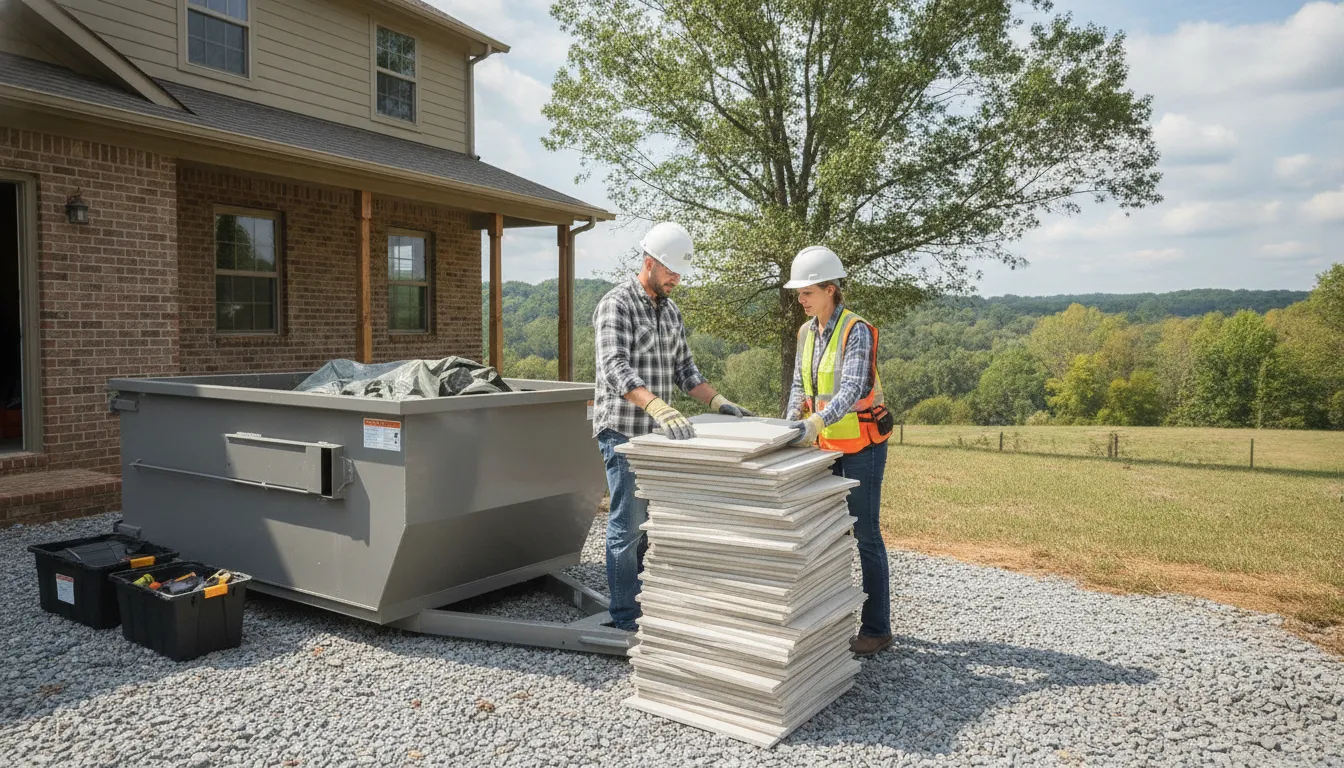
A small repair can leave a few offcuts, while a remodel may create a bulky pile. First check who can use a local drop-off and who will do the lifting. Nashville’s convenience centers serve Davidson County residents who show proof of residency. Residents unload their own materials. Commercial vehicles and waste are excluded. Check Metro’s current rules before a trip.
For drywall disposal in Middle Tennessee, match the route to the load and the labor you can handle. Eligible residents can check local drop-off rules. Larger cleanups may call for a dumpster or a full-service crew. Confirm drywall acceptance before loading or booking.
The practical choice becomes clearer when you compare the size of the pile with the time and help available to move it.
Drywall disposal in Middle Tennessee: choose by volume and labor
The right drywall disposal route depends on your load, available labor, and current acceptance rules. Small piles may suit a verified drop-off. Larger remodels may need a container or removal crew. Confirm acceptance before you book, drive, or load.
Book online, but confirm drywall acceptance before booking or loading.
Start by estimating the pile, not just counting sheets. Note whether this is a small cleanup or several rooms’ worth, whether the boards are intact or broken, and whether other renovation debris is mixed in. The amount affects how many trips or how much loading time a do-it-yourself plan may take. It also helps you explain the job clearly when checking options. Do not assume a facility or hauler accepts drywall because it accepts other household or construction debris.
Next, decide how much of the work you want to handle. If you can load and transport the material yourself, check the facility’s current rules before making a trip. For Davidson County, Metro’s convenience center information covers eligibility and materials. A general construction-and-demolition listing does not confirm that your drywall load is accepted.
If the pile is too large to manage in a vehicle, compare a self-service dumpster with full-service hauling. With a rental, you handle the loading; with a removal crew, the service model includes labor to load and haul. Neither option should be assumed to accept drywall until the provider confirms the material, quantity, and any conditions for your job. Ask before reserving service or putting boards into a container.
There is no single best route for every project. A small pile with an eligible, confirmed drop-off can suit someone willing to do the lifting and transport. A larger pile, limited time, or lack of a suitable vehicle may make paid hauling more convenient, if drywall is accepted. Check local rules and provider terms for the actual load, then choose based on both volume and the labor you can take on.
Can Nashville residents take drywall to a convenience center?
Possibly, but do not assume a Metro Nashville convenience center will accept your drywall. The current Metro page lists construction and demolition (C&D) materials at the Omohundro location, subject to the center’s current materials list and limits. That listing is not a blanket confirmation that drywall is accepted.
Metro convenience centers serve Davidson County residents with proof of county residence. Residents unload their own materials. Commercial vehicles and materials are excluded, so these centers are not a route for contractor or business debris. Check the official Metro Nashville convenience center requirements before loading or driving over. Recheck them near your visit because accepted materials and limits can change.
Confirm the exact material before you go
Drywall may be called wallboard or gypsum board, but the center’s posted categories and rules determine what can be dropped off. If drywall is not named clearly on the current list, contact Metro Waste Services and ask specifically whether your type and quantity are accepted at Omohundro. Also ask about any preparation or load-size requirements. A general C&D listing alone is not enough to plan a trip around.
This distinction matters if you are cleaning up after a renovation. A small household load may seem like a straightforward self-haul, but you still need to meet the residency rule, transport the material safely, and unload it yourself. If the debris came from a commercial job, or you do not qualify as a Davidson County resident, do not treat Metro convenience centers as an option. Confirm another route with a waste provider or an appropriate facility before you load the vehicle.
Confirm acceptance before the material leaves your property. This check can prevent a wasted trip and clarify who unloads it and where it can go.
What should you know about drywall reuse and recycling?
Separate clean, intact drywall from broken pieces mixed with insulation, fasteners, or other debris. Usable sheets may be candidates for reuse. Keep clean offcuts separate for possible recycling. These are sorting ideas, not a promise that a local organization will take the material.
An EPA construction specification describes clean gypsum board as untreated, unpainted, and free of contamination. It suggests stacking larger clean pieces and keeping them dry for possible reuse or recycling. It also recommends preventing spills during transport. This older specification is not Nashville facility policy. Treat it as general handling guidance, and contact any recipient before loading or driving there.
For a remodel, check whether whole sheets can be reused on the same project or offered to someone who can use them. Keep those pieces protected from rain and separate from the demolition pile. For recycling, ask the facility or hauler what it accepts, whether it requires clean gypsum board to be separated, and how the material must be prepared. Painted, wet, damaged, or mixed debris may not meet a recipient’s requirements, so do not assume the same route works for every load.
Nashville’s Construction and Demolition Recycling Guide is a useful general planning resource for reducing, reusing, and sorting jobsite materials. It should not be read as confirmation that a listed facility accepts drywall. The guide and EPA specification offer planning context, but local acceptance can depend on current facility rules and the condition of the load. Verify directly before setting aside drywall for recycling or arranging drywall disposal.
Which drywall disposal route fits a home, contractor, or business?
Choose based on the load, who can move it, and confirmed acceptance. Do not assume a drop-off, rental container, or removal crew takes drywall. Check current rules before loading or booking.
| Route | Best fit | Who loads? | Check first |
|---|---|---|---|
| Residential self-haul | A small amount from a household project, if a suitable drop-off confirms acceptance. | The resident transports and unloads the material. | Metro convenience centers are limited to Davidson County residents who can show proof of residency. Commercial vehicles and commercial waste are excluded. Confirm the current location-specific material list and limits before driving. |
| 15-yard self-service container | A larger home renovation or a contractor’s job where debris will build up over time. | You or your crew load the container; the rental company delivers and later picks it up. | Get approval for drywall and clarify any loading or placement requirements before scheduling. See Nashville dumpster rental options. |
| Full-service junk removal | A household, property manager, or business that would rather not handle the lifting and loading. | A removal crew handles the loading and hauling. | Describe the drywall, its condition, approximate amount, and access so the provider can confirm whether it is a fit. Review the junk-removal booking option and confirm material acceptance before arranging service. |
For Nashville residents, Metro’s convenience-center requirements are not a promise that every construction material is accepted. Residency and self-unloading rules apply. Contractors and businesses need another plan and should not treat a resident-only center as a jobsite route.
A rental gives you control over loading pace, while full-service removal trades that work for crew assistance. Either can suit a renovation, but drywall-specific acceptance must be confirmed with the provider first. For a small load, check local eligibility and facility rules. For a continuing job or a load you cannot move yourself, compare the service model that matches your crew and schedule.
When is a 15-yard dumpster practical for drywall cleanup?
A 15-yard dumpster can be a practical option when a renovation is producing more drywall debris than you want to haul away in small loads. Or when cleanup will happen over several work sessions. With a rental, the container is delivered, you load it at your own pace, and the company picks it up. That can suit a homeowner doing demolition room by room or a contractor coordinating cleanup alongside other jobsite work.
Before choosing this route, consider the volume and how much lifting your project team can handle. A dumpster rental is self-service: you or your crew move the material into the container. It can make sense when you have the labor available and want a place to consolidate debris as work progresses. If you would rather not carry and load the drywall, full-service junk removal may be a better fit because a crew handles the loading and hauling.
Think through placement and access before scheduling delivery. The truck needs an appropriate route to the drop-off point, and the container needs a workable location for loading without interfering with the project. Check the driveway or other proposed spot, vehicle access, and the timing of demolition and cleanup. If the container would be difficult to reach or the debris needs to disappear immediately, discuss those constraints before booking rather than assuming a rental will fit.
Important: drywall acceptance has not been confirmed. Ask Dumpsters On Demand whether your drywall and any mixed renovation debris are accepted before booking or loading the container. Do not treat the dumpster size or general construction-debris service as confirmation of material acceptance.
Review the Nashville dumpster rental options to understand the self-service route. If you have decided that a crew should do the lifting, book online for the full-service option, and confirm drywall acceptance when arranging service.
How do you prepare drywall for pickup or drop-off?
Sorting and securing material can make pickup or drop-off easier. Before loading, confirm that the provider or facility accepts drywall. Ask how to separate or contain it. General handling advice is not a local acceptance rule.
- Confirm acceptance and instructions first. Check directly with the dumpster provider, hauler, or drop-off facility before you book, load, or make a trip. Ask whether drywall is accepted, whether it must be kept separate from other renovation debris, and whether there are size, quantity, or preparation requirements. Do not assume a curbside service or a mixed-waste option takes it.
- Set aside clean sheets that may be reusable. Keep intact pieces separate from demolition debris and protect them from rain and ground moisture. EPA construction specifications describe stacking and storing clean gypsum board dry for possible reuse or recycling. This is general guidance, not confirmation of local acceptance: EPA construction specification.
- Contain smaller offcuts. Gather loose pieces into a sturdy container or bundle them securely, following the receiving provider’s instructions. Keep small scraps from scattering around the work area or mixing into materials that the facility wants sorted separately.
- Secure the load for transport. Restrain sheets and scraps so they cannot shift or spill. EPA includes spill prevention as general jobsite practice. Use suitable tie-downs and follow vehicle and provider loading directions.
- Do not default to curbside or a mixed cart. Use those routes only if the current waste hauler or local program explicitly allows drywall and explains how to present it. If the rules are unclear, pause and ask rather than mixing it with ordinary trash or recycling.
For a larger renovation, sort as you work and keep the designated drywall area dry and orderly. Confirm the final destination’s current requirements before moving the load; acceptance policies can differ between providers and facilities.
How can contractors keep a drywall jobsite organized?
Plan the drywall phase so cleanup does not interfere with the next trade. Before work begins, decide where offcuts and larger pieces will go, who keeps that area orderly, and how debris leaves the site. Nashville’s Construction and Demolition Recycling Guide offers general planning guidance for waste reduction, reuse, and recycling. It does not confirm that a facility accepts drywall.
Reduce scraps and keep material streams clear
Plan cuts around room dimensions and save clean, usable offcuts for the project when practical. Keep those pieces separate from damaged board, packaging, and mixed demolition debris so the material does not become harder to sort later. EPA construction specifications describe keeping clean gypsum board dry and stacked for possible reuse or recycling, and preventing material from spilling during transport. These are general handling practices; the receiving provider’s and facility’s current rules determine what can be accepted.
Set a staging area before debris accumulates
Choose a consistent collection point that does not block doorways, access routes, or active work areas. Put debris there as the crew goes rather than creating scattered piles that need to be moved again. Keep loads contained and the work area passable, then check the staging area as each phase wraps. A predictable setup makes it easier to estimate when the debris needs to be removed and coordinate with other trades.
Match pickup timing and labor to the project
Arrange removal before the container or staging area becomes an obstacle. With self-service rental, your team loads the material; the provider delivers and picks it up. If your crew needs help lifting and loading, full-service junk removal handles that work. Confirm drywall acceptance before booking or loading.
Do not assume a Metro convenience center is a commercial jobsite outlet: Metro excludes commercial vehicles and commercial waste, and its current requirements should be checked directly. For another planning reference, see Nashville construction debris removal.
Frequently Asked Questions
How should I handle old drywall from a renovation?
Separate intact, clean pieces from broken or mixed demolition debris. Keep clean board dry if you are exploring reuse or recycling, but treat that as general handling guidance, not confirmation of a local outlet. Ask the receiving facility or hauler whether it accepts your material before loading or driving.
Can Davidson County residents take drywall to a convenience center?
Metro Nashville convenience centers are for Davidson County residents, who must show proof of residency and unload their own materials. Commercial vehicles and commercial waste are excluded. Metro lists construction and demolition materials at Omohundro subject to its current accepted-material list and limits, so check the official convenience center rules before making a trip; do not assume drywall is accepted.
Is there a free place to drop off drywall near Nashville?
Do not count on a free drop-off without checking current facility rules. Eligibility, accepted materials, and limits can differ, and the Metro resident centers do not accept commercial waste. Contact the facility directly to confirm whether your drywall qualifies and whether any fees apply.
Should I rent a dumpster or hire a crew to remove drywall?
A dumpster can suit a project where you can load the debris over time. Full-service hauling is a better fit when you want a crew to do the lifting and loading. Either way, confirm drywall acceptance with the provider before booking. For a rental, also consider where the container can be placed and how much labor your project requires.
Ready to choose your drywall cleanup route?
Choose a service based on the amount of drywall and who will load it. Confirm that the provider accepts your material before booking. Book online to get started, or call (615) 971-3668 to discuss your project.