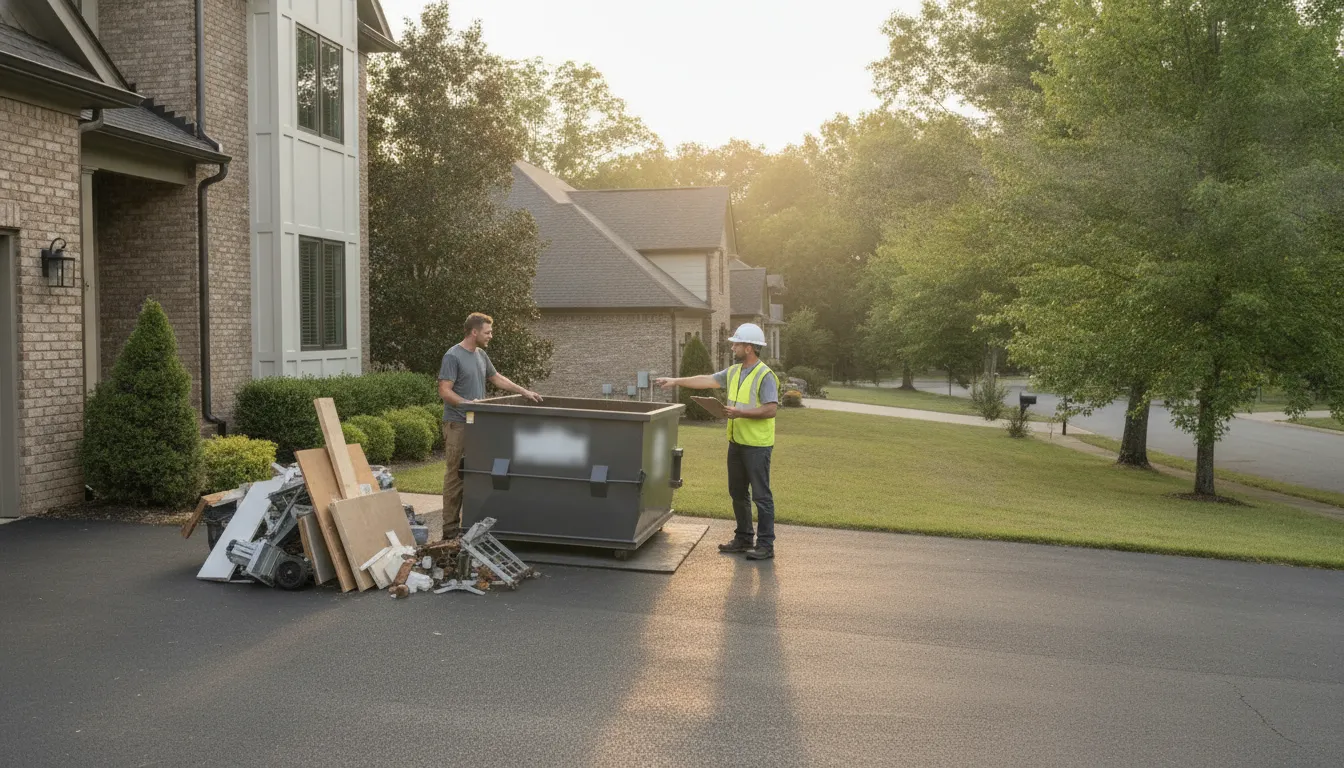
Choosing among dumpster sizes is easier when you separate three questions: how much material the project will create, how heavy that material is, and where the container can sit. A garage cleanout, move, renovation, and construction job may need very different plans even when the projects happen at the same property. Nashville homeowners, contractors, and businesses can avoid an undersized load by estimating the debris before delivery instead of choosing by container number alone.
Book a driveway-friendly dumpster for your Nashville project.
Dumpsters On Demand specializes in a driveway-friendly 15-yard roll-off. The container measures 12 feet long by 8 feet wide by 4.5 feet high and holds 15 cubic yards. That makes it a practical middle-ground option for many cleanouts, moves, renovations, yard projects, and moderate construction jobs. It is not a promise that every project fits, however. Material weight, loading method, access, and the amount of bulky debris still matter.
Start With Volume, Weight, and Placement
Dumpster capacity is usually described in cubic yards. One cubic yard is a space 3 feet long by 3 feet wide by 3 feet high. You do not need a perfect engineering calculation to plan a rental. Instead, gather the debris into rough piles, estimate each pile’s length, width, and height, and leave room for stable loading below the top edge.
Then separate the volume question from the weight question. Furniture, cardboard, clothing, brush, and bagged household debris often use space quickly without becoming extremely heavy. Concrete, brick, soil, tile, sod, shingles, and construction rubble can reach a weight limit while there is still visible room in the container. The EPA’s volume-to-weight conversion guidance explains why material type changes a waste estimate.
Finally, look at the delivery route. Measure the intended placement area and note tight turns, gates, slopes, low branches, utility lines, and overhead obstructions. A container that fits the debris may not fit the driveway or access route. Share unusual conditions before booking so the owner-operated team can discuss a practical placement plan.
A useful estimate is to plan by the next loading decision, not just the final pile. Ask what will be removed first, what can be broken down, and what must remain intact. A room of flattened boxes and bagged debris uses space differently from a room containing sofas, cabinets, and mattresses. Likewise, a kitchen tear-out with cabinets and drywall has a different profile from a bathroom tear-out with tile and fixtures. Write down the largest pieces, the densest materials, and the distance from the work area to the proposed placement spot. Those details make a rough cubic-yard estimate more realistic and give the rental team useful information if the project is close to the container’s practical limit.
A simple project-by-project estimate
For a renovation, list each removed component, such as flooring, cabinets, drywall, fixtures, and packaging. For a move or estate cleanout, list furniture and appliances before counting smaller household items. For a yard project, separate brush from soil, sod, stone, or concrete. For construction work, identify rubble and masonry before estimating the rest of the load. This method prevents a large amount of light debris from hiding a small but very heavy portion of the project.
Use the estimate as a conversation starter, not a guarantee that a generic size chart can approve the load. Dumpsters On Demand is owner-operated and can review the material list, approximate volume, placement conditions, and schedule before delivery. If the project changes after booking, describe the change before adding unexpected dense debris or assuming that an extra day solves a weight issue.
Which Dumpster Size Fits a Cleanout or Move?
Cleanouts and moves are driven mostly by bulk and volume. A small garage full of furniture can need more usable room than a larger home containing mostly flattened boxes. Walk through each room or area and list the largest pieces first. Mattresses, sofas, shelving, appliances, cabinets, and packed storage bins leave more empty space around them than bags or broken-down cardboard.
Home and estate cleanouts
For a home or estate cleanout, group items into three piles: bulky furniture, boxed or bagged household debris, and items that can be dismantled. Remove donations and belongings that are moving with you from the estimate. Then judge the remaining piles together. A property-wide cleanout may need a larger disposal plan or more than one haul, while a focused basement, attic, or single-room project may fit a 15-yard container comfortably.
Use the dedicated Nashville home cleanout dumpster guide for project-specific planning. The key decision here is not the number of rooms by itself. It is the amount of material left after reuse, donation, and recycling, plus the size of the largest items.
Moving and downsizing
Moving projects often become smaller when the household sorts first. Set aside donations, items going to the new home, and materials that require a different disposal method. What remains is the likely dumpster load. Break down tables, shelving, and boxes when possible, but do not force unstable pieces above the fill line.
For many Nashville moves and downsizing jobs, the 15-yard roll-off provides useful capacity without automatically requiring the footprint of a larger generic container. Tell the team how many rooms are involved, whether there are appliances or mattresses, and whether the load includes dense material.
How Renovation and Yard Debris Change the Estimate
Renovation debris is a mixture of bulky light material and dense material. Cabinets, drywall, trim, packaging, and flooring can occupy volume quickly. Tile, cement board, masonry, sinks, tubs, and brick may weigh more than their pile suggests. Remove and estimate those groups separately before deciding whether one container is appropriate.
Roofing and yard projects need the same split. Shingles can be dense, while branches and brush are usually more volume-driven. Soil, sod, stone, and concrete are weight-driven. Break down long pieces where practical, distribute heavy items across the floor, and keep everything below the top edge. If a project combines wood with concrete or brick, identify the dense portion before delivery rather than judging the load by empty space.
Dumpsters On Demand accepts concrete, brick, and heavy construction rubble. That acceptance does not mean unlimited heavy loading. Share the material type and estimated amount when requesting the container. For a project-specific option, review the 15-yard dumpster details for Nashville before booking.
10-Yard, 15-Yard, and 20-Yard Tradeoffs
Generic dumpster sizes are useful planning categories, but they are not a list of sizes offered by every provider. The comparison below explains the practical tradeoff without claiming that Dumpsters On Demand rents generic 10-yard or 20-yard units.
| Category | Often considered for | Planning concern |
|---|---|---|
| 10-yard | Small, contained cleanouts or limited debris | Bulky furniture, tear-out material, or loose yard waste can outgrow the smaller capacity quickly. |
| 15-yard | Many household, commercial, renovation, roofing, and moderate construction projects | Confirm driveway access, stay below the fill line, and plan for material weight. |
| 20-yard | Larger-volume cleanouts or broader remodeling projects | More volume does not remove weight limits, and a larger footprint may complicate placement or hand loading. |
Dumpsters On Demand’s core self-service offering is the driveway-friendly 15-yard roll-off, not a claim to provide every generic category in the table. Its dimensions and right-sized footprint can be useful when a pickup or small trailer is not enough, but a larger-looking container is not automatically better. Choosing the right fit means matching the material, access, and loading plan to the available service.
Request a Nashville dumpster quote after estimating your volume and weight.
When Weight Matters More Than Capacity
A container can have room at the top and still be too heavy. The base rental includes 2 tons, and the Nashville Metro overage rate is $125 per ton. Those terms make it important to identify dense material early, especially when a renovation includes concrete, brick, soil, tile, shingles, or construction rubble.
Place heavier material low and spread it across the container instead of creating one concentrated mound. Do not climb into the container, load above the rim, or assume that unused cubic-yard space is permission to add unlimited dense debris. If you are unsure, describe the material and approximate quantity when you book. That conversation is more useful than relying on a generic size chart.
Light household debris may fill a container before it reaches the included weight allowance. Heavy rubble may reach the weight allowance before it fills the visible volume. This is why project type alone cannot determine the right dumpster size. A clear material list gives the delivery team a better basis for confirming the plan.
Keep the loading sequence in mind as well. Put dense material low, then distribute lighter debris around it without creating an unstable peak. Break down furniture and long pieces when doing so is safe, but do not compact or force material in a way that makes unloading hazardous. Do not load prohibited or uncertain materials without asking first. The safest size decision is the one that accounts for both the container’s usable space and the disposal conditions for the actual material.
How to Plan Placement and Booking in Nashville
- Measure the placement area. A level driveway or firm surface is generally preferable to soft ground, steep grades, or areas that collect water. Keep sidewalks, garage doors, traffic lanes, and emergency routes clear.
- Check the delivery route. Look for narrow turns, gates, low limbs, utility lines, parked vehicles, and other obstructions. Tell the provider about unusual access before delivery.
- Protect the surface thoughtfully. Driveway-friendly equipment can make placement easier, but no surface is damage-proof. Identify fragile pavers, fresh concrete, or other concerns in advance.
- Choose a rental period that matches the work. Published rental options include 1-day, 3-day, 7-day, and 14-day periods. Include sorting, loading, final cleanup, and pickup access in the schedule.
- Describe the load accurately. Mention bulky items, heavy debris, concrete, brick, rubble, soil, and roofing material. The base rental includes 2 tons, and Nashville Metro overage is $125 per ton.
- Keep pickup access open. Remove vehicles, tools, tarps, and loose material from the route before the scheduled pickup.
When you are ready, use the Nashville dumpster rental booking page or request the direct booking appointment. If you want help deciding whether the 15-yard roll-off fits, call (615) 971-3668.
Nashville placement also deserves a practical timing check. If a project is happening in a shared driveway, coordinate vehicles and access before the delivery window. If the container will sit near a sidewalk or street, confirm local placement requirements rather than assuming private-property rules apply. Keep the loading side accessible throughout the rental, and do not let loose boards, branches, or furniture extend above the container. These small decisions reduce carrying distance and make pickup easier.
Rental length should follow the work sequence, not simply the number of days on the calendar. A one-day cleanout may be ready for pickup after one focused loadout, while a renovation may need time for demolition, sorting, and final sweep-up. Dumpsters On Demand publishes 1-day, 3-day, 7-day, and 14-day options. If the work finishes early or the schedule changes, contact the team before the planned pickup so the service plan can be adjusted where possible. Review the dumpster pricing and rental options alongside your project timeline.
For customers comparing self-service loading with a crew-loaded alternative, remember that dumpster sizes describe container capacity, not the amount of labor included. A roll-off works well when you or your crew can load the material and want control over the project schedule. If you need someone else to remove and load the items, a junk-removal service may be a better fit. Separating that labor decision from the volume estimate helps avoid ordering a container when the real need is removal assistance.
Frequently Asked Questions
How do I choose among dumpster sizes for a Nashville cleanout?
Estimate the debris volume, identify heavy materials, check the placement area and delivery route, and then compare those details with the provider’s available container. Dumpsters On Demand specializes in a driveway-friendly 15-yard roll-off for many cleanouts and home projects.
What size dumpster does Dumpsters On Demand offer?
Dumpsters On Demand specializes in a 15-yard roll-off measuring 12 feet long by 8 feet wide by 4.5 feet high and holding 15 cubic yards. The generic 10-yard and 20-yard categories in comparison charts are planning references, not claims that those sizes are offered.
Can a 15-yard dumpster take concrete or brick?
Yes. Dumpsters On Demand accepts concrete, brick, and heavy construction rubble, but these materials require careful weight planning and safe loading. Keep dense debris below the top edge, distribute it evenly, and describe the estimated amount before delivery.
How much weight is included in a Nashville dumpster rental?
The base rental includes 2 tons. For Nashville Metro, the published overage rate is $125 per ton. Because dense debris can become heavy before it fills the container, identify concrete, brick, soil, tile, shingles, and rubble when booking.
Book online for a driveway-friendly 15-yard dumpster in Nashville. You can also call (615) 971-3668 if you want to discuss the project before scheduling.