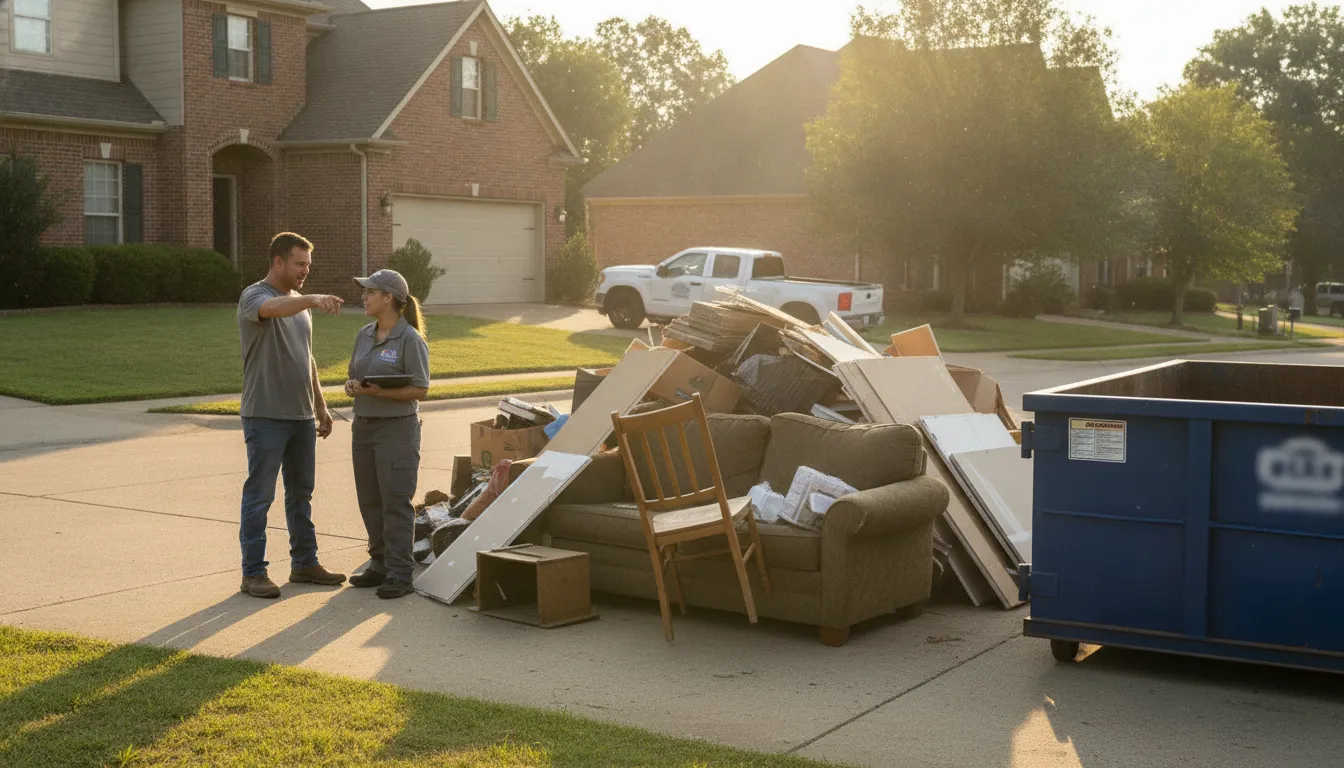
How much does junk removal cost? In Nashville, the honest answer depends on more than the size of the pile. The amount of material, the labor needed to move it, access to the property, the type of debris, and the disposal plan can all change an estimate. A single couch in an easy-to-reach driveway is a different job from a multi-room cleanout with stairs, heavy debris, or a long carry to the truck.
The most useful way to plan is by load size and service model. Full-service junk removal includes a crew to lift, load, and haul items away. A driveway-friendly dumpster gives you the container while you handle the loading on your own schedule. This guide explains what makes a small, medium, or large load more involved, then shows when each option makes sense for a Nashville-area project.
Request junk removal or dumpster service online and call (615) 971-3668 if your project needs a more specific conversation.
How Much Does Junk Removal Cost for Different Load Sizes?
There is no responsible single price for every junk-removal job. Providers commonly estimate by the amount of truck or container space used, but the final scope can also depend on labor, access, material type, and disposal requirements. That is why a small load, medium load, and large load should be treated as planning categories rather than fixed price tiers.
Small loads
A small load may be one bulky item, a few pieces of furniture, or the contents of a small room. The removal may be straightforward when items are already near the driveway and do not require disassembly. It can become a larger job when the crew must carry items down stairs, navigate a narrow hallway, or protect finishes while moving them.
Medium loads
A medium load may include a garage cleanout, several rooms of furniture, appliances, or a moderate renovation cleanup. At this size, volume and labor both matter. A crew may need more time to sort, lift, and load. A customer who can load independently may prefer a dumpster that stays on site during the project.
Large loads
A large load may involve a whole-house cleanout, estate cleanout, commercial space, major renovation, or a mix of bulky furniture and construction debris. Large projects need a clearer plan for access, material separation, weight, loading order, and disposal. EPA guidance identifies furniture, appliances, yard waste, and construction and demolition debris as bulky categories that may need different handling from ordinary household waste. Review the EPA bulky-items guidance before assuming every material belongs in the same stream.
The practical takeaway is simple: ask for an estimate based on the actual scope. Photos, a list of materials, the number of floors, the distance from the items to the truck. And whether the load is already staged can help describe the job accurately without pretending that an online range is a guaranteed quote.
When Is a Small Junk-Removal Load the Simplest Option?
Small projects are often the easiest to underestimate. A single mattress, couch, appliance, or small pile of household items may look simple until you account for stairs. Tight turns, elevator access, or the distance between the item and the truck. If the item is already outside and easy to reach, the labor plan can be very different from a basement or attic removal.
Nashville residents also have a public disposal option for certain household materials. Metro convenience centers require residents to show a Tennessee driver’s license establishing Davidson County residency, and residents are responsible for unloading their own material. The city lists limits and exclusions for different categories, so check the current rules before making a trip. The official Nashville convenience-center guidance includes restrictions involving commercial waste, construction and demolition material, mattresses, and other categories.
That option may work when you have a suitable vehicle, enough time, and material that the center accepts. It is less convenient when the item is heavy, awkward, unsafe to lift, or part of a larger cleanup. Metro also states that commercial waste and waste in commercial vehicles are not accepted at convenience centers. That distinction matters for contractors, landlords, and small businesses planning a worksite cleanup.
Full-service junk removal is worth considering when you want a crew to handle the lifting and hauling. Before requesting an estimate, gather the item list, note the number of stairs, identify whether anything is unusually heavy, and take clear photos if requested. Those details help the service provider understand the job rather than guessing from a short description.
For a single item or very small load, compare the total effort, vehicle needs, disposal rules, and your available time. The lowest out-of-pocket option is not always the lowest project cost if it requires renting a vehicle, making multiple trips, or doing lifting that you cannot safely handle.
How Should You Compare a Medium Load With a Dumpster Rental?
A medium cleanout is where the difference between full-service removal and self-service rental becomes especially useful. The right choice depends on whether your main constraint is labor or time. If you need someone else to lift and haul, a crew-based service is the more direct fit. If you can load the debris but need room to work over several days, a dumpster can provide more control.
| Rental period | Published rate | Included weight |
|---|---|---|
| 1 day | $349 | 2 tons |
| 3 days | $375 | 2 tons |
| 7 days | $399 | 2 tons |
| 14 days | $525 | 2 tons |
The table describes the customer’s 15-yard rental service, not a full-service junk-removal quote. Overage is $125 per ton, so heavy materials should be discussed before booking. A rental may be a strong fit for a garage cleanout, remodeling project, yard work, or a small business cleanup when the customer can load the container safely. It can also reduce the pressure to finish all loading in one crew visit.
Full-service removal may be the better value when you are paying for convenience, have limited physical capacity. Need help with bulky items, or cannot stage materials where a container can be placed. A rental can be the better value when you have willing helpers, a clear driveway placement area, and a project that will produce debris over time.
See the home cleanout dumpster guide for more planning context. If you are comparing the equipment option directly, review the 15-yard dumpster rental in Nashville and confirm the final placement and material details before scheduling.
Get the right service for your load before you start moving heavy items.
What Changes When the Load Includes Renovation or Heavy Debris?
Large cleanouts and renovation projects need more than a rough volume estimate. Construction and demolition debris can include wood, drywall, concrete, brick, asphalt, metal, and shingles. EPA guidance recommends sorting construction debris by material type to streamline processing, and it notes that construction and demolition waste can come from both residential and commercial sources.
Heavy debris deserves special attention because weight can fill a container’s allowance before the container looks full. Concrete, brick, soil, tile, roofing materials, and masonry should be described before service is scheduled. Dumpsters On Demand accepts concrete, brick, and heavy construction rubble, but the project still needs to be planned around safe loading and the applicable weight terms.
Access can be just as important as material. A large pile in a driveway may be simple to load, while debris inside a rear room. Behind a fence, or at the bottom of stairs adds crew time and handling complexity. Contractors should also consider whether a public disposal site accepts commercial waste. Nashville convenience-center guidance states that commercial waste materials and waste in commercial vehicles are not accepted, so a contractor may need a different disposal plan.
Do not place hazardous materials into an ordinary junk-removal load without checking first. EPA guidance says suspected asbestos requires special precautions and disposal at a landfill qualified to receive asbestos waste. Paint, chemicals, fuels, refrigerants, medical waste, and other regulated materials may have separate requirements as well.
- Separate reusable items from ordinary disposal material.
- Identify dense materials such as concrete, brick, tile, soil, and roofing.
- Note where the debris is located and how far it must be carried.
- Ask about accepted materials, weight terms, and special disposal before loading.
For large loads, create a short material list before you request service. Note the approximate volume, the heaviest materials, the loading distance, and the desired completion date. This makes a quote conversation more accurate and helps determine whether a crew visit or a 15-yard dumpster is appropriate. For a deeper project-specific overview, see the construction debris removal options guide.
Why Do Junk-Removal Estimates Change From One Property to Another?
Two customers can have similar-looking piles and still receive different estimates because the work behind the pile is different. A transparent estimate should account for the conditions that affect labor, transportation, disposal, and risk.
Labor and carry distance
Stairs, long driveways, elevators, narrow hallways, fences, and distant backyard piles increase the time required to move materials. An item staged at the curb is not the same job as that item inside a second-floor room. Tell the provider about these conditions before the visit.
Volume and item shape
Loose bags stack differently from couches, cabinets, mattresses, and appliances. Bulky items can use container space quickly. Mixed-material furniture may require substantial processing before recycling is possible. List the largest items instead of describing a pile as simply “a lot of junk.”
Weight and material type
Concrete, brick, roofing, dirt, tile, and other dense materials affect loading and disposal planning. A load may look modest but be heavy. Tell the provider about heavy debris before the job so the service model and weight terms are clear.
Specialty disposal and timing
Some materials have special rules, and some projects require sorting, disassembly, or separate handling. A tight deadline can also change the practical options if it limits scheduling flexibility. Ask what is included, what is excluded, whether labor is included, and how additional weight or special disposal will be handled.
These variables explain why a generic internet price can be a poor planning tool. A useful request gives the provider enough information to estimate the actual job. Dumpsters On Demand can help customers choose between full-service loading and a self-loaded 15-yard container based on the project, access, and available labor.
When Is a Driveway-Friendly Dumpster the Better Value?
A dumpster can be the better value when the project produces debris over multiple days and you can handle the loading yourself. Instead of scheduling a crew to arrive after everything is staged, you receive a 15-yard roll-off. Load it at your own pace, and arrange pickup when the project is ready. That model can fit a renovation, garage cleanout, roofing job, or yard project where the customer has enough help to load safely.
Full-service junk removal can be the better value when the main problem is labor. If you cannot lift bulky items, do not have a suitable vehicle, or need a crew to clear a property quickly. Paying for loading and hauling may save more time and effort than renting equipment and coordinating helpers. It is also worth considering when the debris is spread throughout a property instead of staged near a practical container location.
- Choose crew loading when lifting, stairs, or hauling are the main obstacles.
- Choose a dumpster when you can load safely and need several days to work.
- Disclose concrete, brick, roofing, soil, or other dense materials before booking.
- Confirm placement, accepted materials, included weight, and overage terms.
Dumpsters On Demand’s rental model is simple: we drop off the container, you fill it, and we take it away. The full-service model reverses the labor: a crew arrives, loads the material, and hauls it away. Neither model is automatically cheapest for every project. The right answer depends on the value of your time, your physical capacity, your access conditions, and the amount and type of debris.
For local planning, start with the dumpster rental options and published rates or review the company’s full-service junk removal options. If you are unsure, describe the load and ask which service fits before booking.
Frequently Asked Questions About Junk-Removal Cost
What Is the Minimum Charge for Junk Removal?
Minimum charges vary by provider and job scope. A single bulky item may be priced differently from a small mixed load, especially when stairs, long carry distances, or special disposal are involved. Ask what the minimum includes and provide the item type, access details, and photos when available.
What Is the Cheapest Way to Get Rid of Junk?
The lowest-cost option depends on the material, vehicle, labor, and local rules. A Davidson County resident may be able to use a convenience center for eligible household materials. But the resident must unload the material and commercial waste is not accepted. For a larger project, compare the value of your time and vehicle needs with a self-loaded dumpster or full-service removal.
Are Junk-Removal Services Worth It?
They can be worth it when you need lifting, loading, hauling, and disposal handled for you. They are especially useful for bulky items, property cleanouts, and projects where you do not have the time or physical capacity to make repeated disposal trips. A dumpster may be a better fit when you can load safely and need more time.
Can Heavy Construction Debris Go in a Dumpster?
Some providers accept concrete, brick, and construction rubble, but heavy debris must be disclosed before booking because weight affects loading and disposal. Ask about accepted materials, included weight, and overage terms. Never mix hazardous materials into the load without confirming the proper disposal process.
How Can I Get a More Accurate Junk-Removal Estimate?
Share the material list, approximate volume, largest items, number of stairs, loading distance, property access, and desired timing. Explain whether you need the crew to load everything or whether you prefer a self-loaded 15-yard dumpster. Better details lead to a more useful service recommendation.
Plan Your Nashville Cleanup With a Clear Service Choice
Whether you need a crew to handle the heavy lifting or a driveway-friendly dumpster you can load over time. Start with the actual size, material, access, and labor needs of your project. Dumpsters On Demand is locally owned and family operated, serving Nashville and Middle Tennessee with full-service junk removal and 15-yard roll-off dumpster rentals.
Book your cleanup service online or call (615) 971-3668 to discuss the load and choose the practical next step.