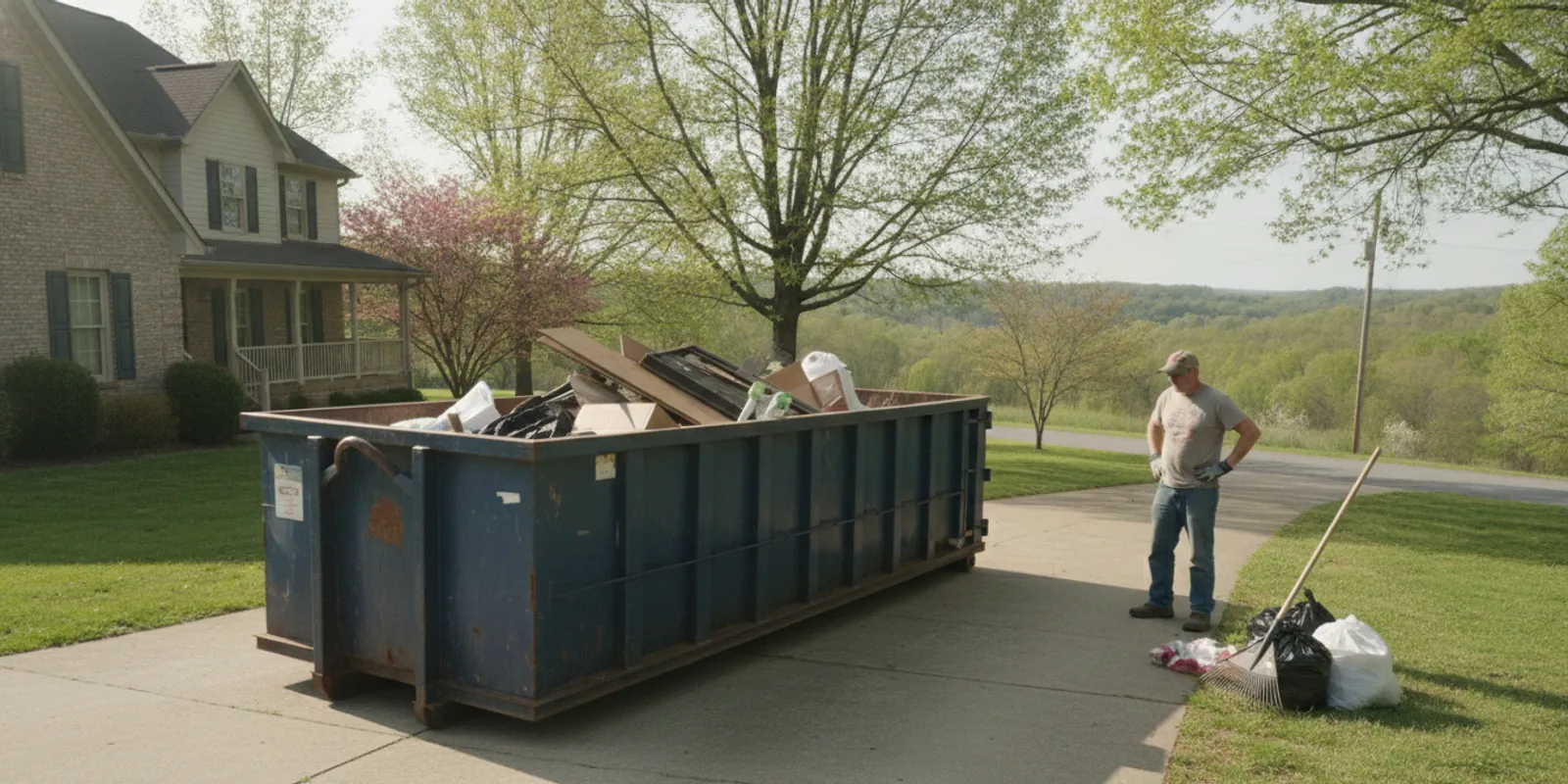
If you are asking how much to rent a dumpster, start with the project and the rental terms, not just the container. The total can depend on rental days, the included disposal allowance, debris type, delivery access, and how schedule changes are handled. Use this guide to compare the complete service for an Ashland City project and identify the questions to settle before you book.
Ask about your project and rental terms
What determines the cost to rent a dumpster?
A rental quote usually combines the container, delivery and pickup, the rental period, and disposal terms. Ask what is included and what can change the total. A short rental should not be compared with a longer one, and a quote with a disposal allowance is not the same as one that bills disposal separately. Before comparing offers, write down the same project details for each provider: address, material, approximate amount, preferred dates, and placement location.
- Rental period: Check the start and end dates, number of included days, and process for requesting an extension. Sorting a house, coordinating trades, or waiting on a delivery can take longer than loading the container.
- Delivery and pickup: Confirm that both are included in the quoted total. Ask whether a change to the delivery date or an early pickup affects the terms.
- Disposal allowance: Find out how much weight is included and how additional weight is billed. Dense debris can reach a weight limit before a container looks full.
- Material: Household items, construction debris, roofing, soil, and concrete do not behave alike. The provider may limit what can go in a load, so list your materials before booking.
- Placement and access: A clear driveway is different from a site with a narrow entrance, overhead obstacles, or a proposed placement on public property. Describe the delivery route and ask about permit requirements when needed.
- Service address: Availability and disposal arrangements can vary by location. Confirm that the address is serviceable and that the quote applies there.
Dumpsters On Demand specializes in 15-yard roll-off dumpsters. Company information says rental periods can range from one day to 14 or more days, and that pricing includes delivery, pickup, and a two-ton disposal allowance. Confirm the current quote and terms for your address and the material you plan to discard. A written confirmation that spells out the dates, included weight, and change process gives you a clear basis for planning.
How should you compare rental quotes?
Ask each provider the same questions and record the answers. Comparing the complete terms is more useful than choosing by the first number you see. If one quote does not specify a fee or allowance, ask for clarification rather than assuming the condition matches another provider. Use this table as a call or booking checklist.
| Cost detail | What to confirm | Why it affects your comparison |
|---|---|---|
| Rental period | Included days, dates, extension process | A longer project may need additional time. |
| Weight allowance | Included tonnage and overage rate | Heavy debris can exceed the allowance while leaving open space. |
| Delivery and pickup | Whether both are in the quoted total | Shows whether the quote covers the complete rental service. |
| Accepted materials | Restricted items and separation rules | Prevents a load from containing material the provider cannot accept. |
| Placement | Surface, access, overhead clearance, permit needs | Delivery access and public placement may affect the plan. |
| Schedule changes | How to request early pickup or extra days | Lets you plan for a changing work schedule. |
For example, suppose a renovation quote includes a disposal allowance but only a few rental days, while another quote offers more time but describes disposal charges differently. The first may suit a fast project with light debris; the second may be easier if trades need to load over several days. You cannot tell which is a better fit from the headline number alone. Compare the total terms against your likely work plan.
For container capacity and planning, read the 15-yard dumpster rental guide and the dumpster rental process overview. You can also review the Ashland City dumpster rental options and ask whether service is available at your address.
How does the project change the estimate?
A project affects both how much space you need and how heavy the load may be. A pile of cardboard and furniture may occupy a lot of room without weighing like shingles or masonry. Tell the provider what you are removing, roughly how much there is, and whether materials will be mixed. A description such as “one garage of household items plus several bags of concrete” is more useful than simply saying “a cleanup.”
Separate the work into material groups before you request a quote. This quick inventory helps a provider understand volume and weight risk, and it gives you a chance to identify items that may need a different disposal route.
- Garage or basement cleanout: First set aside donations, keepsakes, and items to keep. Then list large pieces, boxes, and bags that remain. If you plan to work room by room, estimate how many sessions that will take and choose rental dates that leave time to load. A garage cleanout dumpster guide can help you consider the project.
- Renovation: Identify flooring, cabinets, drywall, fixtures, and packaging separately. Mention if several trades will add debris at different times. Do not assume every material can be mixed; ask about restricted items and separation needs.
- Roof work: Shingles are dense, so estimate the amount and ask how their weight interacts with the disposal allowance. A container can have open space and still approach a weight limit. Review the guide to dumpster size for shingles before finalizing a plan.
- Yard project: Describe branches, leaves, soil, and other green waste separately. Confirm what is accepted rather than assuming all yard debris follows the same rules; see the yard waste rental guide.
- Concrete or masonry: Estimate the amount carefully and ask about weight and loading restrictions before ordering. Small-looking quantities can be heavy. The dirt and concrete dumpster guide covers planning considerations.
For household products that may be hazardous, do not put them in the container without approval. Ask the provider and check the applicable local collection guidance before loading. The U.S. Environmental Protection Agency provides information about environmental and waste topics, including household waste. Keeping uncertain items aside until you confirm the right route can prevent them from becoming mixed into a load.
How can you keep the final cost predictable?
You cannot control every change in a project, but you can reduce uncertainty by settling the major questions before delivery. A simple plan is especially useful when the job involves more than one material or several people loading over multiple days.
- Make a debris list. Write down major material types, bulky items, and anything unusually heavy. Mention appliances, renovation debris, yard waste, or masonry rather than grouping everything as junk. Take a few photos for your own reference so you can describe the size of the pile consistently when asking questions.
- Estimate the schedule realistically. Include time for sorting, loading, and delays in other work. If a contractor has a separate schedule, ask when debris will actually be ready. Then ask how to extend the rental if the project runs late.
- Confirm the allowance and overage terms. Ask how final weight is determined, what amount is included, and what rate applies if you exceed it. Do not assume visible fill level tells you the load’s weight. If your project includes dense material, ask about that material specifically.
- Plan the drop location. Measure the available area and consider the truck’s route, gates, overhead branches, and vehicles that need to pass. Tell the provider about slopes or unusual site conditions. Make sure the intended placement does not block access you will need during the project.
- Check restrictions before loading. Keep uncertain materials aside until you have an answer. Ask what to do with any items the provider cannot accept rather than placing them in the container and sorting them out at pickup.
- Load with pickup in mind. Keep material contained and below the top edge. Distribute debris instead of piling it high in one spot, and preserve access for collection. Follow the provider’s instructions for loading and do not treat a full-looking container as proof that weight limits are satisfied.
- Save the confirmation. Keep agreed dates, included weight, overage terms, and contact instructions together. If your schedule changes, use the stated process to request an adjustment, and ask for confirmation of any revised arrangement.
The practical guide to loading a dumpster can help you prepare. A short written note with your material list, schedule, placement, and unanswered questions makes a booking conversation easier and reduces the chance that key assumptions are missed.
Should you rent a dumpster or hire a hauling crew?
A roll-off rental is a self-service option: the container is delivered, you load it, and it is picked up under the agreed terms. It can suit work that produces debris over several days or a cleanup where you want to load at your own pace. It also means you handle the lifting, carrying, sorting, and loading. Think about whether you have enough people and time to do those tasks safely and steadily.
With full-service junk removal, a crew handles the lifting and loading. That may fit heavy furniture, awkward access, or a cleanout when you cannot do the physical work. The quote structure differs, too. A dumpster quote focuses on rental time, disposal allowance, material, and placement; a hauling quote may reflect volume and labor. Compare the work each option includes, rather than the price alone.
Consider two common cases. If you are clearing a garage in stages while keeping some items, a rental can provide a place to load as you sort. If a single large couch is the main item and you do not want to move it, a hauling service may be more practical. For mixed household items, review junk hauling service considerations, the furniture removal guide, or this couch disposal cost guide. The right choice depends on your timeline, debris, and who will do the labor.
What should Ashland City customers confirm before booking?
Start with the exact delivery address and proposed placement. Tell the provider whether the container will be on a driveway or job site, what access looks like, and whether it may need to sit on public property. If public placement is involved, check with the appropriate local authority about permits. Rules can depend on where the container will be placed, so do not rely on a general answer for a different street or jurisdiction.
Before you commit, make sure the written or booking confirmation answers these questions:
- What are the rental start and pickup dates, and how many days are included?
- Are delivery and pickup included in the quoted amount?
- What disposal weight is included, and what is the overage rate?
- Which materials are accepted or restricted, and does any material need separate handling?
- How should you request an extension, early pickup, or schedule change?
- Does the provider serve the address, and can the truck reach the planned spot?
Use the contact page to ask about an address or project. The published phone number is (615) 971-3668; keep it available if you need to clarify a quote or delivery plan.
Book a dumpster rental for your project
Frequently asked questions
What is included in a dumpster rental price?
It depends on the quote. Confirm whether delivery, pickup, rental days, and a disposal allowance are included, and ask about overage fees, restricted materials, and schedule changes. Compare the same details across quotes before deciding.
Does a longer rental always cost more?
Rental terms differ. Check the included period and extension options for your project instead of assuming every provider uses the same daily rate or schedule. Ask what happens if the work finishes early or takes longer than planned.
Can I put any kind of debris in a rented dumpster?
No. Providers may restrict certain materials or require special handling. Share your debris list before loading, especially if it includes chemicals, batteries, appliances, soil, or concrete. Keep anything uncertain aside until you receive instructions.
How can I estimate whether the dumpster will be large enough?
List the items and materials, estimate their volume, and consider their weight. Ask the provider to match the project to the available container and explain loading limits before delivery. Separate dense debris from bulky, lighter items when describing the load.
What if my project takes longer than expected?
Ask about extensions before booking and find out how to request one. The schedule and any effect on the total depend on the agreed rental terms, so contact the provider before the original pickup date if your plans change.
Plan around the full rental terms
To understand how much to rent a dumpster, compare time, disposal allowance, debris, placement, and service details together. A clear project description and confirmed quote can help you choose an option that fits the work and avoid preventable surprises.