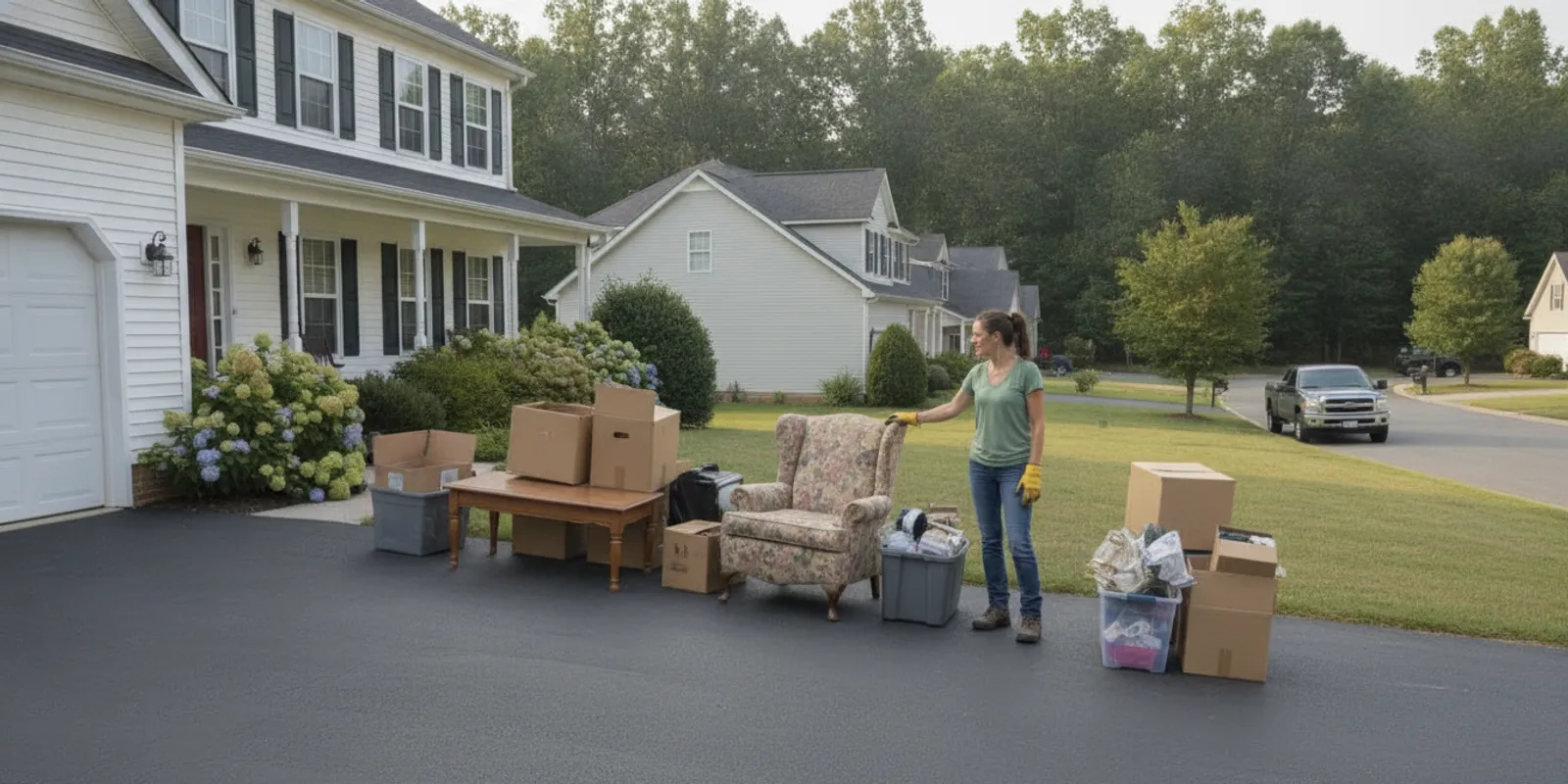
Planning junk removal in White House TN? A little preparation helps you choose between a crew that loads everything and a dumpster you fill yourself, avoid surprises on pickup day, and keep reusable items out of the waste stream. Use this checklist to define the job, sort belongings, and match the service to your timeline and workload.
Ask about your White House cleanout
What Should You Decide Before Booking Junk Removal in White House TN?
Start with the result you need, not just a rough pile estimate. Are you clearing a single room, removing bulky items before a move, emptying a property, or cleaning up renovation debris? The answer affects how much material must move, how quickly it needs to go, and whether you want to do the loading.
- Write down the scope. List rooms, outdoor areas, and large items. Note what must go and what must stay.
- Identify the deadline. Separate a firm move-out or contractor date from a preferred completion date. Ask about availability before planning around same-day service.
- Estimate the volume. Think in groups: a few large pieces, a room’s worth, or multiple rooms and loose debris. Photos can help when requesting an estimate.
- Decide who will load. If you want a crew to do the lifting and hauling, full-service junk removal may suit the job. If you can load items over several days, a dumpster may give you more control.
- Set aside keepers first. Mark items that are staying, and move them away from the disposal area before work starts.
White House is listed among the company’s extended service-area communities, but service details can depend on the exact address and project. Confirm your location, material, and schedule when you review the service area or request a quote.
A useful first pass is to divide the work into three groups: items that must leave now, items that may be donated or sold, and items you have not decided about. Give yourself a firm decision date for the last group. Otherwise, uncertain belongings can block access and make it harder to estimate the actual load. For a business or contractor cleanout, also identify materials that belong to a tenant, customer, or subcontractor before putting them in a removal pile.
How Do You Choose Between Full-Service Removal and a Dumpster?
The simplest distinction is who does the work. With full-service removal, a professional crew handles the lifting, loading, and hauling. With a rental dumpster, the container is delivered and picked up, while you load it at your own pace. Consider the size of the job, access, available help, and how long you need to work.
| Option | Who loads? | Often a fit when | Check before booking |
|---|---|---|---|
| Full-service junk removal | The removal crew | You have bulky items, limited time, or prefer not to lift and load | Item list, access, estimate, and pickup window |
| 15-yard dumpster rental | You or your helpers | You are sorting or renovating over several days and want a container on site | Placement, accepted materials, rental period, and weight allowance |
| Municipal or special-item collection | You prepare items as directed by the local program | The material is eligible and the collection schedule matches your needs | Local eligibility, instructions, dates, and quantity limits |
A dumpster can work well when a project produces debris gradually, such as a room-by-room cleanout or renovation. Dumpsters On Demand focuses on 15-yard roll-off rentals, with rental periods that can range from one day to 14 or more days. Ask what dates and terms are available for your project. For a deeper look at the tradeoffs, see the guide to how dumpster rental works.
Full-service removal is useful when heavy lifting is the main obstacle, when the items are already gathered, or when you want a crew to clear a space in one visit. The company offers junk removal for residential and commercial cleanouts, including furniture, appliances, estate cleanouts, and construction debris. Share the actual item list rather than assuming every material is handled the same way.
Think through a typical day of work before choosing. If a garage contains a few bulky pieces and the rest is already staged, a crew visit may limit the time you spend carrying items. If you are pulling out cabinets, flooring, or stored belongings in stages, a dumpster lets you load as the project progresses. A container still requires safe loading and room for delivery; a crew visit still requires a clear route and an accurate inventory. Neither option removes the need to confirm accepted materials and access.
What Belongs on Your Pre-Booking Checklist?
Before you contact a provider, collect the details that make an estimate and service plan more useful. A clear description reduces back-and-forth and gives you a chance to raise access or material questions early.
- Make an item inventory. Count large pieces such as sofas, mattresses, appliances, cabinets, and shelving. Estimate the number of bags, boxes, or loose debris as well.
- Separate material types. Note household goods, yard debris, remodeling material, and anything unusually heavy or bulky. Do not combine an item that may need special handling with a general description like “miscellaneous junk.”
- Take clear photos. Photograph the full pile and close-ups of oversized items. Include the route from the items to the driveway or pickup area if access is tight.
- Describe access. Mention stairs, narrow gates, long carries, low branches, parked vehicles, or limited turning room. For a dumpster, describe the proposed placement area and surface.
- Ask what is included. Confirm whether the quote covers loading, hauling, delivery, pickup, disposal, and the stated rental period, as applicable. Ask how additional material, excess weight, or a schedule change is handled.
- Confirm the time window. Ask when the crew or container is expected and how you will receive updates. Keep your contact details current.
For a more useful photo set, take one wide picture that shows the whole load, then one picture of each unusually large item. Include a common object for scale only if it does not obscure the items. If material is in several rooms, label the images by location and say whether everything pictured is included. This helps avoid confusing the disposal pile with items that will remain.
For projects that involve a container, the 15-yard dumpster guide can help you think through capacity and placement. It is still important to describe your own project: bulky furniture, dense construction material, and loose household items take up space in different ways.
How Can You Prepare Your Home and Items?
Preparation is not about making a cleanout look perfect. It is about protecting belongings, making the work route safer, and ensuring the crew or driver can reach the material. Work through these steps before the appointment or delivery.
- Make a keep, donate, and remove zone. Label each zone clearly. Keep anything staying well outside the loading route.
- Check drawers, cabinets, and storage bins. Remove personal papers, keys, medications, and valuables. Do not assume a piece will be opened and checked for you.
- Clear a path. Move tripping hazards, small furniture, and loose cords from the route. Keep pets and children away from active loading and vehicle movement.
- Plan for appliances. Remove food and loose contents. Ask the provider in advance about refrigerators, freezers, or other appliances that may need preparation or special handling.
- Protect what remains. Cover nearby floors or corners if needed, and move vehicles so there is room to carry items or position equipment.
- For a dumpster, choose placement deliberately. Look for a stable, accessible area with enough clearance. Check for overhead wires or branches, low walls, soft ground, and anything that could obstruct delivery. Ask the provider about surface protection and placement requirements.
Make a room-by-room pass instead of moving everything into one pile prematurely. Start at the back of the space and work toward the exit, checking closets, shelves, and storage areas as you go. Keep small items contained in boxes or sturdy bags when appropriate, and do not place loose objects where someone could trip while carrying a large item. If the crew will remove items from inside, make sure the route is still clear; if items are being staged outside, keep them away from traffic and weather where possible.
For a home with many loose items, grouping belongings by room can make the project easier to manage. If you are clearing an estate or a property after a move, the estate cleanout guide offers additional planning ideas. For single bulky pieces, a furniture removal checklist may be a better starting point than treating the whole home as one job.
What Should You Ask About Disposal and Recycling?
Do not wait until pickup day to ask whether a particular item can be hauled. Disposal rules and facility requirements vary by material and provider. Give the company a complete list, especially for appliances, construction debris, electronics, liquids, or unusually heavy material, and ask what must be separated or handled another way.
When an item is still useful, consider whether it can be passed on before treating it as waste. The company describes a disposal approach that prioritizes donation, then recycling, with landfill disposal as a last resort where practical. That does not mean every item can be donated or recycled. Condition, material, and receiving-facility rules matter. Keep usable items dry and separate, and verify that a recipient can accept them.
Do not put unidentified chemicals, fuel, or other potentially hazardous materials into a general junk pile or rental container. Ask the provider how to handle anything that could require special disposal. For household hazardous-waste information, consult the U.S. Environmental Protection Agency before disposal. If you have concrete or similar dense debris, describe the material and quantity before choosing a container. See the guide to disposing of concrete for additional considerations.
For donation candidates, check basic condition before you set items aside: is the piece clean, intact, and complete, and can you transport it or arrange an accepted pickup? Do not mix reusable goods with wet or dusty debris. For recycling or special handling, describe the item by material and type rather than relying on a broad label. For example, tell the provider whether a load includes an appliance, a box of electronics, or construction material, then ask what preparation is needed.
How Can You Keep the Schedule on Track?
A cleanout can stall when the service date is set before the work is ready. Build a simple sequence: sort first, confirm the provider and material list, clear access, then schedule loading or delivery. If other trades, movers, or property inspections are involved, leave a buffer rather than planning every step for the same hour.
- Confirm the address, contact number, service type, and appointment or delivery date.
- Keep the designated loading area accessible and avoid parking in front of it.
- For a rental, decide which materials will go in first and leave room to load safely without exceeding container limits.
- For a crew visit, have items ready and point out anything that should not be removed.
- Before the crew leaves or the container is collected, check the area for items that were overlooked.
For a multiday project, set a brief daily target. You might clear one storage area, finish a room, or remove a defined category of material before the next day. This keeps the loading area usable and makes it easier to notice what remains. If your scope changes, contact the provider before adding items or extending the rental; do not assume that a larger load or a later pickup can be accommodated automatically.
If your timeline is urgent, ask about current availability rather than assuming same-day service will be possible. Dumpsters On Demand notes that same-day and next-day options may be available, subject to scheduling. The company’s booking system is available online; you can also contact the team to discuss a specific White House project.
What Can Change the Cost of Junk Removal?
There is no single price that fits every cleanout. Full-service quotes can depend on the amount and type of material, labor, access, and how much loading is needed. Dumpster rental costs depend on the rental option and project details, including material and disposal weight. Ask for an itemized explanation of the quote and what could add a charge before you commit.
Use these questions to compare options fairly:
- Does the quote include labor and hauling, or am I loading the container?
- What amount of material or weight is included?
- How long may I keep the dumpster, and what happens if I need more time?
- Are there materials that are not accepted or that require a separate arrangement?
- How are additional volume, excess weight, or difficult access handled?
- Is the estimate based on the photos and inventory I provided?
Compare the complete service, not just a headline number. A lower initial quote may not include the same labor, pickup, rental length, or disposal allowance as another option. You can review the company’s dumpster pricing information and request details that fit the material and timing of your job.
To make two estimates easier to compare, use the same item list, photos, access notes, and target date for each inquiry. Write down what the estimate covers and what it excludes. If one option includes loading and another expects you to load, compare the time and help you would need to supply, not just the quoted amount. Ask about the consequences of adding a few more items, a delayed pickup, or a container that cannot be placed where expected. Clear answers up front are more useful than trying to resolve a misunderstanding after the work is underway.
Schedule a junk removal appointment
Frequently Asked Questions
Does Dumpsters On Demand serve White House, Tennessee?
White House is included in the company’s listed extended service area. Confirm your exact address and project details with the team before scheduling, since availability and service arrangements can depend on the job.
Should I book a junk removal crew or rent a dumpster?
Choose full-service removal if you want a crew to handle lifting, loading, and hauling. A dumpster may be a better fit if you want to load material yourself over a period of time. Compare the work you can do, the project volume, access, material, and schedule.
What information should I provide for an estimate?
Share your address, a list of items and materials, approximate volume, photos, access conditions, and preferred timing. Mention stairs, long carries, appliances, dense debris, or anything that might need special handling.
Can I put every item in a dumpster?
No. Accepted items and disposal requirements can differ. Tell the provider about all material types before booking and ask how to handle items that may be restricted or require separate disposal.
How do I book junk removal in White House TN?
Gather your item list and photos, confirm that your address is serviceable, then request a quote or schedule through the appropriate service. For a rental, review the online dumpster booking page. For a crew to load and haul, use the junk removal appointment page or contact the company.
For questions about a White House-area project, call (615) 971-3668 or send the team your item list, photos, and preferred dates so you can confirm the right service before the work begins.