
The best place for a roll-off dumpster is usually a flat, firm section of private driveway with a clear path for the delivery truck. Keep it away from weak pavement edges, soft ground, parked vehicles, low branches, and overhead wires. Good planning lowers the risk of surface damage, delivery delays, and extra handling.
Ready to simplify your cleanup? Book a driveway-friendly 15-yard dumpster online with Dumpsters On Demand.
No placement can guarantee that a surface will remain damage-free. A loaded container is heavy, weather changes ground conditions, and every property is different. The practical steps below will help you choose a workable location, prepare it before delivery, and keep access open through pickup day.
Where to place a roll off dumpster at home
Place a roll-off dumpster on a level, firm area of private property that the delivery truck can reach in a straight line. A concrete or asphalt driveway is often the most practical choice. Avoid steep slopes, soft soil, septic areas, and weak driveway edges.
Start by identifying two possible locations rather than committing to the first open space you see. Your preferred location might be convenient for loading but difficult for the truck to reach. A backup gives the driver another option if overhead obstacles, tight turns, or surface conditions make the first choice unsuitable.
Choose a firm and level location
A stable surface helps the container sit evenly and makes the rear swing door easier to use. Concrete and asphalt usually provide better support than grass or loose soil, but existing cracks, thin pavement, heat-softened asphalt, and poorly supported edges still need attention. Keep the container toward the stronger central portion of a driveway when possible.
Gravel may work when it is compacted, level, and dry. Grass and bare soil are less predictable because rain can soften the ground and allow the container or truck tires to sink. Never place a dumpster over a septic tank, drain field, underground utility feature, or other area that may not support the load.
Balance truck access with loading convenience
The closest spot to your renovation or cleanout is not always the best spot. The truck needs enough room to approach, lower the container, and leave without making a tight turn around vehicles, landscaping, or structures. At the same time, placing the dumpster reasonably close to the project reduces long carrying trips and keeps debris from piling up elsewhere.
Leave working room at the rear of the container so the door can open fully. This lets you walk in bulky items instead of lifting everything over the side. For more project-planning guidance, see the Dumpsters On Demand dumpster rental guide.
How can you protect your driveway from a dumpster?
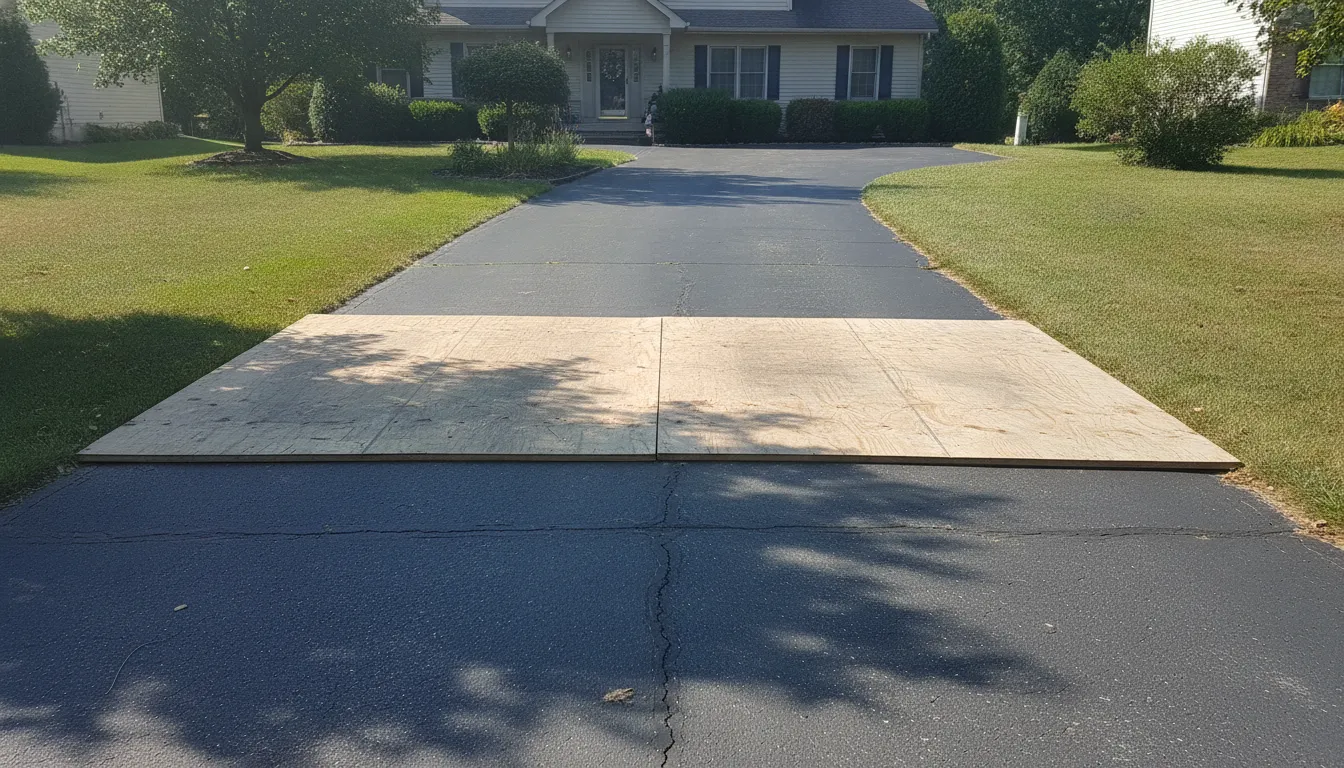
To lower the risk of driveway damage, inspect the pavement first, choose a strong level area. Place sturdy wood boards beneath the container contact points, and distribute debris evenly. Avoid placing the container along cracked or unsupported edges.
Driveway protection begins before delivery. Walk the proposed area and photograph existing cracks, stains, paver movement, or depressions. If the driveway already shows significant damage, tell Dumpsters On Demand when booking so the team can discuss whether another placement area may be more suitable.
Use sturdy boards to spread contact pressure
Wood boards or plywood can create a buffer between the steel container and the pavement. They help spread contact pressure and reduce direct scraping during placement and pickup. The boards must be sturdy, flat, and positioned where the container will make contact. Thin, broken, or warped scraps may split and should not be used.
Prepare the boards before the truck arrives, but keep them out of the vehicle path until the placement area is confirmed. The driver needs to see the surface and may recommend adjusting the location. Protective boards lower risk, but they cannot eliminate every possibility of cracking, indentation, or marking.
Load the container evenly
Surface protection continues after delivery. Spread heavy material across the floor rather than concentrating it in one corner. Uneven loading can make the container harder to haul and put more pressure on one part of the placement area. Keep all material below the top rim and follow the rental rules for prohibited or especially heavy debris.
If your project involves concrete, dirt, roofing, or another dense material, confirm what the container can accept before loading. The right approach depends on both the material and the rental terms. Review the available dumpster rental options before reserving.
What clearance does a dumpster delivery truck need?
A dumpster delivery truck needs a clear approach, adequate turning room, and open vertical space above the placement area. Remove vehicles and clutter, check for gates and narrow turns, and keep the route free of low branches, wires, and roof overhangs.
Roll-off delivery is not the same as parking a passenger vehicle. The truck must line up with the placement area and tilt the container during delivery. A spot that looks open from the ground may still be blocked by a cable, branch, basketball hoop, or roof edge.
Clear the complete approach path
Walk the route from the street to the proposed drop area. Move cars, trailers, toys, garden equipment, and temporary project materials. Open gates before arrival and check whether gate posts or narrow driveway sections create a pinch point. Leave the street area in front of the driveway open so the driver has room to line up.
Do not assume that the same route will remain open for pickup. Plan where contractors, family members, and deliveries will park throughout the rental. A blocked container can delay service, so keep a clear approach available until it is hauled away.
Look up before delivery day
Check the full delivery path and drop zone for overhead power lines, communication cables, low tree limbs, signs, awnings, and eaves. The container rises as it moves on and off the truck, so it needs more vertical room than it does while sitting on the ground. Never attempt to move utility lines yourself.
If the property has questionable overhead clearance or a tight approach, share the concern before delivery. Photos can help explain the situation, although the driver must make the final placement decision after seeing the site.
Which placement surface is best?
A sound concrete or asphalt driveway is usually the most practical placement surface because it is firm, level, and accessible. Compacted gravel may also work. Grass, soft soil, steep slopes, and damaged pavement carry greater placement and pickup risks.
| Surface | Practical assessment | Preparation priority |
|---|---|---|
| Sound concrete | Often a strong, accessible option | Inspect cracks and use protective boards |
| Sound asphalt | Often workable, but may soften in heat | Use protective boards and avoid weak edges |
| Compacted gravel | May work if dry, firm, and level | Check for shifting, ruts, and soft areas |
| Grass or soil | Higher risk of sinking and rutting | Discuss alternatives before delivery |
| Public street | May require local permission or a permit | Confirm rules before booking placement |
Evaluate the surface, not just its material
Two concrete driveways can support weight differently. One may be sound and well supported, while another has deep cracks or voids beneath it. Asphalt may be stable in mild weather but more vulnerable to indentation during extreme heat. Gravel can provide a solid base when compacted, yet become unstable after heavy rain.
Look for warning signs such as cracking, crumbling edges, standing water, previous tire ruts, loose pavers, or visible settlement. If you are uncertain about the condition of the surface, choose another location or ask an appropriate property professional for advice.
Check local rules for street placement
A street may seem convenient when a driveway is short, steep, or unavailable, but public right-of-way rules vary. Your city, town, county, or homeowners association may require permission, reflective markings, cones, or a permit. Rules may also limit how long a container can remain in place.
Confirm requirements before scheduling. Do not assume a neighbor’s previous street placement means yours is allowed. Private-property placement is generally simpler when there is a safe, accessible option.
Need help choosing the right container before you plan the drop zone? Contact Dumpsters On Demand with your project and placement questions.
How to prepare the placement area before delivery
Prepare the placement area by selecting a firm backup location, inspecting the surface, clearing the truck route. Checking overhead space, setting aside protective boards, marking the preferred position, and keeping the area open through pickup.
- Select a preferred and backup spot. Choose two level areas on private property that may support the container and remain convenient for loading.
- Inspect and document the surface. Note existing cracks, weak edges, soft ground, and underground features that should be avoided.
- Clear the approach. Move vehicles, trailers, tools, toys, and building materials away from the truck route.
- Check overhead clearance. Look for wires, branches, roof edges, and other obstacles above the route and drop zone.
- Prepare protective boards. Have sturdy boards ready for the confirmed contact points without blocking the truck’s initial approach.
- Mark the preferred orientation. Use cones or another visible marker to show the location while leaving final placement approval to the driver.
- Preserve pickup access. Keep the route clear, avoid overfilling, and close the rear door before service.
Plan around how you will use the dumpster
Placement should support the work itself. Keep the rear door accessible if you expect to load furniture, cabinets, or heavy bags. Position the container so workers do not have to carry debris through a narrow passage or across a busy sidewalk. Maintain safe walking space around the container, especially after dark.
Think ahead to pickup day as well. Debris should remain inside the container and below the fill line. Nothing should lean against the outside or block access to the front of the container.
Coordinate before the truck arrives
Make sure the person who understands the placement plan is available when the delivery is expected. If you cannot be present, provide clear instructions and keep the proposed area unobstructed. The driver may need to choose a different spot if conditions are unsafe or access is insufficient.
For renovation-specific planning, read the guide to dumpster rentals for home renovation projects.
Why a 15-yard dumpster works well for many driveways
A 15-yard dumpster can suit many residential cleanouts and renovation projects because it offers useful capacity in a relatively compact footprint. Dumpsters On Demand focuses on driveway-friendly 15-yard containers that are practical for many homes and project types.
Container size affects both project efficiency and placement flexibility. An oversized container may use more driveway space than necessary, while an undersized option can require additional service. A 15-yard container provides a practical middle ground for many household cleanouts, moves, and remodeling projects.
Match the container to the project
Before booking, estimate the type and amount of debris you expect. Bulky household items fill space differently than dense construction material. Explain the project clearly and review accepted materials so you can choose an appropriate rental and loading plan.
A compact container still needs a safe approach, adequate overhead room. And a supportive surface. “Driveway-friendly” describes the container’s residential suitability; it is not a guarantee against all surface damage. Protective preparation and careful loading remain important.
Keep the booking and placement plan connected
When you reserve a dumpster, include placement details such as a steep driveway, gated access, nearby wires, or existing pavement damage. That information helps identify questions before delivery day. Final placement depends on what the driver can safely access when the truck arrives.
Dumpsters On Demand makes it easy to review the 15-yard option and reserve online. Visit the 15-yard dumpster booking page when your placement area is ready.
Frequently asked questions about dumpster placement
Homeowners commonly ask about street placement, grass, protective boards, and who makes the final placement decision. The safest answer always depends on property conditions, access, weather, and local rules.
Can a roll-off dumpster be placed on the street?
Possibly, but street placement may require approval or a permit from the local authority. Rules can include time limits, visibility requirements, and restrictions on traffic or sidewalk obstruction. Confirm the requirements before booking a street location.
Can a dumpster be placed on grass?
Grass placement carries a higher risk of ruts, sinking, and pickup difficulty, especially after rain. A firm private driveway is usually more predictable. Discuss grass or soil placement in advance and have a backup location available.
Do plywood boards guarantee driveway protection?
No. Sturdy boards can spread contact pressure and reduce direct scraping, but they cannot guarantee that concrete, asphalt, pavers, or another surface will remain damage-free. Surface condition, load weight, weather, and underlying support all matter.
Who decides the final dumpster placement?
You can identify and prepare your preferred location, but the driver must determine whether the truck can safely access and use it. If the preferred spot is unsuitable, the driver may recommend the backup location or explain why delivery cannot proceed there.
Book a driveway-friendly dumpster online
Prepare a firm, accessible placement area, keep a backup location available, and share any access concerns before delivery. Then reserve the container that fits your cleanup.
Dumpsters On Demand offers a driveway-friendly 15-yard dumpster for residential cleanouts, renovations, moving debris, and other projects. Plan your drop zone using the checklist above, keep access clear, and remember that the driver must approve final placement based on conditions at delivery.
Book your 15-yard dumpster online with Dumpsters On Demand and get your cleanup moving.

4 Responses