Nashville Dumpster Rental Company
Nashville Dumpster Rental Company
Demolishing a concrete patio or tearing down a brick wall in Middle Tennessee leaves you with tons of heavy debris. Getting rid of this heavy waste can quickly become a major headache if you do not plan ahead.
Book your concrete and brick disposal Nashville dumpster online today and get a driveway-friendly 15-yard container delivered to your job site tomorrow.
Before you begin loading heavy debris, you need to understand why these materials require special handling. We will explain how Nashville rules affect your project and why concrete and brick disposal is different from regular trash. We will also compare your local options so you can choose the most efficient path for your specific renovation.
Concrete and brick require special disposal because of their extreme weight and density. A single cubic yard of solid concrete weighs approximately 4,000 pounds, making it far too heavy for standard garbage trucks and municipal hydraulic lifts to handle. Nashville homeowners who try to dispose of these materials through regular curbside collection risk damaging equipment and incurring fines from Metro Nashville Public Works.
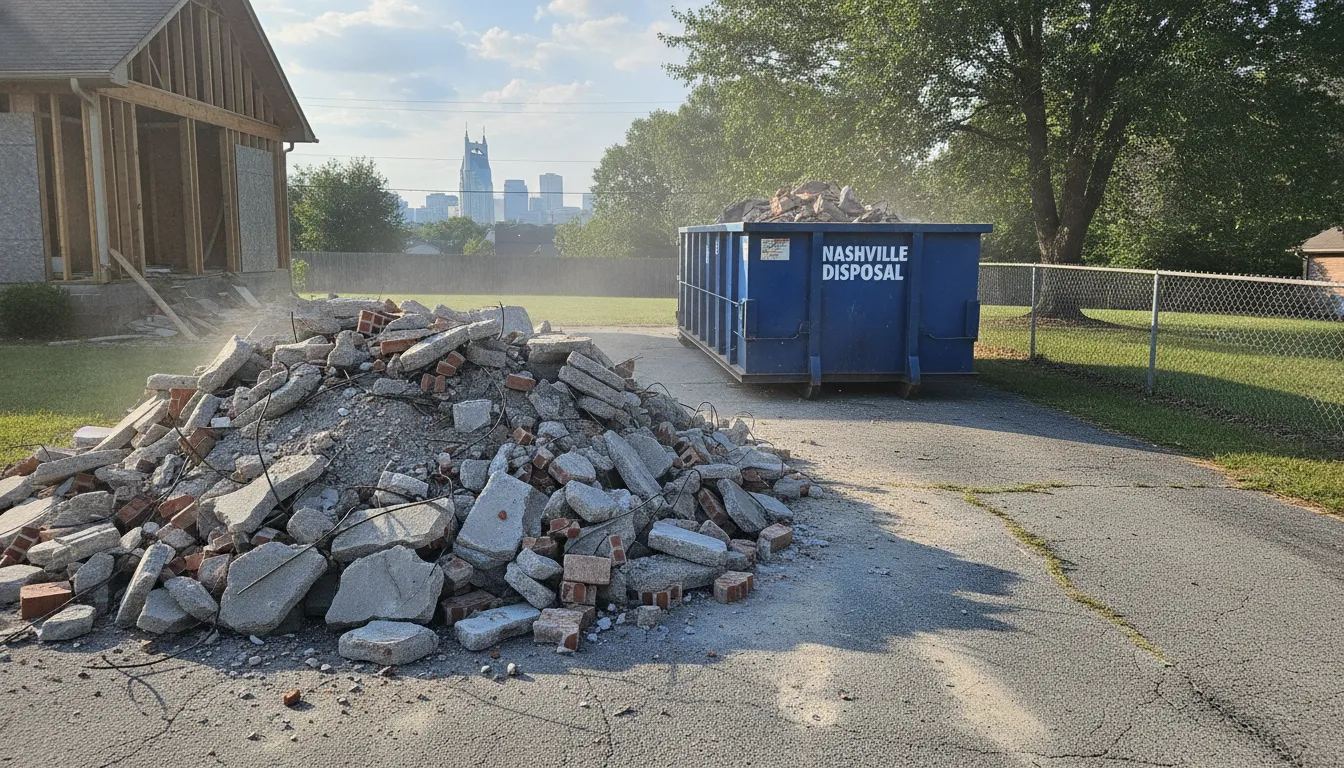
The main reason masonry requires special handling is its massive weight. One cubic yard of solid concrete weighs about 4,000 pounds, which is far too heavy for municipal hydraulic lifts. Standard garbage trucks have strict weight limits to prevent axle damage and protect public roads. If you load a regular bin with heavy brick, the truck will not lift it, and you may face fines.
To put this in perspective, a standard 4-foot by 8-foot concrete patio slab that is 4 inches thick weighs roughly 1,000 pounds. A single dump truck load of concrete demolition debris can approach 20,000 pounds. Nashville homeowners who try to dispose of these materials through regular curbside collection risk damaging trucks and incurring fines from Metro Nashville Public Works.
Construction debris also creates a major space problem for local landfills. According to the Environmental Protection Agency, the United States generated 600 million tons of construction and demolition debris in 2018. This massive volume makes up a large portion of landfill waste. Because of this, standard municipal services do not accept building materials. Disposing of these items requires following strict city guidelines or finding a specialized dumpster service. Doing research on disposing of brick and concrete before you start your renovation can keep your project on track and prevent unexpected fees.
Local government drop-off sites also have strict limits on building materials. For example, Nashville convenience centers only accept construction waste at their Omohundro location. Homeowners are limited to a maximum of two cubic yards per load. If you have a larger remodeling project, hauling small loads to Omohundro is rarely practical. You need a bulk disposal option that can handle several tons of heavy masonry safely in a single trip.
Some homeowners consider sneaking concrete and brick into standard trash containers or dumping it on vacant lots. Illegal dumping in Davidson County carries stiff penalties, including fines starting at $500 per violation. Beyond the legal risk, illegal dumping damages local ecosystems and strains Metro waste enforcement resources. The right approach is to plan ahead and secure a proper concrete and brick disposal Nashville solution before your project starts.
Nashville offers three main options for concrete and brick disposal: municipal drop-off at the Omohundro Convenience Center. Specialized recycling at facilities like Walsh Recycling and American Farms, and roll-off dumpster rentals from companies that accept heavy materials. When you tackle a home renovation project in Middle Tennessee, finding the right way to manage heavy waste is key. For a crew-assisted option, see our Nashville debris removal service. Concrete and masonry debris cannot go out with your normal weekly trash pickup. Nashville residents and commercial contractors have a few distinct paths they can take for concrete disposal Nashville options. These routes range from driving the materials to local municipal drop-off sites to hiring specialized recycling facilities or renting a roll-off dumpster.
For very small projects, you can use local public facilities. The City of Nashville allows residents to drop off construction and demolition debris, but rules are strict. You can only take these heavy materials to the Omohundro Convenience Center, and your load must not exceed two cubic yards. If you use a credit or debit card there, you will face a 2.8% transaction fee with a $1.95 minimum. For larger commercial loads, clean concrete and brick can be taken directly to private recycling facilities. Local sites like American Farms accept clean concrete, brick, and asphalt. They also provide haul-off services for large items like concrete slabs or wall panels.
Recycling is the best way to handle clean masonry waste. Instead of filling up local landfill space, materials are crushed down into aggregate stone for reuse in new construction projects. In Goodlettsville, Walsh Recycling serves the greater Nashville area with professional concrete recycling and stone supply. Dropping off materials at these facilities keeps heavy rubble out of landfills and helps conserve natural resources. However, you must haul the heavy materials yourself, which requires a heavy-duty truck or trailer and physical loading.
If you want to avoid making multiple heavy trips to a dump site, renting a roll-off dumpster is the most efficient choice. A dedicated container sits on your job site, allowing you to load debris at your own pace. However, many dumpster rental companies in the area ban concrete, brick, and masonry entirely. This is because these heavy materials can easily overload standard trucks. Renting a driveway-friendly dumpster from Dumpsters On Demand gives you the best balance of capacity and convenience. It eliminates the need for personal transport while keeping your project site clean and safe.
This table compares the primary methods for concrete and brick disposal in the Nashville area. We look at cost, capacity, and overall convenience to help you choose the right path.
| Disposal Option | Debris Capacity | Average Cost | Convenience Level |
|---|---|---|---|
| Omohundro Convenience Center | Strict limit of 2 cubic yards maximum | Low ($20 per load) | Low (requires self-hauling and unloading) |
| Walsh Recycling (Goodlettsville) | Varies by truckload size | Moderate (based on material weight) | Medium (eco-friendly, but requires self-hauling) |
| American Farms | Large commercial volumes accepted | Moderate (commercial rates apply) | Medium (commercial-focused drop-off site) |
| Dumpsters On Demand 15-Yard Rental | Up to 15 cubic yards (2 tons included) | Flat rate ($349 to $525) | High (delivered and hauled for you) |
Most dumpster rental companies ban concrete and brick because these materials exceed the weight capacity of standard containers and trucks. And the disposal fees at landfills make heavy loads unprofitable for brokers. If you are planning a remodeling job, you might think any dumpster rental can handle your waste. But if your project involves tearing down walls, patios, or chimneys, you will quickly find that many local haulers refuse to take your heavy debris. Companies like Red Dog Dumpsters ban heavy materials entirely from their containers. Understanding why these bans exist can help you plan your cleanup and avoid sudden fees or rejected loads.
Concrete and brick are among the heaviest materials found on a job site. Standard roll-off containers and transport trucks have strict weight limits to stay safe on public roads. According to the US Environmental Protection Agency, construction and demolition waste includes heavy items like brick and clay tile. When standard dumpsters are filled with these dense materials, they easily exceed the legal weight capacity of the truck, which can damage the lifting systems and truck axles.
Federal law caps commercial truck weight at 80,000 pounds gross vehicle weight. A 20-yard dumpster filled with concrete can easily weigh 16,000 to 20,000 pounds on its own, leaving little room for the truck chassis and container weight. Most standard dumpsters are built from light-gauge steel that buckles under concentrated loads like solid concrete slabs. This is why many rental companies say no rather than invest in heavy-duty containers.
Most local landfills do not mix heavy masonry with regular household trash. Heavy waste must go to dedicated debris sites or specialized recycling centers. Because of this, standard waste brokers face high sorting costs and steep tipping fees at the gate. To keep their own costs low, many companies simply ban heavy debris from their standard rental agreements.
The economics work against large brokers. With a base rate overage charge of $125 per ton in the Nashville market, a heavy concrete load can quickly eat up a broker’s profit margin. Rather than dealing with the operational complexity, most national chains and local brokers simply exclude these materials from their contracts. If you read the fine print on most dumpster rental agreements, you will find concrete, brick, asphalt, and heavy rubble on the prohibited list.
National dumpster brokers operate on thin margins and standardized processes. They deploy lightweight containers because they are cheaper to manufacture and transport. When a customer calls about a concrete demolition project, the broker’s standard response is to say no. They would rather lose the rental than risk a bent frame or an overweight ticket.
Local owner-operated companies like Dumpsters On Demand LLC take a different approach. Because we own our equipment and provide concrete and masonry disposal directly, we can invest in heavy-duty containers and maintain transparent weight policies that work for contractors. This is the key difference between working with a national name and working with a local partner who understands the weight of the job.
While other companies turn away heavy rubble, Dumpsters On Demand LLC welcomes your brick and concrete. We provide heavy-duty 15-yard roll-off containers that are built specifically to handle the stress of dense construction debris. Instead of dealing with the strict bans of national brokers. Local contractors and homeowners can use our driveway-friendly dumpsters to safely clear away old masonry and remodel waste without the hassle.
Dumpsters On Demand provides heavy-duty 15-yard roll-off dumpsters that accept concrete, brick, and construction rubble, with transparent flat-rate pricing and a 2-ton weight allowance. Managing heavy debris like concrete, brick, and asphalt requires a strong, local partner. For self-service placement and booking details, see our 15-yard dumpster rental in Nashville. As a family-operated business, we built Dumpsters On Demand LLC to serve contractors and homeowners across Middle Tennessee with transparent service. Our team delivers a robust, driveway-friendly solution that takes the pain out of heavy debris cleanups.
Many national brokers deliver oversized bins that crack your pavement or block your job site. We offer premium 15-yard roll-off bins that fit perfectly in standard driveways. These containers are easy to load and keep your work site clean without the risk of property damage. Our driveway-friendly design makes heavy debris disposal simple for small renovations and major commercial teardowns alike.
The 15-yard size is the sweet spot for heavy debris. A 10-yard dumpster fills up too quickly with bulky demolition material, while a 20-yard dumpster loaded with concrete exceeds safe weight limits. Our 15-yard container provides enough volume for most renovation projects while staying within practical weight parameters. This is why we have positioned it as the premium choice for contractors who need to dispose of heavy materials responsibly.
Budgeting for a renovation project should be straightforward. We do not use hidden fees or complex fuel surcharges. Our standard 15-yard rental plans fit different timelines to match your schedule:
Every standard rental plan includes 2 tons of debris. If your heavy materials exceed this limit, our overage rate is just $125 per ton. This transparent rate protects you from the surprise fees that national brokers often charge.
A typical small concrete patio demolition generates between 1.5 and 2 tons of debris, which fits comfortably within the included allowance. A medium-sized driveway removal (roughly 400 square feet) produces 3 to 4 tons of broken concrete. Even on these larger projects, the $125 per ton overage rate keeps your total costs predictable and affordable compared to multiple trips to a city convenience center.
Many dumpster rental agencies in Middle Tennessee completely ban heavy debris because it is difficult to transport. We welcome concrete, brick, and heavy construction rubble in our bins. We haul these heavy materials to licensed facilities, such as American Farms in Nashville, which accepts clean concrete and brick for processing. Choosing our team ensures you have a reliable local partner when cleaning out heavy debris during your next remodeling project.
When you call Dumpsters On Demand, owner Benjamin Blaylock answers the phone. Not a call center, not a dispatcher, not an automated system. This means same-day scheduling, flexible drop-off and pickup windows, and direct answers about what your specific project needs. For Nashville contractors and homeowners dealing with heavy concrete and brick debris, this level of local accountability makes all the difference. Check out how we compare to standard trash and dumpster services in the Middle Tennessee area.
Proper loading techniques protect your driveway, maximize dumpster space, and keep concrete and brick eligible for recycling instead of landfilling. Disposing of heavy debris can be a physical challenge on any Middle Tennessee job site. To make your cleanup safe and efficient, you must load your container with care.
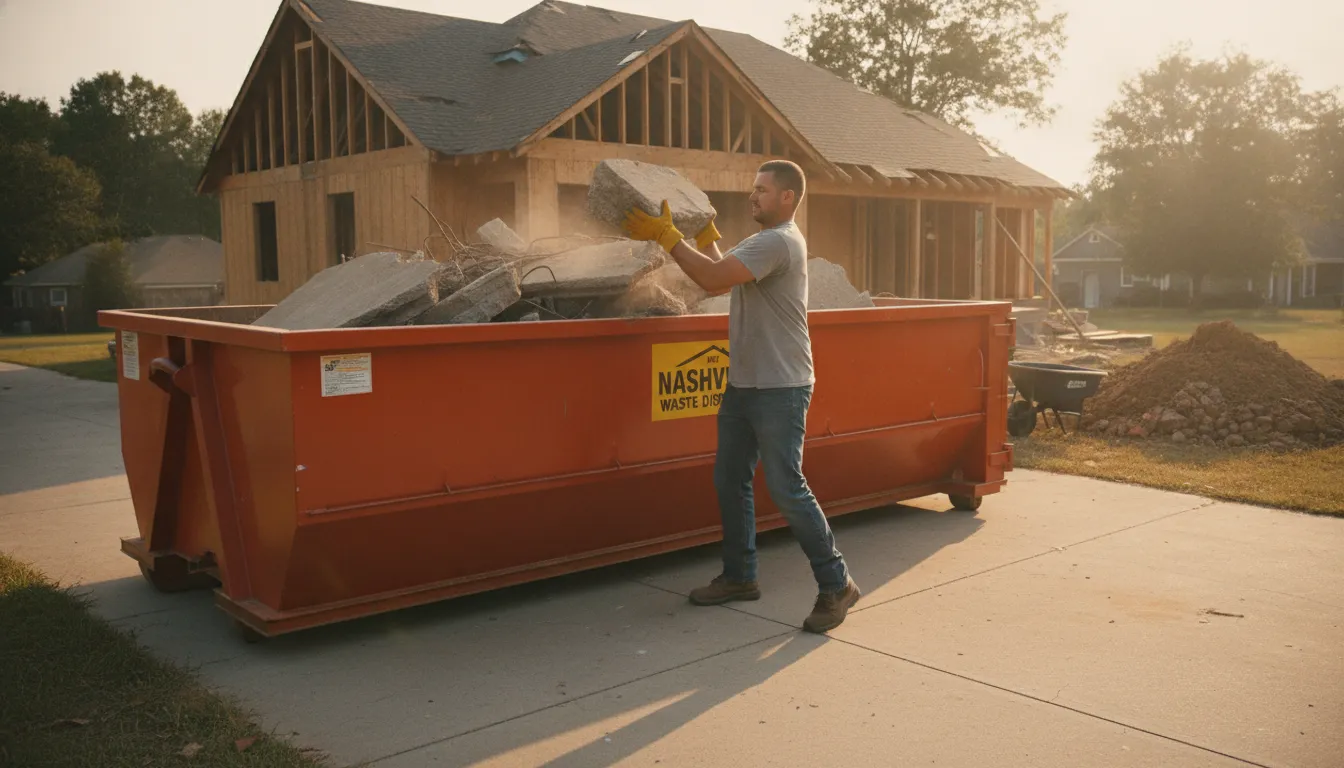
Before you lift a single block, take time to prepare your materials. Large slabs of masonry are hard to carry and take up too much space in a roll-off container. You should also keep your masonry separate from general trash to ensure it remains eligible for local recycling streams.
Taking care during the loading process directly impacts both the environment and your wallet. Disposing of construction waste in local landfills is highly inefficient and expensive. Choosing to recycle your masonry waste helps conserve valuable landfill space in Middle Tennessee.
According to the U.S. Environmental Protection Agency, deconstruction and material reuse are essential strategies to cut down on waste and reduce disposal costs. By breaking down your concrete and loading it properly, you help local operations crush the material into useful aggregate for new building projects. If your project involves extensive demolition, review our basement cleanout checklist for additional guidance on managing heavy materials.
Yes, but only if the rental company accepts heavy materials. Most national brokers ban concrete because it exceeds standard container weight limits. Dumpsters On Demand LLC welcomes concrete and brick in our heavy-duty 15-yard roll-off dumpsters. Our containers are built to handle dense construction debris, and we haul everything to licensed recycling facilities that crush concrete into reusable aggregate.
Concrete disposal costs in Nashville vary by method. A DIY trip to the Omohundro Convenience Center costs roughly $20 per load but is limited to 2 cubic yards. A 15-yard dumpster rental from Dumpsters On Demand ranges from $349 for one day to $525 for 14 days with 2 tons of weight included. Overage charges are $125 per ton for any weight beyond the allowance. Compare this to multiple self-haul trips and the savings become clear, especially for commercial contractors who need consistent disposal.
You have three options: the Omohundro Convenience Center (limited to 2 cubic yards). Walsh Recycling in Goodlettsville (commercial-grade concrete recycling), and American Farms (accepts clean concrete, brick, and asphalt). For larger renovation projects. Renting a roll-off dumpster from a heavy-material-compatible provider like Dumpsters On Demand is the most convenient option since the container sits on your property and is hauled away when full.
Most dumpster companies ban concrete and brick because these materials are extremely dense and quickly exceed legal truck weight limits. A 20-yard dumpster filled with concrete can weigh 16,000 to 20,000 pounds, approaching the federal 80,000-pound gross vehicle weight limit before the truck and container are even counted. Additionally, disposal facilities charge higher tipping fees for heavy loads, making them unprofitable for brokers who operate on thin margins.
A 15-yard dumpster is the optimal size for concrete and brick disposal. A 10-yard container fills up too quickly with bulky demolition material, while a 20-yard dumpster loaded with concrete becomes dangerously overweight. The 15-yard size provides enough volume for most residential and commercial renovation projects while staying within safe weight parameters. Dumpsters On Demand LLC specifically designed its 15-yard containers to handle the stress of heavy masonry loads.
Yes, illegal dumping of construction debris is a recurring issue in Davidson County. Fines start at $500 per violation, and Metro Nashville Waste Services actively monitors known dumping hotspots. Beyond the legal consequences, illegally dumped concrete damages local ecosystems and strains city enforcement resources. The safest approach is to plan ahead and arrange proper disposal through a licensed hauler or recycling facility before your project begins.
Your renovation project deserves a disposal partner that does not turn away the toughest materials. Dumpsters On Demand LLC welcomes concrete, brick, and heavy construction debris that other companies refuse to touch. Our heavy-duty 15-yard roll-off dumpsters are built for the job, and our transparent pricing means no surprise fees at the end of your rental. If you want help loading and hauling, request a junk-removal estimate.
Book your concrete and brick disposal dumpster online now or call (615) 971-3668 to schedule same-day delivery. We serve all of Middle Tennessee with driveway-friendly containers that make heavy debris cleanup simple.
© 2026 Dumpsters On Demand Nashville. All rights reserved.
BBB
A+ Accredited Business