
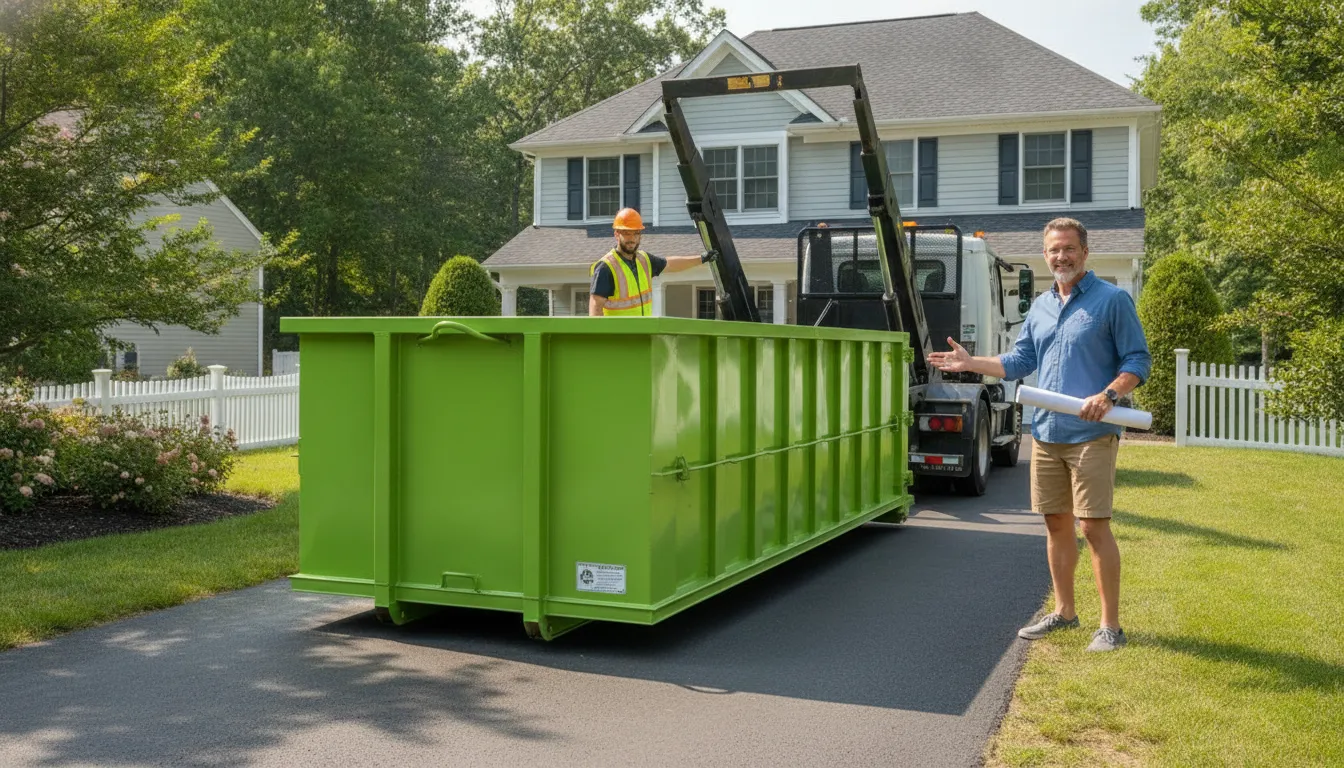
For a first-time renter, a dumpster can make a renovation, cleanout, or construction project far easier, but the details matter. The right placement, loading plan, and pickup timing help protect your property and prevent avoidable surprises.
Learning how to rent a dumpster comes down to four practical steps: choose the right container. Schedule delivery, fill it responsibly, and notify the rental company when it is ready for pickup.
Dumpsters On Demand keeps that process straightforward with owner-operated service and driveway-friendly 15-yard containers for customers across Nashville and Middle Tennessee. Before you book, it helps to understand how the full rental lifecycle works. From selecting capacity for your debris to preparing the delivery area and confirming what belongs in the container.
Book your dumpster rental online
How to Rent a Dumpster Without the Guesswork
Learning how to rent a dumpster is straightforward when you break the job into four decisions: choose the right size. Schedule delivery, fill the container safely, and notify the company when it is ready for pickup. You do not need to be an experienced contractor to manage the process. A clear plan helps you reserve the right container, prepare the delivery area, and avoid surprises once the work begins.
1. Choose a container that fits the project
Start with the type and volume of material you expect to remove. A home cleanout, remodeling project, roofing job, and construction cleanup can produce very different amounts of debris, so think through the rooms or areas involved before booking. Consider both the physical space the container will occupy and the amount of waste it needs to hold.
For many residential projects, a driveway-friendly roll-off provides a practical balance between capacity and access. Dumpsters On Demand specializes in premium 15-yard containers for typical home cleanouts and renovation work. If the project includes concrete, brick, or other heavy construction rubble, mention those materials when you schedule service so the load can be handled appropriately.
2. Schedule delivery and choose the placement area
Once you have a reasonable size in mind, select your delivery date and rental period. The container should sit where you can work efficiently without blocking more of the property than necessary. A hard, level surface, such as a concrete or asphalt driveway, is generally the best placement area for stable delivery and loading.
Also check whether local rules apply. If the dumpster will be placed on public property rather than your own driveway or private lot, your city may require a permit. Confirm the placement plan before delivery so the driver has clear instructions and the container can be set down safely.
3. Fill the dumpster with a safe loading plan
As the project progresses, load material evenly instead of creating one heavy pile on a single side. Keep debris inside the container and do not place prohibited materials in the load. When you are unsure whether an item is accepted, ask before adding it. This is especially important for hazardous waste, chemicals, electronics, batteries, tires, or appliances containing refrigerants, which commonly require separate disposal.
Loading as you work keeps the site cleaner and makes the final pickup easier. It also gives you an opportunity to notice when the container is approaching its safe capacity rather than waiting until debris spills over.
4. Notify the company when the container is ready
When the work is complete, or the dumpster is full, contact the rental company to arrange pickup. Make sure the driver can reach the container and that vehicles, tools, or loose debris are not blocking the access route. You can then focus on the finished project while the container is removed from the property.
In short, the rental lifecycle is simple: select a suitable container, arrange delivery, load it responsibly, and request pickup. Planning those four steps in advance gives first-time renters a reliable way to keep a renovation, cleanout, or construction project moving.
Choose the Right Dumpster Size for Your Project
Choosing a dumpster size is easier when you start with the material you are removing, not just the number of rooms involved. A container that is too small can leave you arranging a second pickup or paying for another rental. One that is much larger than necessary may take up more driveway space than your project requires. Right-sizing gives you a cleaner plan, steadier costs, and a safer place to load debris.
For many Middle Tennessee homeowners, a premium 15-yard roll-off dumpster is a practical middle ground. It is driveway-friendly and provides the right-sized capacity for typical home cleanouts, renovations, and many smaller construction projects. That makes it useful for clearing out a garage, preparing for a move, remodeling a kitchen or bathroom. Replacing flooring, or handling debris from a room-by-room cleanout without defaulting to an oversized container.
When a 15-yard dumpster is a good fit
A 15-yard container is often ideal when debris will come from one substantial project or several smaller areas of the home. It works especially well when you can estimate the volume of furniture, boxes, cabinets, flooring, drywall, and general renovation debris before delivery. Break down bulky items where possible, keep the material contained, and leave room to distribute the load evenly.
Project size is only part of the decision. The type of debris matters just as much. A contractor completing a demolition project may have fewer items by volume but significantly heavier material. Concrete, brick, and heavy construction rubble can change how a container should be loaded and handled. Dumpsters On Demand accepts these heavy materials, giving contractors and homeowners a dependable option for demo and masonry work that many rental services restrict. Be specific about your materials when booking so the team can help confirm the best fit.
Why guessing can create extra work
Before you choose, make a simple list of what is coming out and separate bulky lightweight items from dense debris. Think about whether the project includes an entire structure, one room, landscaping material, or concentrated concrete and brick. If you are unsure, describe the project in plain language when you schedule delivery. An owner-operated local company can use the details of your job, access conditions. And placement area to guide the recommendation instead of forcing you into a generic size chart.
Also consider how long the work will take. A right-sized container is more useful when it arrives before demolition begins and stays available through the final cleanup. If you need help deciding how many days to reserve, review this guide to choose your rental duration.
The goal is not to choose the biggest container available. It is to choose a driveway-friendly option that holds the material from your actual project, supports safe loading, and avoids unnecessary trips. For many local cleanouts and renovations, the 15-yard roll-off delivers that balance. For heavy debris or an unusually large project, share the full scope before delivery so the right plan is in place from the start.
Step 1: Book Online and Prepare Your Driveway
The easiest way to get started is to book when you know roughly what you are removing and where the dumpster can go. Dumpsters On Demand keeps its 24/7 online booking system available so homeowners and contractors can schedule service without waiting for business hours. Before delivery, spend a few minutes confirming the rental details and preparing a safe, accessible placement area.
-
Choose your delivery date and rental details
Start the online dumpster booking process and select the service details that fit your project. Have your delivery address, preferred date, and an estimate of the debris ready. If you are unsure how long the project will take, allow enough time for loading rather than assuming everything will be finished in a single day. A clear description of the project also helps the owner-operated team understand what you are disposing of and answer questions before delivery.
-
Select a placement area before the truck arrives
Choose a location that is easy for the delivery truck to reach and convenient for loading. The best surface is hard and level, such as a concrete or asphalt driveway. Proper placement helps keep the container stable and reduces the risk of surface damage. Clear away vehicles, toys, tools, branches, and other obstacles from the area, and leave enough room for the truck to approach and place the dumpster safely. If the driveway is narrow, sloped, soft, or surrounded by low branches, mention those conditions during booking so the placement can be reviewed in advance.
-
Check local permit requirements
Confirm whether your location requires a permit before delivery. Requirements vary by city, especially when a dumpster will sit on a street, alley, sidewalk, or other public property. Contact the local city office or permitting department for the rule that applies to your address. A dumpster placed entirely on private property may be treated differently, but the city office can give you the definitive answer. Checking early prevents a last-minute delay and helps you avoid moving the container after it arrives.
-
Confirm access and protect the work area
On delivery day, make sure the placement area is empty and accessible. Keep people and pets away while the truck is working, and make sure gates can be opened if the dumpster will be placed behind one. If you have concerns about the driveway or want to discuss the safest position, raise them before the delivery window. Clear planning makes the first step in how to rent a dumpster straightforward: book the service. Prepare the site, and give the delivery team the information needed for a smooth drop-off.
What You Can and Can’t Throw in a Dumpster
Before loading your roll-off dumpster, separate ordinary project debris from items that need specialized handling. Most cleanouts, renovations, and construction jobs produce materials that belong in a standard container, but a dumpster is not a universal disposal solution. Knowing the difference helps protect your household, the crew handling the container, and your project budget.
For a typical home or construction project, accepted materials may include household junk, furniture, yard debris, wood, drywall, flooring, roofing materials, and other nonhazardous waste. Dumpsters On Demand also accepts heavy construction materials that some restrictive services will not take, including concrete, brick, and heavy construction rubble. If your load contains a large amount of dense material, mention it when booking so the right container and weight expectations are clear.
Commonly accepted materials
- Furniture, mattresses, cabinets, and household cleanout debris.
- Wood, drywall, flooring, roofing materials, and other renovation debris.
- Yard waste and general nonhazardous waste from cleanup projects.
- Concrete, brick, and heavy construction rubble, subject to the rental’s material and weight requirements.
Items that do not belong in a roll-off dumpster
Hazardous and special waste should stay out of a standard roll-off. The Environmental Protection Agency identifies electronics, tires, batteries, appliances containing refrigerants such as freon, and chemicals as materials that generally cannot go in a roll-off dumpster. Review the EPA’s hazardous waste guidance for more information about hazardous waste categories and safe handling.
- Electronics, including televisions, computers, and similar devices.
- Tires and automotive batteries.
- Refrigerators, air conditioners, and other appliances containing refrigerants.
- Paint, solvents, pesticides, fuels, and other chemicals.
- Any material marked hazardous or requiring specialized disposal.
Do not place a questionable item in the dumpster just because it fits. Set it aside and check with your local waste or recycling program, county household hazardous waste facility, or another approved disposal program. These programs can provide instructions for electronics, tires, batteries, refrigerant appliances, and chemicals. Requirements vary by location, so Nashville and Middle Tennessee residents should confirm accepted items, drop-off times, and preparation rules before making a trip.
If you are unsure about a material, ask before delivery. A clear description of what you are removing makes it easier to confirm whether the load is suitable. Especially when a project includes both heavy rubble and special items. That straightforward conversation is part of a transparent rental process and helps prevent delays, rejected materials, or unexpected disposal charges.
Loading Tips to Pack More and Avoid Overage Fees
A well-loaded dumpster is easier to use, safer to transport, and less likely to create a surprise charge. Every rental comes with a weight allowance, which is the amount of debris covered by the flat rental rate. If your load exceeds that allowance, the additional weight is charged at a prorated per-ton overage fee.
For Dumpsters On Demand customers in Nashville Metro, the standard 15-yard rental includes up to 2 tons, with an overage rate of $125 per ton. That allowance covers many household cleanouts and renovation projects, but heavy materials can add up quickly. Concrete, brick, soil, and other dense debris should be loaded thoughtfully from the beginning.
Start with heavier materials
Put the heaviest items on the bottom of the container. Concrete chunks, brick, tile, and other dense material should form a low, even base rather than sitting in one pile. This keeps the weight distributed across the floor and makes better use of the available space. It also prevents lighter items from becoming trapped underneath heavy debris.
If you are disposing of heavy construction rubble, estimate the weight before booking and ask about the material when you schedule service. A driveway-friendly container can be a practical solution for these projects, but the material weight still counts toward the included allowance.
Break down bulky items before loading
Furniture, cabinets, cardboard, and other large items often leave empty pockets around them. Disassemble what you reasonably can, flatten cardboard, and break down bulky debris into manageable pieces. Smaller, flatter pieces settle together instead of creating large air gaps.
- Take apart tables, shelving, and cabinets when practical.
- Flatten boxes and fold flexible materials rather than tossing them in whole.
- Place smaller debris into open spaces around larger pieces.
- Keep sharp edges and protruding materials contained within the load.
Build a level load from corner to corner
Work across the full floor of the dumpster instead of filling one end first. Distribute weight evenly from side to side and front to back. As the container fills, load in layers and use open corners. This approach helps you pack more debris without creating an unstable mound.
Do not fill above the rim. Overfilled dumpsters may be unsafe to transport and can require debris to be removed before pickup. Keep the final layer flat and level with the top edge of the container. If you are approaching the rim before the project is finished, contact the owner-operated team rather than adding another overloaded layer. A quick conversation can help you decide whether to schedule an earlier pickup or arrange another container.
These simple loading habits make it easier to stay within the 2-ton allowance and use the full capacity of your rental. They also give you a clearer picture of your debris as the project progresses, which is the best time to ask questions about weight, pickup, or possible overage.
What Happens at Pickup?
Once your project is finished, the final step is simple: let Dumpsters On Demand know that the container is full and ready to go. The rental process typically ends with this notification, after you have chosen a size, scheduled delivery, and loaded the dumpster. You do not need to figure out transportation or make a separate trip to a disposal facility.
After you notify the company, the hauler schedules the pickup and returns with the roll-off truck. The container is carefully retrieved from your driveway or approved placement area, loaded onto the truck, and hauled away. The debris is then handled and disposed of responsibly according to the material and applicable disposal requirements. If you are unsure whether a particular item belongs in the container, it is better to ask before pickup rather than place a restricted material inside.
How to prepare for collection day
There is no complicated collection-day checklist for most homeowners. Before the truck arrives, make sure the path to the dumpster is clear. Move vehicles, trailers, tools, lumber, and other objects that could prevent the truck from reaching the container. Keep the lid, access points, and surrounding area reachable so the driver can safely connect to and remove the dumpster.
If the dumpster is on a driveway, check that gates are open and that no work materials are leaning against the container. You generally do not need to stand outside and supervise the pickup, but it is helpful to be available if the driver needs clarification about access or placement. If the container cannot be reached because of a parked car or blocked gate, pickup may need to be rescheduled.
A transparent finish to the rental
Before pickup, take a quick look inside the dumpster. Keep debris below the top edge, avoid overloading one side, and confirm that no prohibited items were added accidentally. Weight limits and local disposal rules can affect the final handling of a load, especially when a project includes dense materials such as concrete or brick. Local expectations may also vary by city, property type, and whether the container was placed on private or public property. So check with the rental company or your local office when a permit or safety question comes up.
For first-time renters in Nashville and Middle Tennessee, pickup should feel like the natural close of a well-planned project. Clear the area, keep the container accessible, and send the notification when it is ready. The hauler takes it from there, leaving you with one less task and a cleaner work site.
How Much Does It Cost to Rent a Dumpster?
The cost of a dumpster rental depends on three practical details: where the container is delivered. The size you choose, and the type of material you plan to dispose of. A short home cleanout may need a different rental plan than a renovation or construction project. Before you book, describe the project honestly so the container, rental period, and weight allowance match the work.
For Nashville Metro customers, Dumpsters On Demand keeps pricing straightforward for its driveway-friendly 15-yard roll-off dumpster. The rental period changes the base price, while the included weight allowance helps you estimate the full cost before delivery.
| Rental period | Base price | Included weight | Overage rate |
|---|---|---|---|
| 1 day | $349 | 2 tons | $125 per ton over the allowance |
| 3 days | $375 | 2 tons | $125 per ton over the allowance |
| 7 days | $399 | 2 tons | $125 per ton over the allowance |
| 14 days | $525 | 2 tons | $125 per ton over the allowance |
Each listed price includes the 15-yard container, delivery, the selected rental period, pickup, and up to 2 tons of disposed material. If the debris weighs more than the included allowance, the additional charge is based on the amount over the limit. In Nashville Metro, the overage rate is $125 per ton. That weight rule matters most for dense materials such as concrete, brick, and heavy construction rubble, even when those materials are accepted.
To estimate your total, start with the rental period that covers the project without rushing the loading work. Then consider the material mix, not just how much space it takes up. A container that looks partly full can still be heavy if it contains dense debris. Spread material evenly, keep the load level, and ask about the expected weight when the project includes masonry or other heavy waste. This approach makes the final invoice easier to predict.
For a broader breakdown of what affects a rental quote, review our standard dumpster rental pricing. The goal is not simply to find the lowest advertised number. It is to choose a rental plan that fits your timeline and materials, so you are not paying for unused time or surprised by avoidable overage charges.
When you know the project type, rental duration, and materials involved, learning how to rent a dumpster becomes a clear budgeting exercise rather than a guess. A transparent quote should account for those details before the container arrives.
Frequently Asked Questions
What is the process of renting a dumpster?
Start by choosing a container that fits your project, then schedule delivery for a date when the work area is ready. Once the dumpster arrives, load it safely and evenly, and contact the owner-operated team when you are finished so pickup can be scheduled. This simple four-step process is documented by Dumpsters On Demand LLC at the company website.
How much is the smallest dumpster to rent?
For Dumpsters On Demand LLC, the standard 15-yard driveway-friendly dumpster is priced at $349 for one day. $375 for three days. $399 for seven days, or $525 for 14 days. Each Nashville Metro rental includes up to two tons, which makes the right duration and a realistic debris estimate important when comparing options.
Is it cheaper to go to the dump or rent a dumpster?
It depends on how much debris you have, how far you must drive, and how much time you can spend loading, hauling, and making multiple trips. A dumpster can be the better value for a renovation or cleanout because it keeps disposal at your property and consolidates the hauling into one pickup. While a small amount of light debris may cost less to transport yourself.
How do I avoid extra disposal or overage charges?
Estimate the debris before booking, keep the load level with the top, and distribute heavy material evenly instead of concentrating it in one area. The included allowance is two tons, and Nashville Metro overage is $125 per ton. So tell the rental team if your project includes substantial concrete, brick, or other heavy rubble.
What items cannot go in a roll-off dumpster?
Do not place hazardous materials, electronics, batteries, tires, chemicals, or appliances containing refrigerants such as freon in a roll-off dumpster. These materials require separate handling, and the EPA hazardous-waste guidance explains why they should not enter ordinary disposal streams. Ask before loading anything unusual.
Ready to Book Your Dumpster Rental?
A local, owner-operated team can make your first rental straightforward from booking through pickup. Our driveway-friendly 15-yard dumpster is a practical fit for many home and construction projects, including loads with concrete, brick, and other heavy materials. Transparent upfront pricing includes 2 tons, so you can plan your project with fewer surprises. Questions before booking? Call (615) 971-3668 and we will help you choose the right next step.

2 Responses