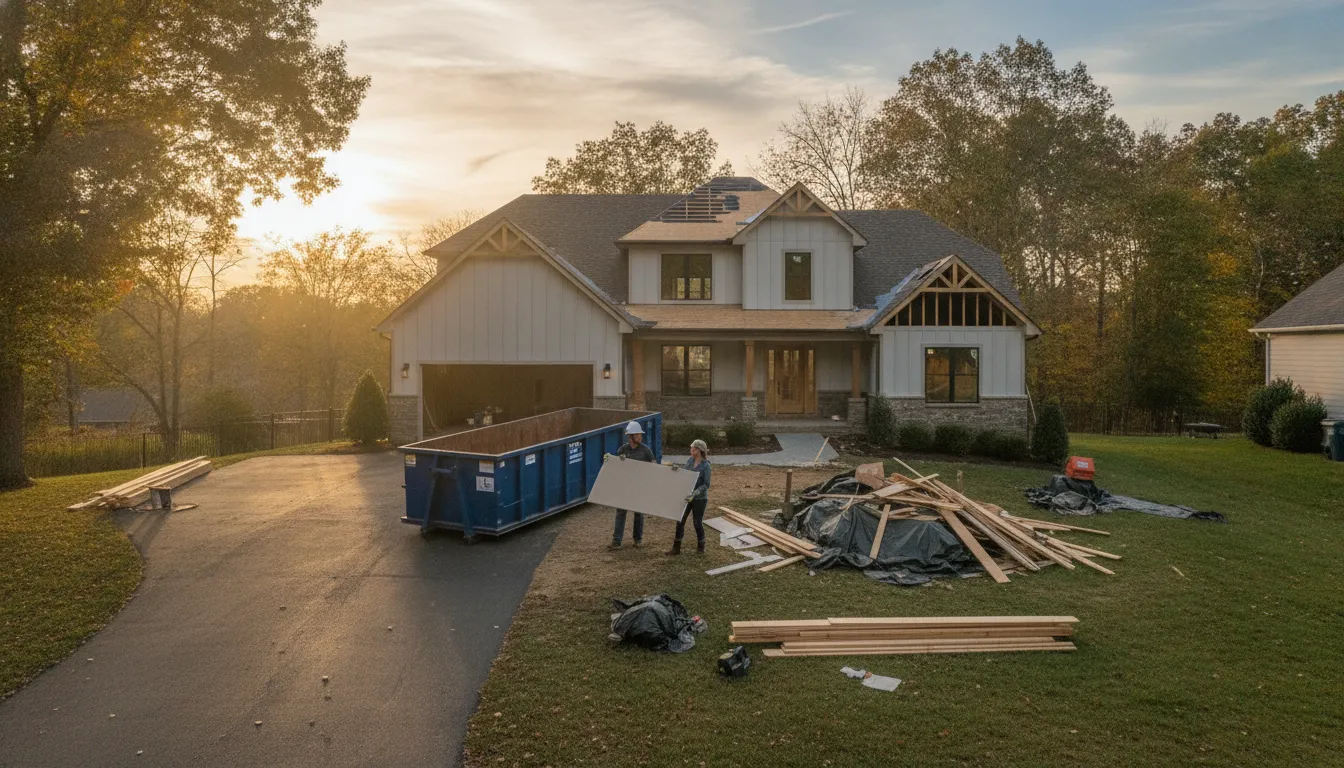
Renovation debris rarely arrives in one neat pile. Cabinets, drywall, flooring, tile, fixtures, packaging, and framing can fill a driveway faster than expected. Especially when a kitchen, bathroom, or basement is being cleared at the same time. Planning disposal before demolition helps keep the work area usable and the project moving.
Book Online for a renovation dumpster, or call (615) 971-3668 to discuss your project.
For many Nashville home renovations, a driveway-friendly 15-yard roll-off is a practical fit. It gives homeowners a renovation dumpster Nashville crews can load at their own pace. The right choice depends on both debris volume and weight. Concrete, tile, porcelain, and other dense materials can approach the included allowance before the container looks full.
Start by listing every material you expect to remove, then consider where the container can sit safely and how long loading will take. That simple debris plan gives you a clearer rental conversation and helps determine whether one right-sized container can handle the cleanup.
How to Plan a Renovation Dumpster Nashville Homeowners Can Use
Before demolition starts, make a simple debris plan. Walk through each room and list what will leave the house: cabinets, drywall, flooring, doors, fixtures, packaging, or masonry. Estimating by material is more useful than guessing from the room name. A pile of lightweight drywall takes up space differently than a smaller pile of tile, brick, or concrete.
Estimate volume and weight separately
Measure the approximate length, width, and height of each debris pile, then consider whether pieces can be broken down or loaded flat. Keep weight in view, too. Heavy material can approach a dumpster’s allowance before the container looks full, so note any tile, concrete, brick, or other rubble in your list. Dumpsters On Demand accepts concrete, brick, and heavy construction rubble, but uncertain materials should be confirmed before loading.
Also write down your project timeline. A kitchen tear-out may happen quickly. A phased renovation can leave debris accumulating over several workdays. Plan delivery close enough to the first demolition day that debris does not sit in walkways or the yard. Allow enough rental time for the work to finish. If the scope changes, an owner-operated provider can help you review the plan rather than guessing at a larger container.
Choose a practical placement
The 15-yard roll-off measures 12 feet long, 8 feet wide, and 4.5 feet high, with 15 cubic yards of capacity. It is designed as a driveway-friendly fit for many residential renovation projects. Choose a firm, accessible placement area with room for delivery and a clear path from the work area. Protect walkways by moving debris into the container as you work instead of creating several temporary piles.
The process is straightforward: Dumpsters On Demand drops it off, you fill it at your own pace, and the company takes it away. Review the 15-yard dumpster for renovation projects details before booking, especially if your material list includes unusually heavy debris.
What Size Dumpster Do I Need for a Kitchen Remodel?
For many residential kitchen remodels, a 15-yard dumpster is a practical starting point. It can handle the mixed debris created when cabinets come out, appliances are replaced, countertops are removed, and walls or floors are opened up. Dumpsters On Demand identifies this size as a fit for many kitchen and bathroom renovation projects. While its driveway-friendly design can work well for homeowners who need the container close to the work area. You can review the details of the 15-yard dumpster for renovation projects before choosing a delivery location.
Estimate the full mix of kitchen debris
Make a list before demolition starts. Cabinet boxes and doors take up space, while old refrigerators, ranges, dishwashers, and other appliances add bulky pieces. Countertops may be especially dense, depending on the material. Drywall, flooring, trim, cardboard, and protective packaging usually add more volume as the project progresses. Breaking down cabinets and flattening boxes can improve loading efficiency, but it does not make heavy materials weigh less.
Why weight matters as much as volume
A dumpster can look only partly full and still carry substantial weight when the load includes stone countertops, tile, masonry, or other dense debris. Think about both the amount of material and the type of material going in. Standard 15-yard pricing includes 2 tons, and Nashville Metro overage is $125 per ton, so ask about the expected load if your remodel includes unusually heavy components.
The 15-yard unit may suit a typical kitchen update, but no container size is an absolute promise for every project. A full gut renovation, added wall demolition, multiple rooms, or a large amount of dense debris can change the plan. If your debris estimate is close to the container’s practical limit, share the scope with the owner-operator before delivery rather than guessing.
What Size Dumpster Do I Need for a Bathroom or Basement Remodel?
For many bathroom remodels, a driveway-friendly 15-yard dumpster is a practical starting point. Bathroom tear-outs can include tile, drywall, a vanity, a tub, and porcelain fixtures. Those materials do not all take up space the same way, and tile and porcelain can add weight quickly. If the project involves one bathroom and a standard fixture replacement, this size may provide a right-sized solution. Confirm the plan before delivery if you are removing multiple bathrooms or a large amount of masonry.
A basement remodel needs a different debris forecast. List each material you expect to remove before choosing a 15-yard dumpster for renovation projects. A partial finish-out may produce flooring, drywall, shelving, and a modest amount of framing. A full gut renovation may also include stored household items, old cabinets, wall materials, and heavier construction debris. The total can exceed a single container when several rooms are cleared at once.
Use a room-by-room debris list
- Bathroom: Count the tile, drywall, vanity, tub, toilet, sink, and other porcelain fixtures. Separate heavy rubble from lighter packaging and trim when estimating the load.
- Basement: Note flooring by room, removed wall framing, drywall, shelving, and stored items. Include debris from closets, utility areas, or a stair landing if those spaces are part of the remodel.
- Both projects: Consider weight as well as volume. A container can look partially filled while dense tile, concrete, brick, or other heavy rubble brings the load close to its allowance.
When the scope is uncertain, an owner-operated local company can review the material list before delivery rather than guessing at a larger unit. For larger basement demolitions or projects with substantial heavy debris, describe the rooms and materials in advance so the disposal plan matches the work.
Book Online when you are ready to match the rental to your remodel scope.
How Should I Dispose of Old Fixtures and Heavy Materials?
Start by separating what can be useful from what is headed for disposal. A clean, undamaged vanity, cabinet, light fixture, door, or appliance may be suitable for donation, resale, or reuse. Remove hardware carefully, keep pieces together, and protect items from rain while you finish the renovation. For materials that cannot be reused, sort them by type when practical. The EPA recommends reducing, reusing, and recycling construction and demolition materials where possible, rather than treating every removed item as trash. Read its construction and demolition material guidance for additional planning ideas.
Concrete, brick, and rubble need a weight-conscious plan
Tile, porcelain, concrete, brick, and masonry can make a dumpster heavy before it looks full. Load dense debris in a stable, even layer, and do not mix in extra material without confirming that the container and service plan fit the project. Dumpsters On Demand accepts concrete, brick, and heavy construction rubble, which makes its driveway-friendly 15-yard roll-off a practical option for many Nashville renovation cleanups. If your project includes a large amount of masonry, describe the material and estimated quantity when arranging your Nashville debris removal plan.
Use extra care around older painted surfaces
If the renovation disturbs painted surfaces in an older home, pause before sweeping chips or dust into the container. EPA guidance for renovation, repair. And painting work recommends collecting lead-containing waste at the end of each workday and keeping it contained so dust and debris do not escape the work area. Waste should also remain contained during transport. Review the EPA’s lead-containing waste guidance and its lead-safe renovation steps. This is general safety information, not legal advice. Requirements can depend on the property, materials, and who performs the work.
When you are unsure whether a material is acceptable, potentially hazardous, unusually heavy, or contaminated, do not guess. Keep it separate and ask before loading it. An owner-operated local team can help clarify the disposal plan, so your renovation dumpster Nashville setup matches the debris instead of creating a preventable problem.
Book Online to review a renovation cleanup plan before delivery.
How Do I Keep a Renovation Job Site Clean and Safe?
A clean renovation site is easier to work on and less likely to create avoidable hazards. Set up the debris plan before delivery, then maintain it throughout the project instead of waiting for the final cleanup.
- Stage debris safely as each room is cleared.
- Move loose materials into the container at the end of each workday.
- Finish with a sweep and a level-load check before pickup.
Start with a safe placement and staging plan
Before the dumpster arrives, choose a stable driveway location with a clear path for loading. Keep doors, gates, utility access, and walkways open. Stage tools and salvageable materials away from the container so workers are not stepping over loose boards, tile, or packaging. A driveway-friendly 15-yard unit can support many residential renovation projects, but confirm placement and material questions with the owner-operated team before delivery.
Load a little each day
At the end of each workday, collect debris from active rooms and move it to the container. Put sharp pieces where they cannot catch clothing or hands, and break down bulky cardboard when practical. Load evenly from side to side. Do not create a leaning pile or place debris above the container rim. Even loading keeps the weight distributed and makes removal safer.
Use extra care after rain, storms, or freezing temperatures. Wet surfaces can become slippery, and loose plastic or lightweight debris can blow into neighboring yards. Secure temporary coverings and clear standing water from the work area before resuming.
Control dust and finish with a sweep
Separate the renovation zone from occupied areas when possible. Close doors, use suitable containment, and provide ventilation appropriate to the work. NIOSH discusses maintaining acceptable indoor environmental quality during construction and renovation, including practical controls for the work environment. Read the NIOSH indoor environmental quality guidance for project-specific considerations. This is job-site guidance, not medical advice.
Before the final pickup, sweep floors, inspect corners and walkways, remove nails and sharp fragments, and check that the load remains level and contained. For a straightforward rental plan, review the steps for booking a renovation dumpster before scheduling delivery.
How Much Does a Renovation Dumpster Cost in Nashville?
For a renovation dumpster in Nashville, the rental price depends mainly on how long you need the container. Dumpsters On Demand offers several standard rental periods for its 15-yard roll-off, so you can match the rental to the pace of your kitchen. Bathroom, basement, or whole-room project instead of paying for a longer term than you expect to use.
| Rental period | Price |
|---|---|
| 1 day | $349 |
| 3 days | $375 |
| 7 days | $399 |
| 14 days | $525 |
Each standard rental includes up to 2 tons. That allowance matters when you are removing tile, brick, concrete, or other dense renovation debris. A container can look only partly full while heavy material is already approaching the included weight, so plan by both volume and weight. For Nashville Metro rentals, the overage rate is $125 per ton when the load exceeds the included allowance.
If the work takes longer than expected, extensions are $25 per additional day when applicable. It is worth choosing a rental period that gives your crew enough time to complete demolition and loading without rushing the final cleanup. For more planning detail, review the Nashville dumpster rental pricing guide, then confirm the project details before scheduling.
The goal is a clear price for a right-sized, driveway-friendly container, with the rental term and potential weight costs understood before delivery.
Frequently Asked Questions
What size dumpster do I need for a kitchen remodel?
A 15-yard dumpster is a practical fit for many kitchen remodels, including cabinets, appliances, countertops, drywall, flooring, and packaging. The right choice depends on both volume and weight. Countertops, tile, and other dense materials can use up the weight allowance before the container looks full. So confirm the debris plan if your project includes substantial masonry or concrete.
What size dumpster do I need for a bathroom remodel?
A 15-yard dumpster is typically sufficient for a bathroom renovation with tile, drywall, a vanity, a tub, and porcelain fixtures. Load bulky pieces carefully and keep debris below the fill line. If the remodel also includes demolition from another room, estimate that material separately before delivery so the container matches the full scope.
Can I put concrete in a dumpster?
Yes. Dumpsters On Demand accepts concrete, brick, and heavy construction rubble. Tell the owner-operator about heavy materials when you plan the rental, because weight matters as much as container space. Nashville Metro overage is $125 per ton, according to the customer’s published service information: confirm the current disposal terms before loading.
How much does a renovation dumpster cost in Nashville?
Standard 15-yard Nashville rental options are $349 for one day, $375 for three days, $399 for seven days, and $525 for 14 days. Standard pricing includes two tons, with Nashville Metro overage charged at $125 per ton. Review the published Nashville dumpster rates and choose a rental period that covers demolition, loading, and the final cleanup.
Book Your Nashville Renovation Dumpster
A driveway-friendly 15-yard roll-off can give your remodel a clear place for cabinets, fixtures, flooring, and other debris as the work moves along. Because every renovation has a different mix of materials, plan the container around both volume and weight. To book the right dumpster for your Nashville renovation cleanup, Book Online or call (615) 971-3668.