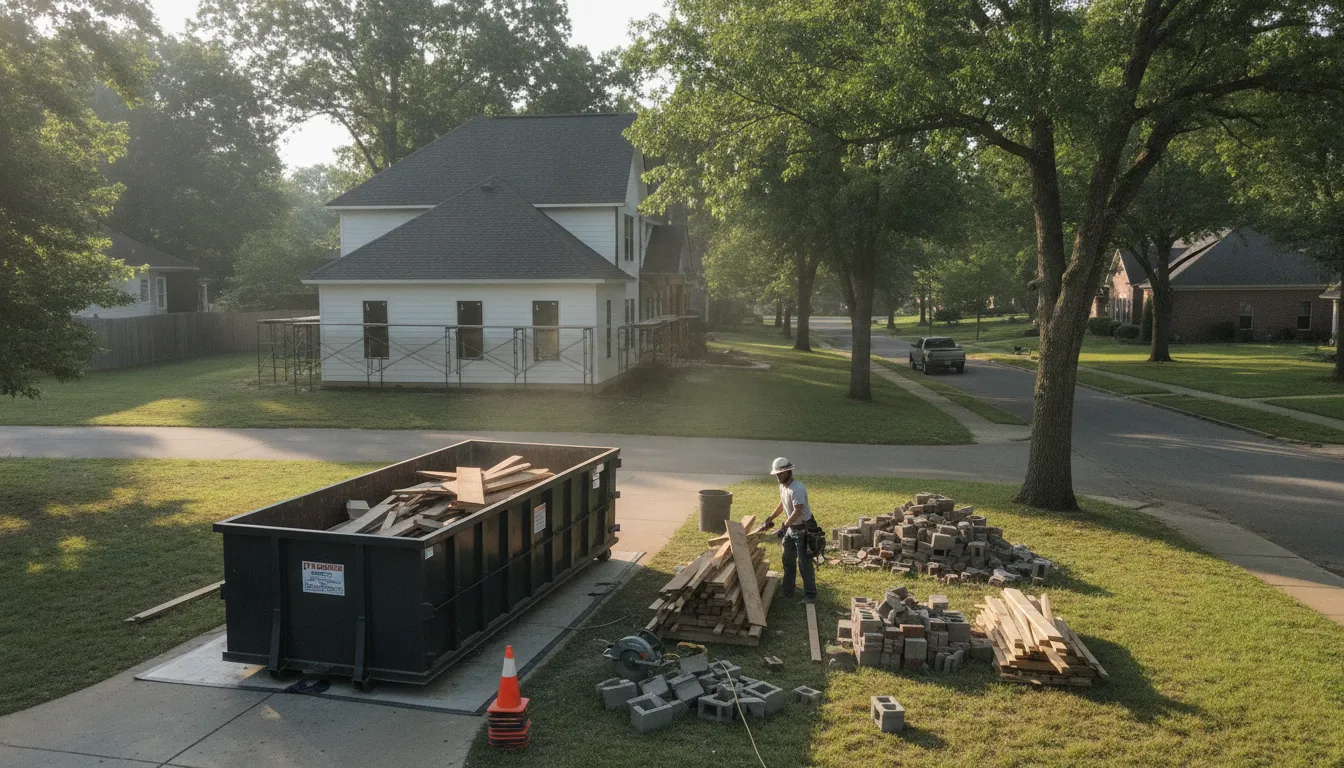
A cleanup budget can look simple until a crew starts sorting drywall, shingles, lumber, concrete, or brick at the same job site. The container, hauling plan, loading labor, access, and time required all shape what the project actually costs.
Book a Nashville dumpster online or call (615) 971-3668 to plan your construction cleanup.
Construction debris removal cost is a total-project calculation, not one universal rate. Plan for the rental base, material weight, labor choice, driveway or site access, rental duration, and any extra tonnage. EPA classifies debris from building, renovation, demolition, and deconstruction as construction and demolition material, including bulky items such as concrete, wood, asphalt, gypsum, metals, and brick: EPA guidance on C&D materials.
For Nashville contractors, the most useful estimate starts with the debris itself and the workflow around it. A right-sized roll-off can keep material contained at the site, while repeated trips may add labor, fuel, loading time, and disruption. Here is how each cost driver affects the decision.
What Shapes Construction Debris Removal Cost in Nashville?
For a contractor, construction debris removal cost is a total-project calculation, not a universal flat price. Start with the rental or removal base, then account for the material being discarded, its weight, the labor plan, site access, rental duration, and any extra tonnage. A low initial estimate can change when a job produces heavier debris than expected or requires more handling than the crew planned.
Construction debris is also different from general household junk. The U.S. Environmental Protection Agency defines construction and demolition materials as waste generated by building, renovating, demolishing, or deconstructing structures. That category can include concrete, wood, asphalt, gypsum drywall, metals, brick, glass, plastics, earth, and rock. Each material affects how much volume the container uses and how quickly the included weight allowance may be reached. See the EPA’s overview of construction and demolition materials for the broader definition.
Six cost questions to answer before booking
- What material is coming out? Lumber, shingles, drywall, concrete, brick, and mixed renovation debris do not load or weigh the same way.
- How much volume and weight will the job produce? A container can fill by space before it reaches its weight allowance, or become heavy before it looks full.
- Who will do the labor? With self-service, your crew loads the container. Full-service removal adds professional lifting, loading, and hauling when labor is limited or the debris is difficult to handle.
- Can the truck reach and place the container safely? A driveway-friendly unit still requires an access and placement assessment. Tight turns, overhead obstructions, soft ground, or restricted staging can affect the plan.
- How long will the project run? Match the rental period to demolition, remodeling, roofing, or cleanup schedules instead of paying for unnecessary days.
- Could the load exceed the included weight? Heavy materials such as concrete and brick can reach an allowance quickly, so confirm material rules and plan weight before delivery.
For many medium Nashville jobs, the practical estimate comes from matching the debris list and loading plan to a right-sized container. Then confirming access, timing, and weight terms with a local, owner-operated provider.
How Material Type and Weight Change the Estimate
Two jobs can fill the same amount of dumpster space and still create different disposal requirements. A roof tear-off, a drywall remodel, and a concrete removal project do not load the same way. Material type affects how quickly the container reaches its practical weight limit, while the amount of material determines how much space the crew needs. EPA identifies concrete, wood, drywall or gypsum, bricks, shingles, steel, and asphalt among common construction and demolition materials. See the EPA material guidance when planning a mixed job-site load.
Light and mixed debris
Packaging, plastic, light fixtures, trim, insulation, and a mix of smaller renovation debris usually consume volume before they create the same weight concern as masonry. Keep these materials contained and distribute them throughout the box instead of building one unstable pile. Mixed loads still deserve a clear inventory, especially when the job includes a small amount of heavy material alongside mostly light debris.
Lumber, drywall, and roofing
Lumber and drywall can occupy substantial space as demolition progresses. Break down bulky pieces where practical, keep the load below the container walls, and account for roofing materials separately. Shingles and related roofing debris can become dense as the load accumulates. The estimate should reflect both the space required and the expected weight, not just the number of bags or visible debris piles.
Concrete, brick, and rubble
Concrete, brick, and heavy construction rubble reach a weight allowance much faster than light debris. Dumpsters On Demand accepts these materials subject to current material rules and weight planning. Before booking, review the guidance on concrete and heavy debris disposal, describe the material accurately, and ask how it should be loaded. Do not assume that an empty-looking container is within its safe weight range.
For Nashville rentals, the published base rates below include delivery, pickup, disposal, and 2 tons of included weight. The rate changes with the rental period, while the material plan determines whether the included weight is a realistic fit.
| Rental period | Base rate | Included services and weight |
|---|---|---|
| 1 day | $349 | Delivery, pickup, disposal, and 2 tons included |
| 3 days | $375 | Delivery, pickup, disposal, and 2 tons included |
| 7 days | $399 | Delivery, pickup, disposal, and 2 tons included |
| 14 days | $525 | Delivery, pickup, disposal, and 2 tons included |
These figures are a starting point, not a universal construction debris removal cost. A contractor estimating a masonry or rubble load should prioritize weight planning before choosing a rental term. For a lighter remodel, the main constraint may be volume and the time needed to load it. For heavy debris, confirm the material rules and weight expectations before delivery so the estimate matches the actual job.
When Is a 15-Yard Roll-Off More Efficient Than Repeated Hauling?
Repeated dump runs can look manageable when a job starts with a small debris pile. On a medium renovation, roofing project, or construction cleanup, the trips can become a recurring interruption. Someone has to sort and load the truck, secure the debris, drive to the disposal facility, unload, and return before work can continue. A roll-off keeps the container at the job site, so the crew can load debris as the project progresses instead of rebuilding the disposal workflow after every load.
Book a Nashville dumpster online or call (615) 971-3668 before your crew schedules another disposal run.
Compare the work, not just the container price
With a 15-yard rental, Dumpsters On Demand delivers the container, your crew loads it during the rental period, and the company retrieves it and handles disposal. That can simplify scheduling and keep material in one controlled location. Organized containment may also reduce trip hazards and delays caused by scattered debris or repeated disposal trips. These operational benefits matter when a foreman, laborer, or subcontractor would otherwise spend part of the workday on hauling.
The 15-yard roll-off holds 15 cubic yards. It measures 12 feet long by 8 feet wide by 4.5 feet high. It offers approximately 50 percent more capacity than a standard 10-yard unit. That makes it a practical middle-ground choice for many medium projects. Review the details before booking and choose the right dumpster size for the debris plan.
When repeated hauling may still make sense
Repeated hauling may be reasonable when debris volume is genuinely small, the work is completed in a single load, or the site cannot accommodate a roll-off. It can also be the better fit when materials are unusually heavy and the planned load would not fit the container’s weight limits. Volume and weight are separate checks: a container can have open space remaining while the material is already too heavy for the approved load.
Before comparing construction debris removal cost, estimate both the amount and type of material. Concrete, brick, and rubble need careful weight planning, and contractors should confirm current material rules before booking. Also confirm that the delivery vehicle can access the placement area. Driveway-friendly equipment helps on many residential and narrow-lot sites, but it does not replace an access and placement assessment.
What Labor, Access, and Rental Duration Add to the Budget
Labor is one of the clearest differences between a roll-off rental and full-service removal. With self-service, Dumpsters On Demand delivers the container. Your crew loads it during the rental period. The company retrieves it and handles disposal.
This model can fit a contractor who already has labor on site. Full-service removal uses a professional crew for lifting, loading, hauling, and construction debris work. It may fit when your team should stay focused on the project. Your choice depends on crew availability, schedule, and physical workload.
Account for access before delivery
A driveway-friendly container can work well for residential driveways and narrow urban lots. That description does not remove the need for a placement review. Before booking, identify the delivery path, overhead clearance, gate width, surface condition, and space for the truck to position and retrieve the container.
Keep the container close enough to the work area to reduce carrying distance. Leave safe access for workers and equipment. Review the commercial dumpster weight allowances guidance when planning a larger or heavier job.
Match the rental term to the work schedule
Choose the shortest rental period that gives your crew a realistic loading window. Nashville rental options are available for 1, 3, 7, or 14 days. The listed base rates are $349 for 1 day, $375 for 3 days, $399 for 7 days, and $525 for 14 days. These rates include delivery, pickup, disposal, and 2 tons of included weight.
Weather, inspections, or sequencing can extend a project. Additional rental days cost $25 per day.
Weight deserves equal attention, especially when a job includes concrete, brick, roofing material, or other dense debris. In Nashville Metro, material above the included 2 tons is charged at $125 per ton. Give the material list and expected loading plan up front. That helps the rental duration and weight allowance reflect the actual job and reduces avoidable overage.
How to Plan Concrete, Brick, and Heavy Rubble Disposal
Concrete, brick, and heavy rubble require a different loading plan than a typical mixed construction cleanup. Dumpsters On Demand accepts these materials, but confirm the current material rules before booking and discuss the expected weight. A container can have enough room left by volume while approaching its weight allowance, which can affect the final construction debris removal cost.
Start with a practical material inventory. Estimate how much concrete, brick, block, tile, asphalt, soil, or rock the crew will remove, then separate those dense materials from lighter wood, cardboard, plastic, and packaging. The EPA identifies concrete, bricks, asphalt, earth, and rock as common construction and demolition materials, so a project may contain several different load types at once. See the EPA’s construction and demolition materials guidance for broader planning context.
Distribute weight across the container
Place dense material in a stable, spread-out layer rather than building one concentrated mound at one end or corner. Keep the load below the top edge, avoid overloading one side, and leave clear access for safe loading. A balanced load helps the container remain stable during pickup and gives the hauler a clearer way to assess the job. If the rubble is unusually dense or the quantity is uncertain, ask for weight guidance before delivery rather than assuming the available cubic space tells the whole story.
Also look for materials that can be reused or diverted before they enter the dumpster. Salvage sound brick, block, pavers, or other usable pieces when the project plan allows it. The EPA notes that C&D materials can serve as commodities in new building projects, and its reuse and recycling practices include source reduction, salvaging, and reuse. Keep any uncertain or restricted material out of the load until the disposal rules are confirmed.
For a Nashville job, review the concrete and heavy debris disposal guide, then provide the material list, estimated volume, access details, and loading plan when you book. That conversation makes the container and service plan more predictable for the crew and the project budget.
Book a Nashville dumpster online or call (615) 971-3668 to confirm the right container and timing for your project.
A Contractor’s Cost Checklist Before Booking
A few minutes of job-site planning can make the estimate more useful and prevent avoidable delays. Before booking construction debris removal in Nashville or Middle Tennessee, work through this checklist. For projects in Sumner County, review the Gallatin dumpster rental and Hendersonville dumpster rental pages before scheduling delivery:
- List the debris. Identify whether the load includes lumber, drywall, shingles, tile, concrete, brick, or mixed construction materials. Confirm any material rules before delivery, especially for unusual or hazardous items.
- Estimate the volume. Approximate how many cubic yards the debris will occupy after loading. Break down separate phases if the project includes demolition, roofing, or remodeling. If you are unsure, use this guide to choose the right dumpster size.
- Flag the weight. Concrete, brick, soil, and dense rubble can reach a container’s weight allowance before it is full. Tell the provider about heavy materials so the plan reflects both volume and weight.
- Plan loading. Decide who will load the container, where debris will be staged, and how equipment or workers will move around it. Keeping debris contained can reduce trip hazards and repeated disposal trips.
- Inspect access and placement. Measure the approach, gate, driveway, overhead clearance, and proposed drop location. Driveway-friendly equipment still requires a safe access and placement check.
- Choose rental dates. Match the rental period to the work schedule, including weather or inspection delays. Same-day or next-day delivery may be available in Nashville and Middle Tennessee, subject to scheduling and service-area conditions.
- Ask about overage. Confirm what weight is included, how extra tonnage is handled, and whether additional rental time could affect the total.
- Select the service model. Choose self-service when your crew can load during the rental period. Choose full-service Nashville debris removal when lifting, loading, and hauling would take your team away from the job.
Decision rule: book a roll-off when your crew can safely load a known volume on-site. Request full-service removal when labor, heavy lifting, access constraints, or a tight deadline matter more than keeping the container on-site. When ready, book a Nashville dumpster online.
Frequently Asked Questions
How do you calculate construction debris removal cost?
Start with the debris type and estimated volume, then account for weight, loading labor, delivery access, rental duration, and any extra tonnage. In Nashville, a self-service rental covers the container, delivery, pickup, and disposal, while full-service removal adds professional loading labor. The right estimate depends on the whole project, not a universal price.
How much does a Nashville dumpster rental include?
Current Nashville rental rates are $349 for one day, $375 for three days, $399 for seven days, and $525 for fourteen days. Those rates include delivery, pickup, disposal, and two tons of weight. Additional days are $25 each, and Nashville Metro overage is $125 per ton above the included two tons.
Review the current dumpster rates and rental options.
Is a 15-yard dumpster large enough for construction debris?
It can fit many medium renovation, roofing, and cleanup projects when the volume and weight match. The roll-off holds 15 cubic yards and measures 12 feet long by 8 feet wide by 4.5 feet high. Concrete, brick, and rubble can reach the weight allowance quickly, so confirm material rules and plan the load before booking.
Should I rent a dumpster or hire full-service removal?
Rent a container when your crew can load debris steadily during the rental period. Choose full-service removal when you need professionals to lift, load, and haul the material, or when labor and schedule pressure make repeated trips impractical. In either case, confirm that the truck can reach the planned placement area.
Can I place a construction dumpster in a driveway?
Driveway-friendly equipment is designed for residential driveways and narrow urban lots, but placement still requires an access and site assessment. Check overhead clearance, turning space, surface condition, and the path from the work area before delivery. Same-day or next-day availability depends on scheduling and service area.
Book Your Nashville Construction Dumpster
A right-sized dumpster can keep debris contained and make your project cleanup easier to coordinate. Review your material mix, placement, expected weight, and rental timing before you book. Call the Tennessee team at (615) 971-3668 if you need help planning the details.
Book a Nashville dumpster online for your construction project.