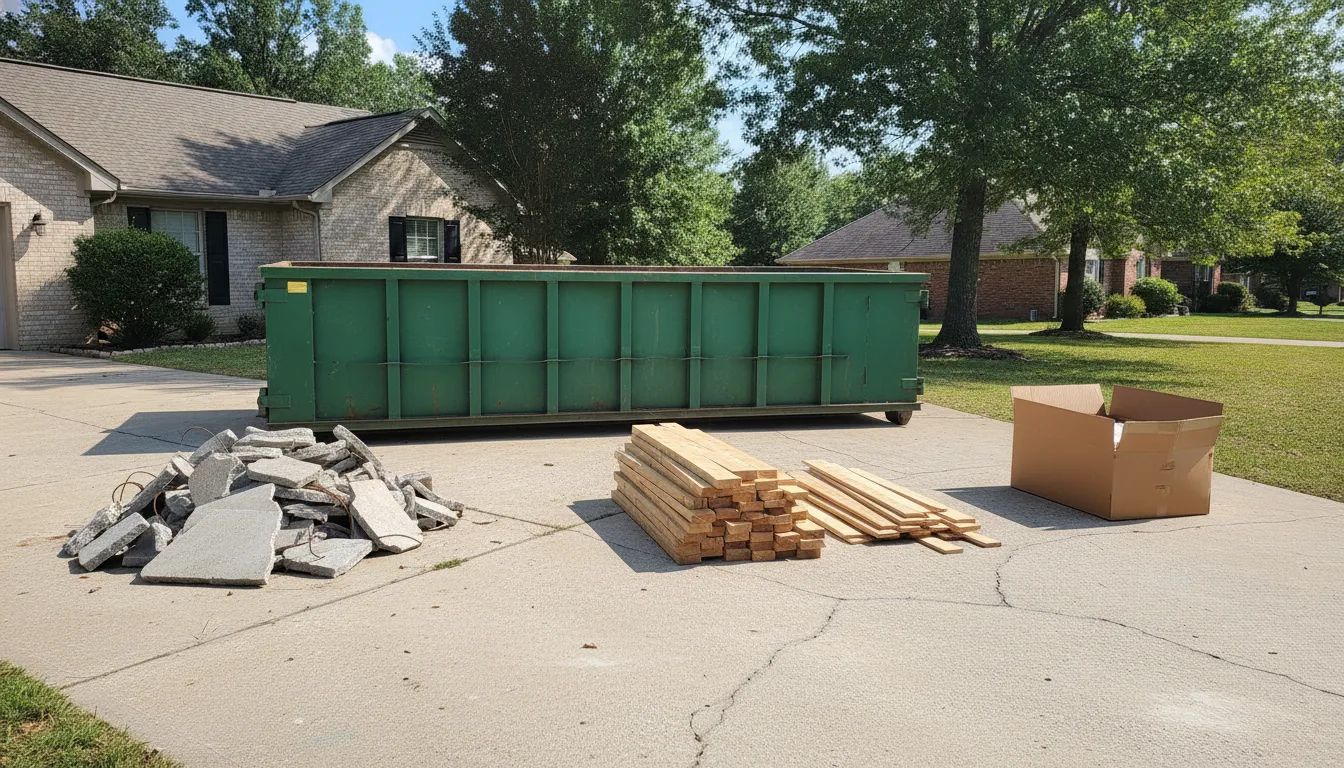
Construction debris recycling is a plan for keeping wood, metal, cardboard, and clean concrete out of one mixed pile. In Nashville, that plan starts before the first wall comes down. Metro Waste Services says construction and demolition waste is highly recyclable and points crews to local reuse and recycling options. A roll-off or a hauling crew then moves what you have already sorted.
Call (615) 971-3668 to plan a sorted jobsite load
What is construction debris recycling in Nashville?
It is not the same thing as tossing a renovation into one container and hoping the landfill sorts it later. Recycling means a material becomes raw material for a new product. Reuse means a door, fixture, or brick keeps its current form. Landfill is the last stop when neither path fits.
Metro Nashville’s construction and demolition recycling page puts it in plain terms. Waste from these projects is highly recyclable, and the city lists local options. The city’s Construction and Demolition Recycling Guide adds the local scale. It says 23 percent of the waste Metro sends to landfill comes from construction and demolition, including wood, metal, concrete, asphalt, and brick.
That guide also gives a useful order of operations. Design out waste first. Reuse a building when you can. Deconstruct so materials stay whole. Recycle streams such as concrete, metal, wood, and cardboard. Downcycle material into road base or similar uses. Landfill only what has no better path. The guide says 50 to 75 percent of construction and demolition debris on a jobsite is recyclable. That range is a planning target, not a promise for every mixed load.
EPA describes the same family of materials in its guide to sustainable management of construction and demolition materials. Concrete, asphalt concrete, wood, drywall, brick, clay tile, asphalt shingles, and steel are the core streams. EPA ranks source reduction above recycling. Saving a wall beats crushing it.
A homeowner with one bathroom demo will not run a formal jobsite program. The same idea still applies. Name the materials before you break them. Keep the clean streams apart. Then choose a haul method that matches the pile you actually have.
Which materials belong in a recycling plan?
Start with the streams Nashville’s guide treats as recoverable. Do not invent a drop-off rule the chart does not state. Call the receiver before you load the truck.
| Material | Often recoverable when | Ask before you load |
|---|---|---|
| Clean concrete, block, or asphalt | It is separated from trash and can be crushed for fill or processed. | Does this receiver take it, and can any of it stay on site as fill? |
| Metal and cardboard | They are kept dry and out of the mixed pile. | Is there a separate container, or will one mixed load bury them? |
| Clean lumber | It is untreated and free of paint, nails are pulled when required. | Will the receiver reject treated, painted, or trash-mixed wood? |
| Whole fixtures and unused drywall | They can be reused or donated, not smashed into rubble. | Is donation realistic, or is this material past reuse? |
| Mixed renovation trash | Recycling is unlikely once streams are combined. | Is landfill the honest destination for this portion? |
The Nashville chart lists concrete, asphalt, and aggregates as materials that can be crushed on site for fill. It also names local processors and haulers, including options that depend on the site. Treat those names as a starting list. Hours, fees, and accepted contamination change. Confirm them with the facility.
Brick, clean masonry, and metal follow the same rule. Separate them while they are still recognizable. Cardboard from deliveries is an easy win if it stays dry and flat. Once it is wet and mixed with food wrappers or insulation, it is trash.
Some materials need a different conversation. Drywall scraps, painted wood, roofing, and insulation are not automatic recycling loads. The chart is specific: Habitat ReStore is listed for new, unused drywall donations, not for dusty demo scraps. If your pile does not match that description, do not force it into a donation story.
Household chemicals, liquid concrete washout, and unknown powders do not belong in a debris container. Set them aside and ask before anyone scoops them in. A recycling plan fails when one banned item contaminates a clean stream.
How should you sort a mixed jobsite?
Sorting is the work that makes recycling real. A single container can still help, but only after you decide what it is allowed to hold.
Use a short sequence and write it where the crew can see it:
- Walk the project and list the materials you will actually generate. A kitchen gut and a new deck do not produce the same pile.
- Mark what can be reused whole, what can be recycled, and what is trash. Reuse comes before the dumpster.
- Give each keep-stream a spot: metal, cardboard, clean wood, and mineral rubble. A corner of the garage counts.
- Put trash in its own pile so it cannot fall into the clean piles.
- Load the container only with the materials the hauler agreed to take.
- Check the piles at midday. One careless bag of household trash can undo a morning of sorting.
Metro’s recycling page tells larger projects to name a lead, involve subcontractors, and talk about expectations at every meeting. A homeowner can copy the small version. One person owns the piles. Helpers hear the rule before they carry the first load.
Signage matters even on a driveway. A piece of tape and a clear label beat a shouted reminder. If two containers are on site, label them for the material, not with a vague word like “demo.” Nashville’s solid waste review for permitted projects asks drawings to label containers for trash, recycling, or cardboard. A small remodel can borrow that habit without filing a drawing.
Keep the path to the container clear. Concrete and lumber are awkward. People take the short path, which is how clean metal ends up under drywall. Stage the recycling pile closer than the trash pile if recycling is the goal.
For a plain definition of what counts as construction debris before you sort it, read the guide to what construction debris includes. This article stays on the recycling plan, not that definition.
When is a driveway roll-off the right haul?
A driveway-friendly roll-off fits when debris will come out over hours or days and someone on site can load it. You control the pace. You also control whether the load stays sorted.
Choose the container after the sort, not before. Tell the provider what the load will be: clean lumber, mixed remodel waste, drywall, or heavy rubble. Acceptance depends on the material. Do not assume every stream can share one box.
Weight is the quiet limit. Concrete, brick, dirt, and roofing reach a weight cap long before the container looks full. If mineral rubble is a large share of the job, say so up front. The guide to dumpsters for dirt and concrete covers dense loads. The guide to concrete and brick disposal in Nashville covers those heavy materials as a disposal question. Neither one replaces a recycling plan for wood, metal, and cardboard.
Placement is part of recycling success. The container needs a firm driveway or other approved surface, enough overhead clearance, and a path that does not block neighbors or workers. If the box sits too far from the work, crews stop sorting. Put it where the walking path is short and the street stays open.
A 15-yard roll-off is the driveway size Dumpsters On Demand uses for many home projects. It is not a guess at how much your debris weighs. Describe the rooms, the materials, and whether concrete is included. Then match the rental length to the work. A one-day tear-out and a two-week kitchen remodel should not share the same schedule assumption.
Published Nashville 15-yard rates, for readers comparing a rental with repeated self-haul trips, are $349 for 1 day, $375 for 3 days, $399 for 7 days, and $525 for 14 days. Those rates include 2 tons, with $125 for each extra ton. They are a planning figure for the rental itself, not a quote for every material, distance, or special handling fee. Confirm the load before you book. The Nashville dumpster rental prices page is the place to check current rental terms.
If you will load the container yourself, read how to load a dumpster safely before the first piece goes in. Heavy items go in first and are spread, not stacked against one wall. Do not fill past the rim.
When should a crew handle the load instead?
Self-loading fails when the material is already in a heavy pile, the timeline is one day, or no one on site can lift it safely. A full-service crew loads and hauls. You still need to say what is in the pile.
Call a crew when:
- The debris is already down and blocking the work.
- Stairs, mud, or a tight side yard make a roll-off a poor fit.
- The load mixes furniture from a cleanout with remodel debris, and you want those paths separated.
- You need the material moved now, not over a rental week.
A crew is not a recycling guarantee. Ask whether clean metal, cardboard, or concrete can be kept apart, and where the rest is expected to go. If the honest answer is a mixed disposal load, treat it that way. Do not describe a landfill load as recycled.
Dumpsters On Demand offers both rentals and junk removal in its Middle Tennessee service area. Dickson County is not part of that current service area. If you are comparing crew help with a container, the junk removal service page explains the crew option. For Nashville-area bulk debris that is not a formal jobsite, the debris removal page is the service overview. Use this article to decide the recycling setup first.
Larger Nashville projects that need a permitted waste plan have a separate city step. Metro Waste Services reviews solid waste plans for building permits and expects storage for both trash and recycling containers. Read the city’s solid waste review page if your permit requires that drawing. A driveway remodel at an existing home usually does not. Do not copy permit rules onto a job that does not need them.
How do you keep recycling from collapsing mid-project?
Most plans fail in the middle, not at the kickoff. The first day looks sorted. By day three, lunch trash, wet cardboard, and a surprise layer of tile share one pile.
Build a midday check into the work:
- Look in each container before it is half full. Contamination is cheap to fix early.
- Restack cardboard if rain is coming. Wet paper is rarely recyclable.
- Pull metal off the mixed pile while it is still on top.
- Stop and re-label if a helper treated every pile as trash.
- Photograph unusual debris and ask before it goes in the container.
Nashville’s jobsite steps say to monitor containers and check with subcontractors when the program slips. On a house, that subcontractor might be a flooring crew or a friend with a truck. The question is the same. Did the new person hear the sorting rule?
Keep a simple record if the project is large enough to matter. Note which loads left as mixed trash and which left as a separated stream. You do not need a spreadsheet for a bathroom. You do need one if a contract, a building owner, or a permit asks what was diverted.
Cost questions belong in a different guide. Weight, labor, access, and rental length change the bill. Use the Nashville construction debris removal cost guide for that math. Use the Nashville contractor dumpster guide when the question is rental logistics on a jobsite. This page stays on sorting and routing.
Drywall has its own limits. New, unused scraps may have a donation path. Dusty tear-out usually does not. The drywall disposal guide covers that choice so this article does not pretend every scrap is recyclable.
What should you confirm before booking?
A short call prevents a rejected load. Have answers ready, and ask the same questions of any receiver or hauler.
- What materials will be in the container, and what will stay out?
- Is concrete, brick, dirt, or roofing included, and about how much?
- Are there painted wood, treated lumber, or leftover liquids?
- Where can the container sit, and for how many days?
- Who loads it, and who keeps the streams separated?
- If a crew comes, what will they take, and what destination should you expect?
Concrete-only recycling is a narrower question. If the pile is a patio, sidewalk, or slab and you want the crushing-and-reuse explanation, use the guide to how concrete recycling works. Do not make this mixed-debris plan do that job.
EPA’s practices for large-scale residential demolition are aimed at bigger teardown projects. They are still a useful warning for a house: identify problem materials first, and do not treat demolition debris as ordinary household trash. A single-room remodel can follow the spirit of that advice without borrowing rules written for a whole-building teardown.
Service area matters too. Confirm the address is in the current Dumpsters On Demand area before you promise a delivery date to a contractor. The service area page lists covered cities. If the address is outside that list, say so early.
Call (615) 971-3668 before the debris is mixed together
Frequently asked questions
What construction materials are easiest to recycle?
Clean metal, dry cardboard, and separated concrete or asphalt are the usual starting streams. Nashville’s guide also treats clean wood and some whole building materials as recoverable when a receiver agrees. Mixed trash, wet cardboard, and painted or treated wood are much harder. Ask before you haul.
Can one dumpster handle construction debris recycling?
Sometimes. A single roll-off works when you have already pulled out the streams that need their own path, and the hauler accepts what remains. It fails when concrete, household trash, and recyclables go in together. Tell the provider the mix before you reserve the container.
Does Nashville pick up construction debris with regular trash?
No. Curbside trash and recycling are not a jobsite program. Metro’s recycling guidance is about separating construction and demolition materials and using reuse or recycling outlets. Private hauling covers the piles that city carts cannot take. Check any permit waste plan separately if the project requires one.
Where should concrete from a remodel go?
Keep it apart from wood and trash, then confirm a receiver or hauler will take that mineral load. Crushing clean concrete for on-site fill is one option the city chart names. A full explanation of concrete recycling sits on the concrete recycling guide. This article only tells you not to bury that rubble in a mixed container.
Who do I call to book the haul?
Call Dumpsters On Demand at (615) 971-3668. Describe the materials, the address, and whether you want a driveway roll-off or a crew. You can also start with the Nashville dumpster rental page if you already know a container fits.
Book the haul after the sort
Construction debris recycling works when the sort happens first. Name the streams, keep trash out of them, and match the container or the crew to the pile you really have. Nashville’s own guidance is the local map for what might be recoverable. Your hauler still has to confirm the load.
When the plan is clear, call (615) 971-3668. Have the material list ready so the booking matches the job.